- Maymester courses often blend real-world skill-building, community engagement and travel.
- Short-term courses offer instruction with hands-on learning, helping students envision their futures.
- From Syracuse to Seoul, students are exposed to learning experiences that can transform the way they see the world.
For Syracuse University students, Maymester courses are an opportunity to travel and explore, immerse themselves in a new culture or issue, gain hands-on experience, build skills or learn something entirely new.
Building for Community Good
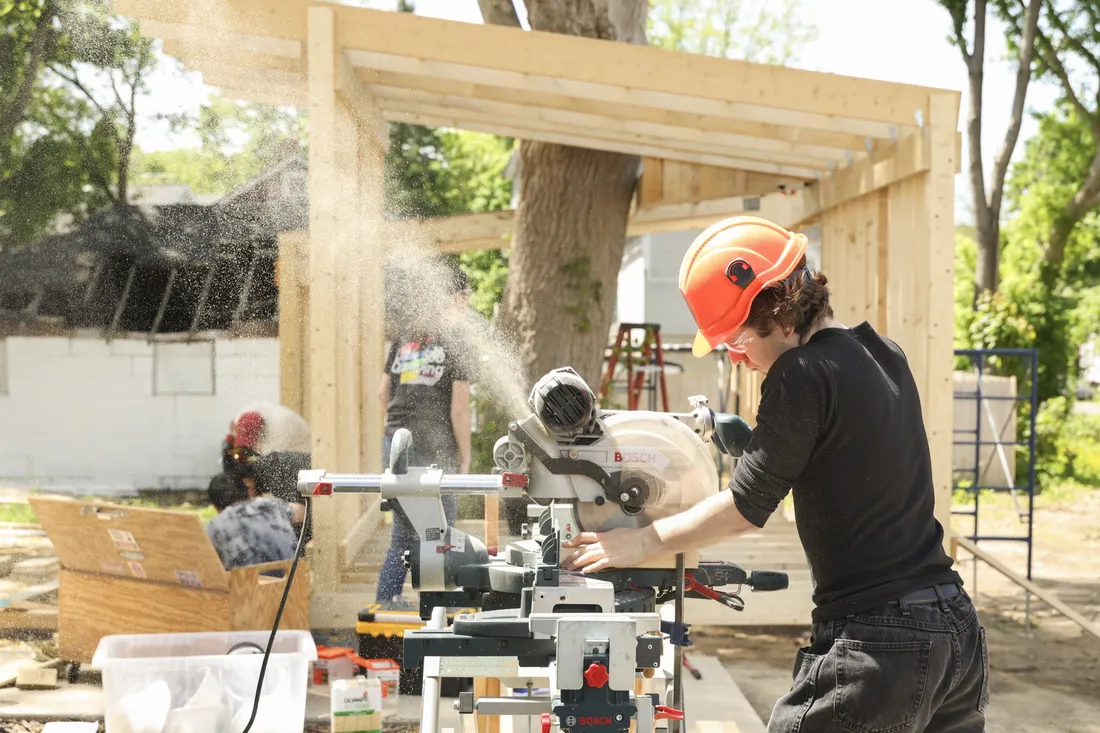
In the Maymester course Syracuse Design-Build, architecture major Kai Sorensen ’28 cuts a board to size during work building a pergola for A Tiny Home for Good, a Syracuse-based nonprofit organization.
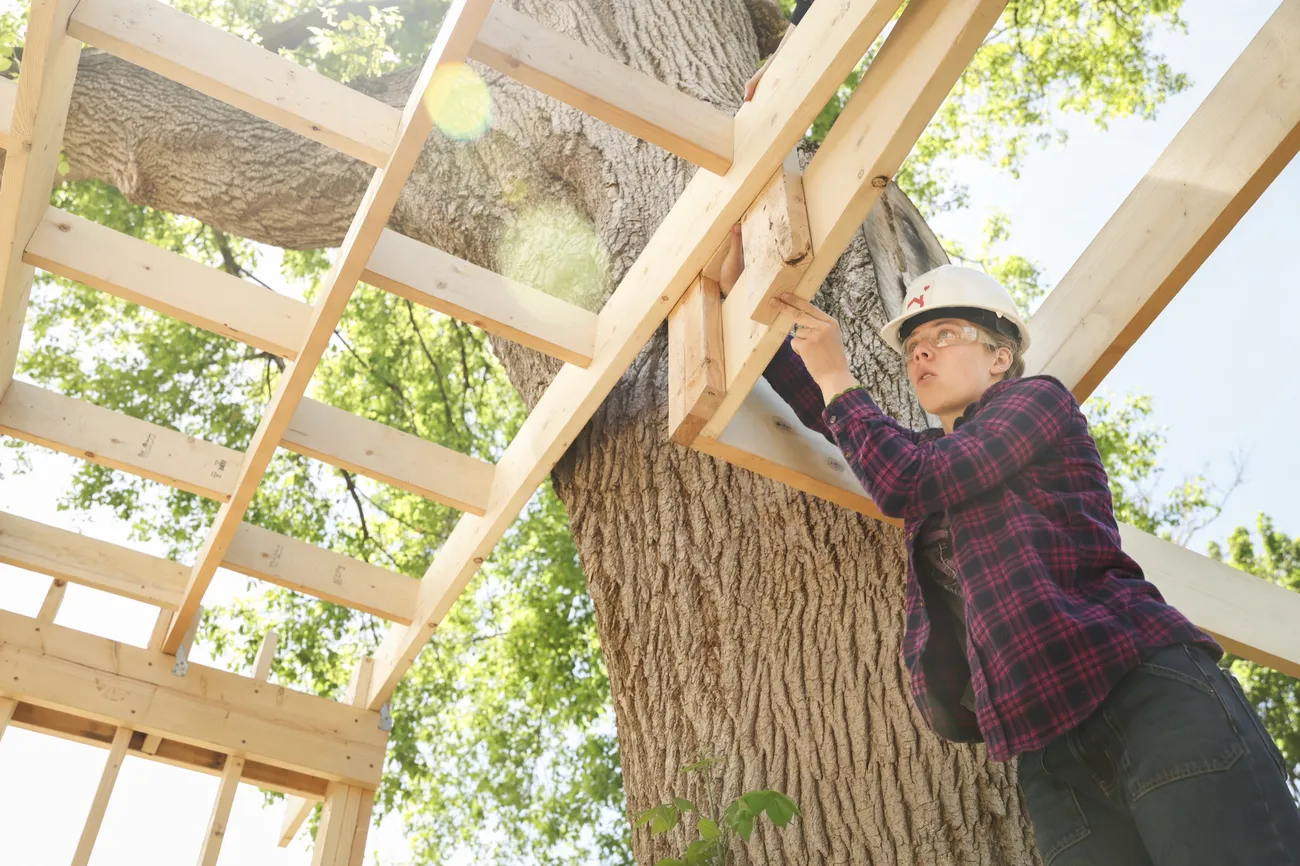
In two weeks, School of Architecture students took an idea from concept to creation, constructing a pergola for A Tiny Home for Good (ATHFG), a Syracuse-based nonprofit that provides housing for people facing homelessness and long-term case management support. “Not only did the students get hands-on experience, but they built something that will be a valuable contribution to an organization that’s doing a lot for the City of Syracuse,” says Hannibal Newsom, assistant professor of architecture who arranged the collaboration through his Maymester course, Syracuse Design-Build.
The wood structure—located in the backyard of a two-family house ATHFG is renovating and next door to its headquarters—will serve as a relaxing gathering spot for the families and ATHFG staff as well as a meeting space. “Looking back at everything we’ve done—we’ve accomplished so much,” Julia Ward G’27 says.
In week one, the students visited the site and met with Andrew Lunetta G’14, ATHFG founder and executive director, and Alex Alois, director of construction and maintenance. Working in teams, they created four scale models and gave presentations to Lunetta and Alois, who provided feedback and selected a final design. After that, the build began with students measuring, sawing, drilling and pounding their way to the finish in week two.
“I was really impressed that the students could take what was very little criteria from my team and come up with unique designs,” Lunetta says. “It was enjoyable working with a group of students who were excited to take exactly what was in our heads, put it on paper and then ultimately in the ground.”
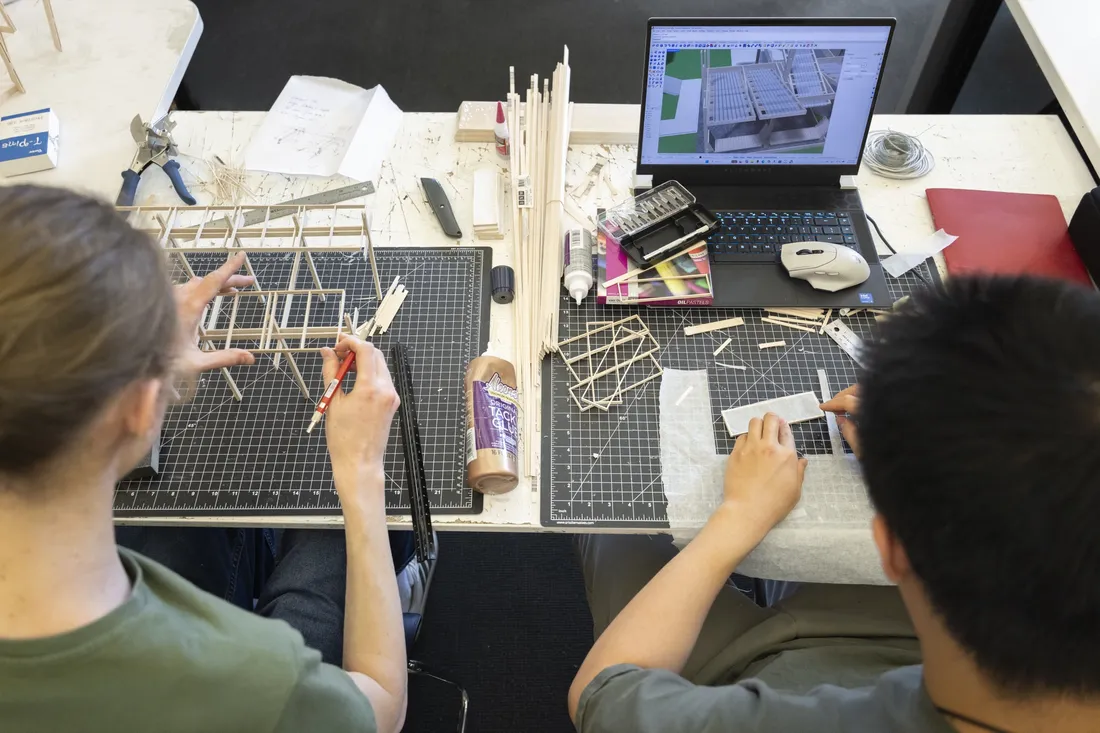
Architecture students work on the designs of their scale models for a pergola.
Selina Yuet Ning Peh ’27 had never worked on a construction project, and she enjoyed collaborating with a client, learning practical skills and sharing the hands-on building with classmates. “Usually, in studio, we’re thinking about how to make something look good,” she says, “but we don’t really think about how it goes together.”
For Landon Li ’29, the class provided a valuable experience, from start to finish. “To see the project come to life is why I really appreciate the course,” he says.
Seeing Seoul
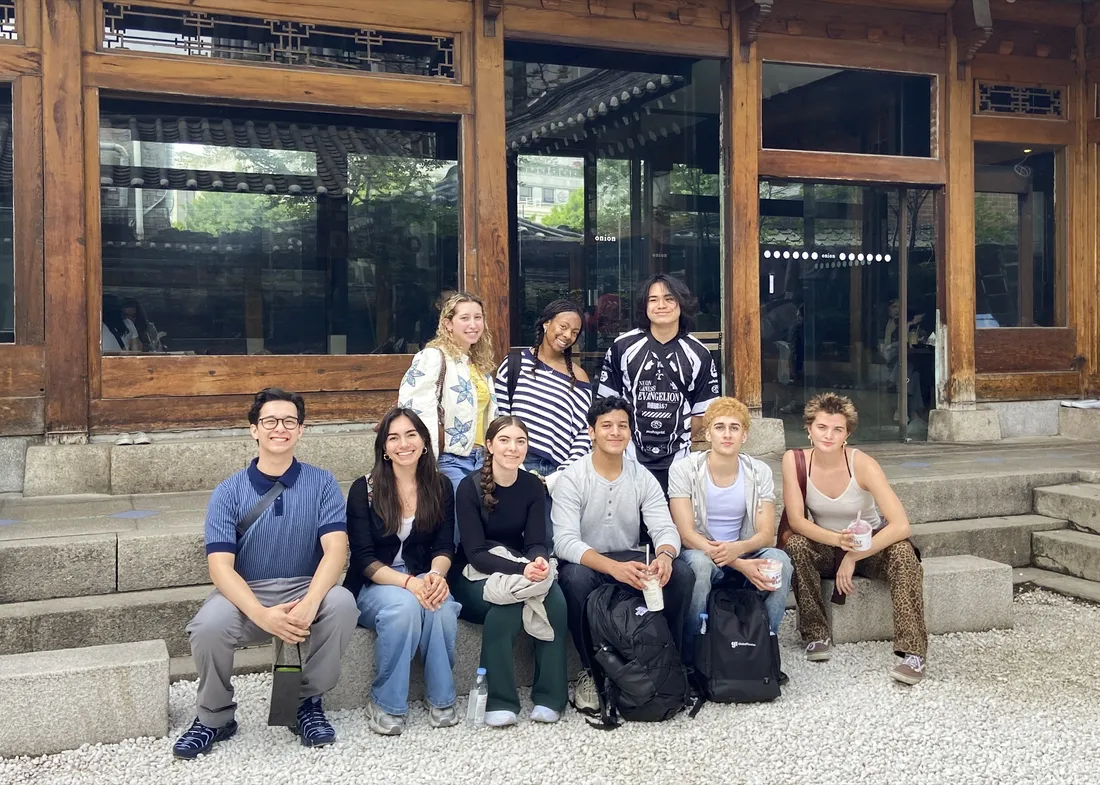
Students in the Maymester course Design-Scape of South Korea gather outside of Onion, a bakery café operating in a repurposed traditional residence.
For the course Design-Scape of South Korea, Seyeon Lee wanted her students to broaden their perspectives and explore how the people of Seoul interact with their surroundings. “Through experiencing Seoul’s historic sites, contemporary architecture, public spaces and everyday urban life, students gain insight into how social, cultural, political and economic forces shape the built environment,” says Lee, a professor in the School of Design at the College of Visual and Performing Arts. “Ultimately, the course is about learning to read environments more thoughtfully while understanding them as lived experiences rather than only formal or aesthetic exercises.”
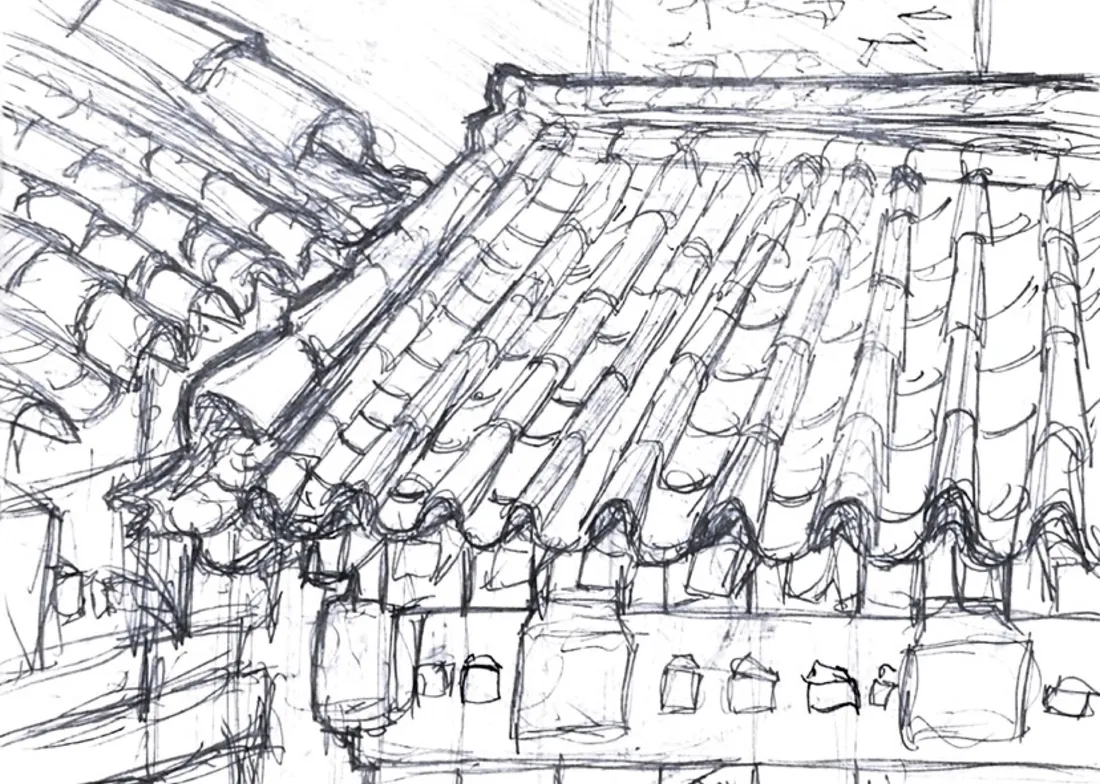
The students documented their observations and reflections in sketchbooks and notebooks and kept daily digital journals featuring photographs and writings that they posted on the course Instagram page. Lee encouraged them to look beyond what they saw and ask themselves, “Why?” Architecture major Aaron Tan ’30 appreciated visiting renowned architectural sites like the Dongdaemun Design Plaza and the Jaeneung Culture Center. “To see something new and pinpoint why it’s calling out to you has been a super helpful learning experience,” he says.
Acting major Sofia Slaman ’27 considered the trip a perfect opportunity to educate herself on unfamiliar topics, and it reinforced her curiosity. “I have been inspired to pay attention to details and to be patient,” she says. “The local scene, such as visiting food markets, has taught me a lot more about what makes Seoul lively.”
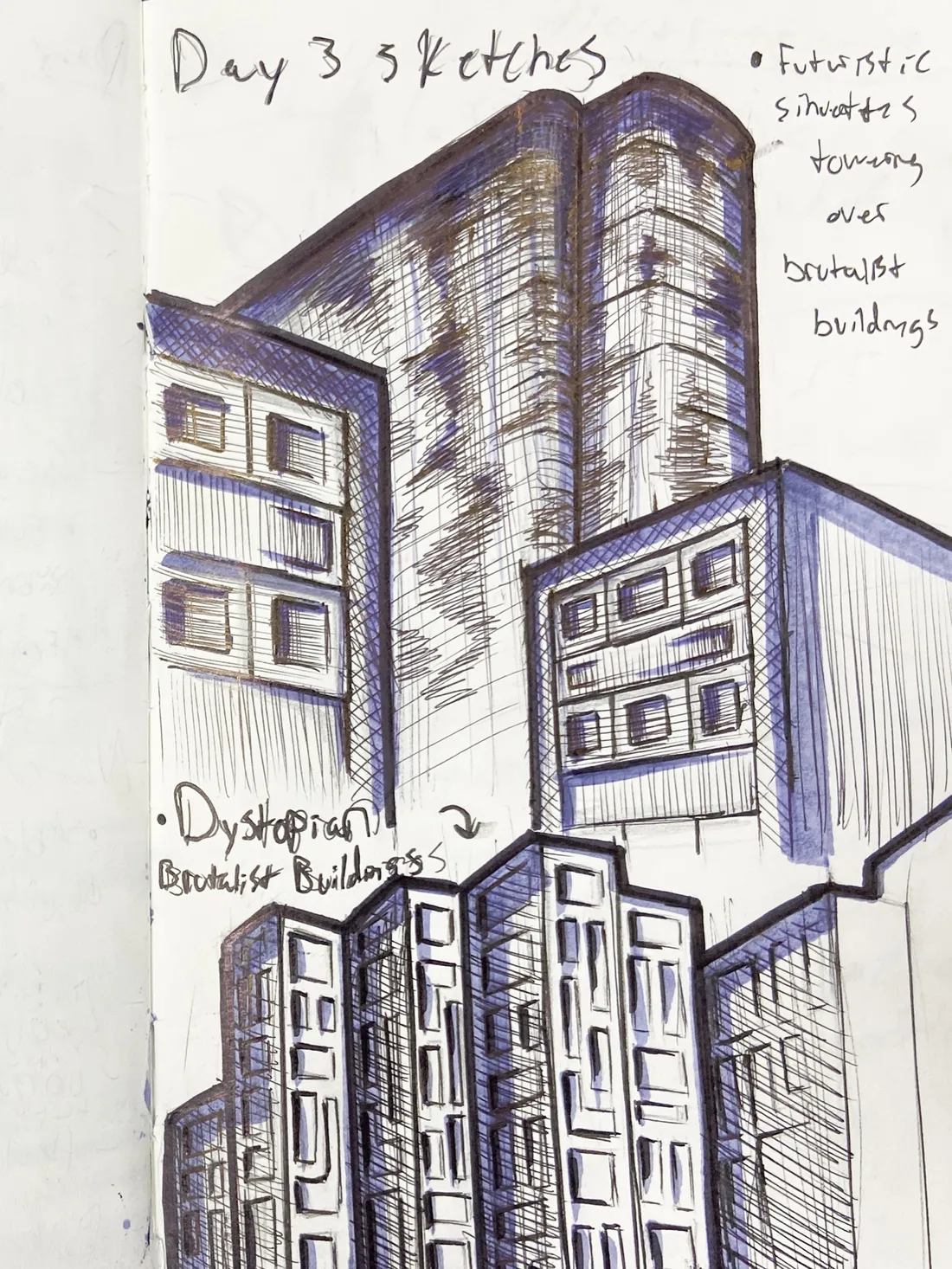
Sketches by illustration major Tommy Lee-Adler ’27 (top) and industrial and interaction design major Devan Carter ’28 (bottom) reflect architecture and design details that caught their interest.
Along with visits to public markets, museums, art galleries, the Demilitarized Zone and Jongmyo Shrine, a UNESCO World Heritage site, students experienced everyday Korean life through evening picnics and bicycle rides along the Han River and by joining thousands of fans at a professional baseball game.
For illustration major Tommy Lee-Adler ’27, the course provided a “super eye-opening” view of the nuances of Korean culture and helped him gain a sense of independence. Keeping a sketchbook enhanced his drawing and storytelling, he says. “I feel as if my drawings have become more alive, and my storytelling has done nothing but improve since I now have more stories to tell.”
Amid all the activities, Lee-Adler says his favorite moments were interacting with others and having conversations with locals. “They gave me such an amazing perspective on life and understanding relationships,” he says. “I really can’t thank them enough.”
Digging Into Polls and Surveys
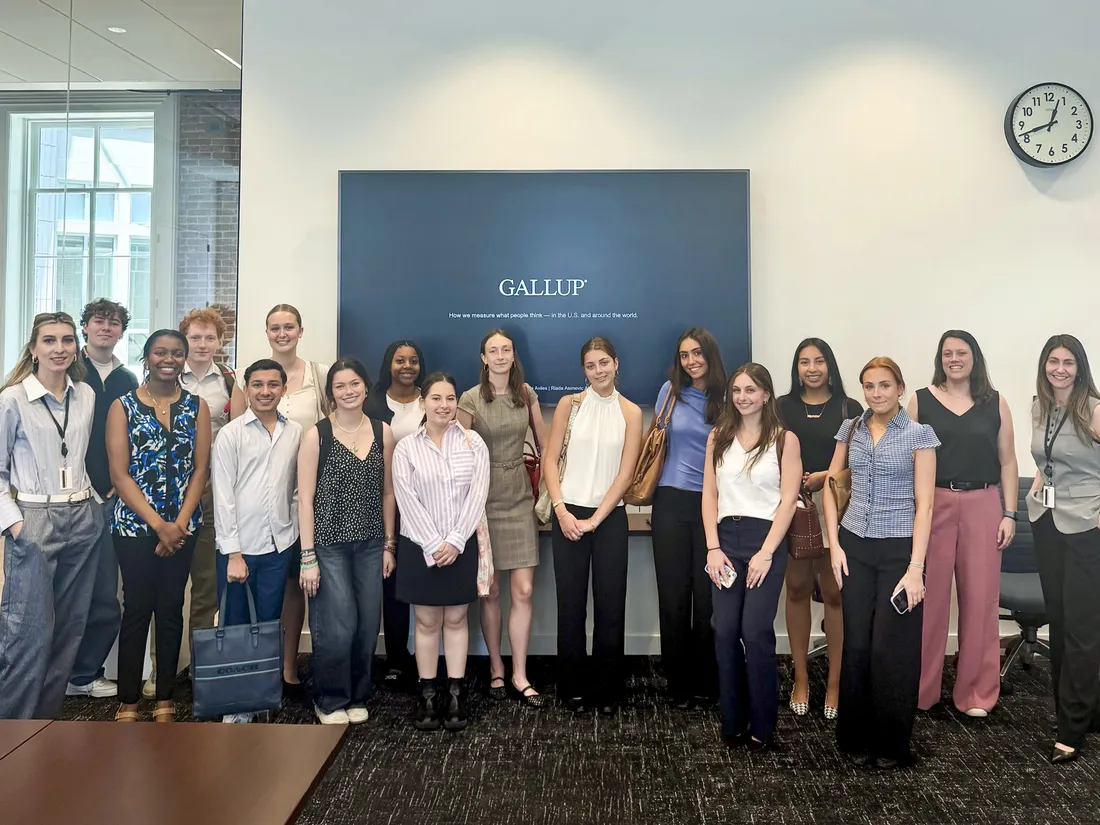
A tour of the research and polling firm Gallup was among the activities that introduced students to how public opinion surveys and polls are designed and measured.
If you’re interested in political journalism, sooner or later you’ll find yourself wading through polls, surveys and election races. “What better opportunity to think about what that coverage looks like than to take a class and dig into all of that with some experts,” says Emily Sydnor, associate professor at the University’s Institute for Democracy, Journalism and Citizenship in Washington, D.C.
Through the S.I. Newhouse School of Public Communications’ Maymester course The Press, Polls and Public Opinion, Sydnor introduced students to a driving force in the political world. With an interest in political reporting and analysis, Harrison McClements ’28 found just what he was looking for. “This class has taken my understanding of polls and public opinion to the next level,” says McClements, a journalism major.
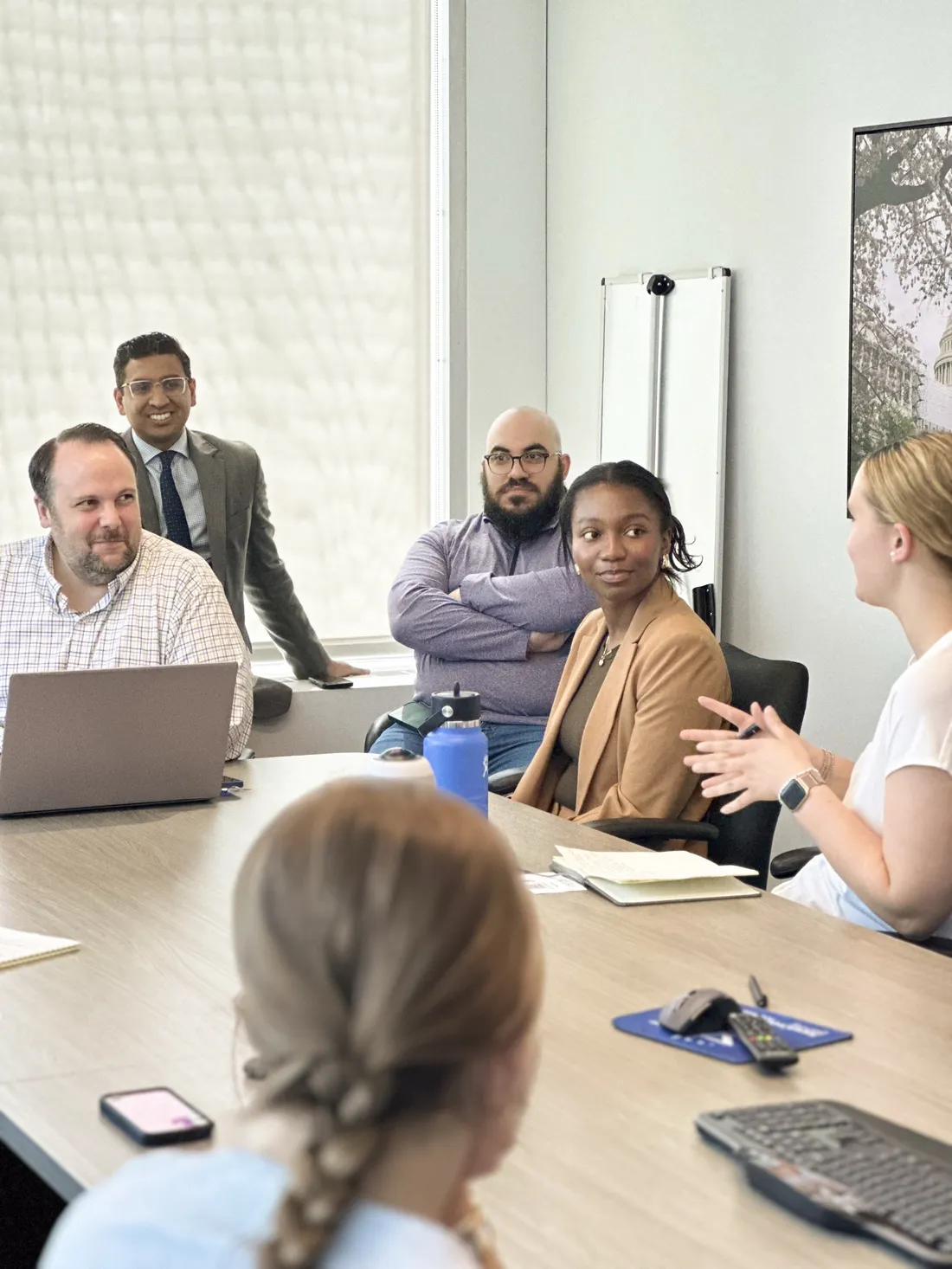
In the Maymester course The Press, Polls and Public Opinion, students ask questions of Nexstar Washington, D.C., Bureau Executive Producer Lenny Smith.
The course offered lectures and discussion on how public opinion is measured through surveys, interviews and focus groups; survey design and bias; and covering public opinion as a journalist. Students visited news organizations and polling and research firms, such as Gallup, toured the U.S. Capitol and other sites, including the National Museum of African American History and Culture.
A visit to the global news organization POLITICO—which included meeting with Education Editor Gloria Gonzalez ’98 and reporter Bianca Quilantan—reinforced for McClements why he wants to be a journalist, giving him insights on a working newsroom and helping him envision his future.
Journalism major Katie Jamroga ’29 cites a visit to the D.C. bureau office of Nexstar Media Group for helping her connect her academic and student media experiences to the daily work of Nexstar reporters. “It was so inspiring to picture myself in their position and remind myself that this is why I want to go into political reporting,” she says.
Exploring Inclusive Education in Italy
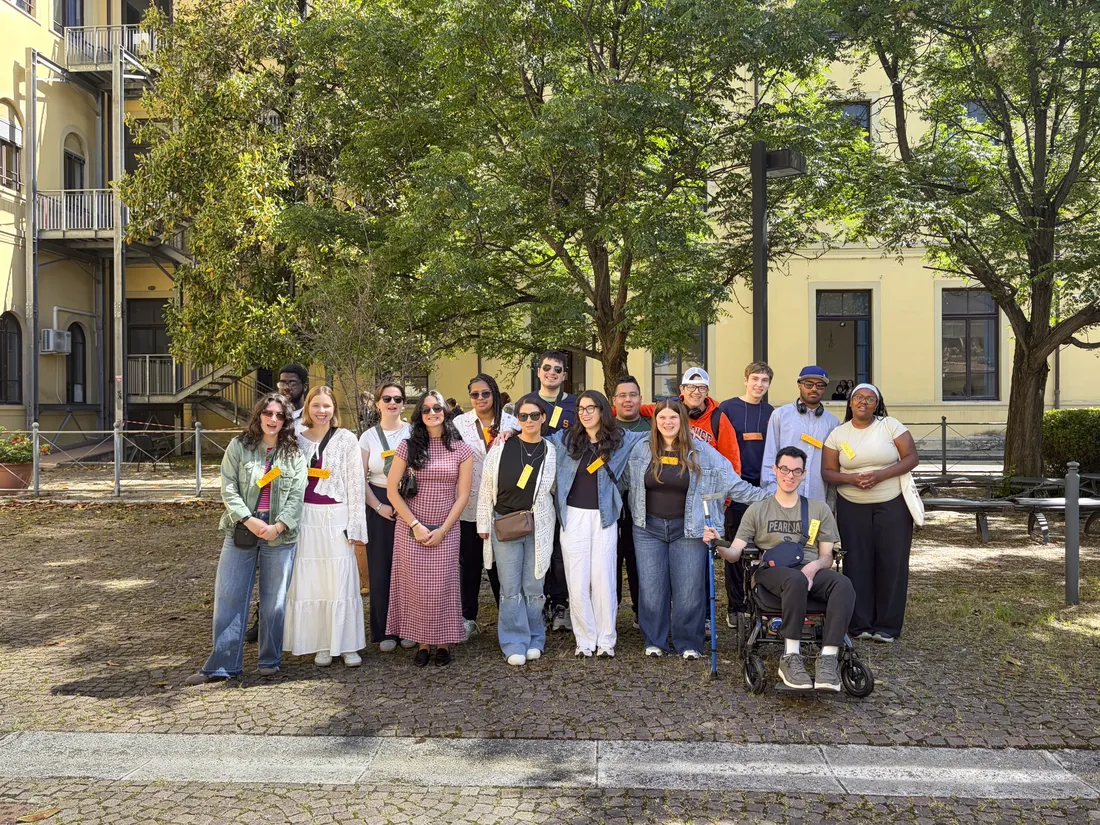
As part of the Maymester course Inclusive Schools and Societies: Lessons from the Italian Context, matriculated and InclusiveU students visited Liceo Statale “G. Pascoli,” an inclusive high school in Florence, where they discussed differences between Italian and American high schools.
In the Maymester course Inclusive Schools and Societies: Lessons from the Italian Context, both matriculated and InclusiveU students journeyed to Italy to learn about the country’s progressive disability, accessibility and inclusion policies and practices in its schools and communities. “The overall goal of the course and study abroad experience is to live inclusion while we learn about it,” says School of Education professor Christine Ashby G’01, G’07, G’08, director of the Center on Disability and Inclusion.
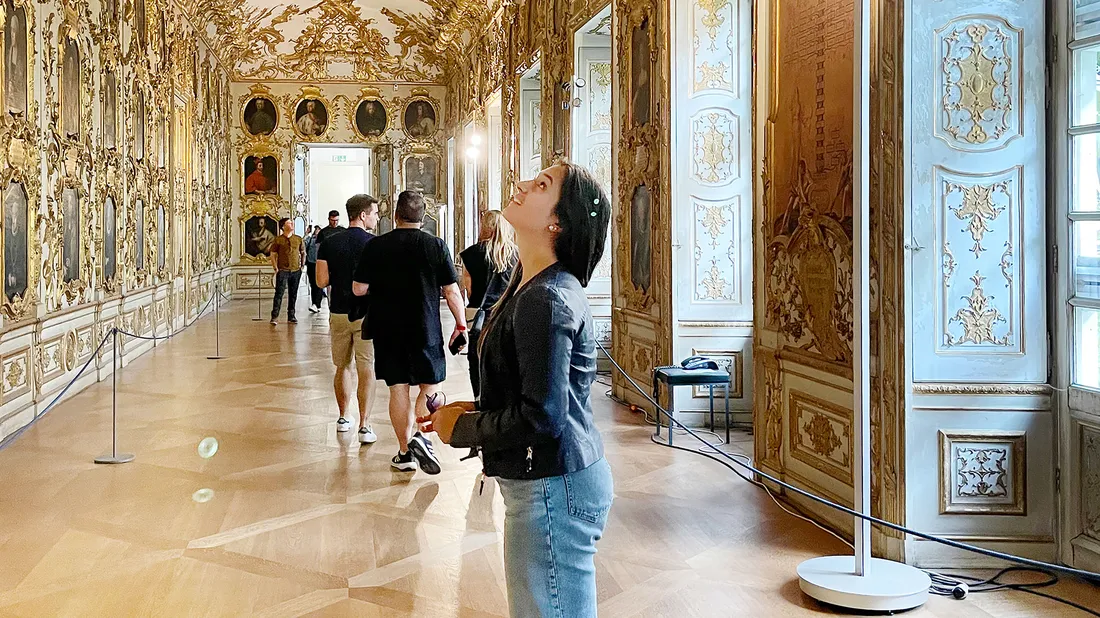
Their travels featured visits to schools, universities, museums and other cultural sites, including Syracuse Abroad headquarters at the Villa Rossa in Florence and the Uffizi Museum, Padua, Venice and Rome, with tours of the Colosseum and Forum. “This was a lifetime opportunity,” says InclusiveU student Nicolas Sorrentino ’29, who is specializing in disability studies.
Along with taking language lessons and enjoying the cuisine, the students found inspiration for the future. Inclusive childhood education major Bella Cecchinelli ’29 embraced the opportunity to study Italy’s policies, observe in the schools and draw comparisons with the U.S. system and understand change is possible.
“This course has helped me learn a lot about different models of inclusion, but also what it means to truly live inclusively,” they say. “Observing the classroom has helped me establish the importance of a community that has a common goal to help one another succeed. I hope to create this community atmosphere within my classroom.”