- Syracuse University offers resources for students to seek employment in a variety of roles across campus.
- Student workers gain life skills that transfer to future roles and careers, all while earning income.
- Through peer-to-peer support, student workers play a key role in maintaining a supportive campus community.
Abby Zhang ’29 still remembers the student who helped her on her first day at Syracuse University.
“The front desk worker was so welcoming to me and my family and helped us get situated,” she says. “They shared their favorite parts of campus and gave some tips and tricks, which made everything feel way less overwhelming. It gave me a really strong sense of community right from the start.”
Each year, about 6,500 students work across campus through ’Cuse Works. These roles span dining services, residence halls, libraries, technology support and creative studios. Students earn income and gain professional experience, but they also become part of something larger—a network of shared knowledge and support that helps the University run day to day.
Support, Served Daily
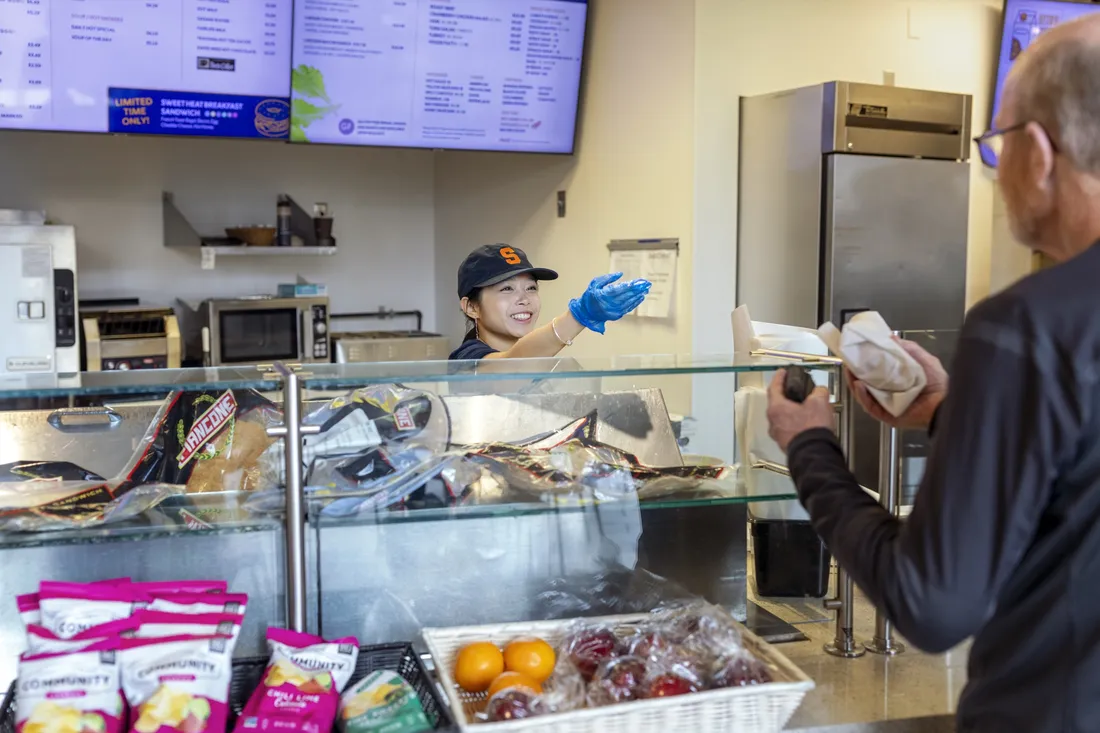
Abby Zhang ’29 serves a customer at the Life Sciences Café, where the fast-paced environment is helping prepare her for a career in accounting.
Holding multiple positions on campus, Zhang has followed in the footsteps of that student who helped her on day one. She works at the front desk in the residence halls and for dining services at the Life Sciences Café. Each shift brings interactions with students navigating busy schedules and an opportunity to pass on a sense of comfort—peer to peer.
An accounting major in the Martin J. Whitman School of Management, Zhang relates to the students who rush into the café between classes. She works quickly to get them the sandwich or smoothie that will fuel the rest of their day.
“I have been in the exact situation with back-to-back classes and no time to eat,” Zhang explains, “so I know how much those meals mean to them.”
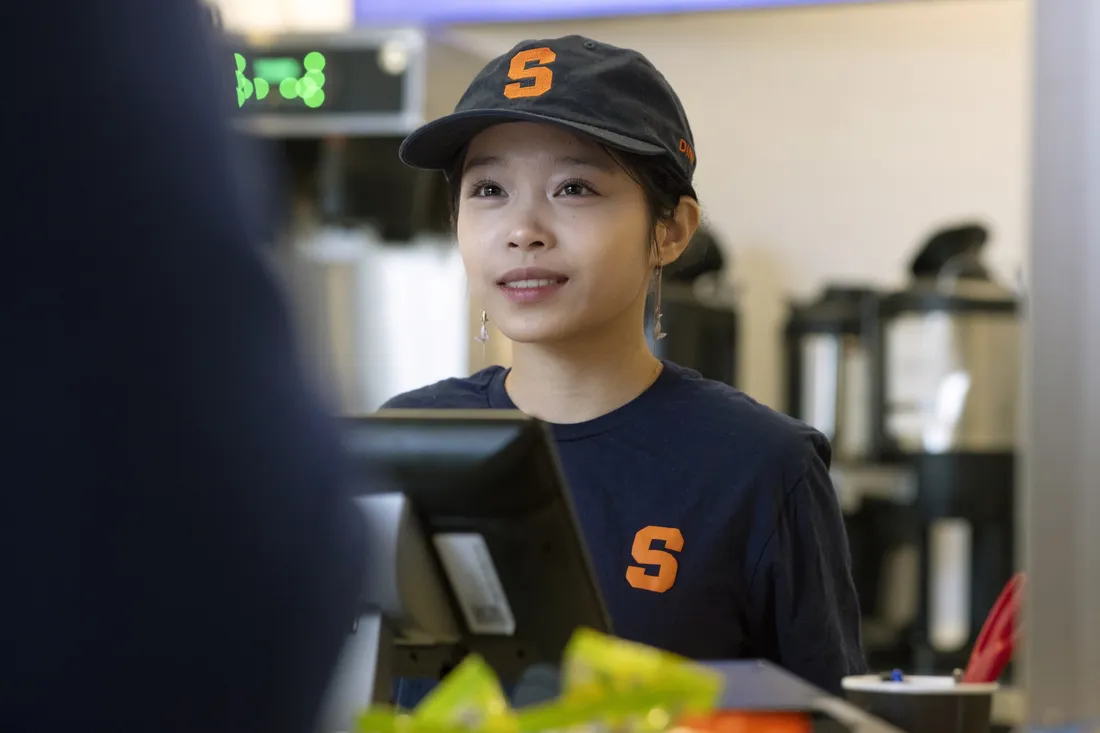
Zhang works in both dining services and the residence halls. Students can find campus job openings by logging into Handshake and searching “on campus” or “Cuse Works” for Federal Work-Study and non-Federal Work-Study roles.
At the café, the pace can shift quickly from quiet to hectic.
“I’ve had to learn how to think quickly on my feet,” Zhang says. “Things can get really busy and chaotic, and you have to handle multiple things at once. If you mess up an order, you don’t have time to panic—you just fix it and keep moving.”
That mindset connects directly to her academic and career path. “I know I am going to be in situations where things are high stakes and fast paced, especially at bigger firms,” she says. “Being able to stay calm and problem solve in the moment is definitely going to help me in the future.”
Help Is on the Way
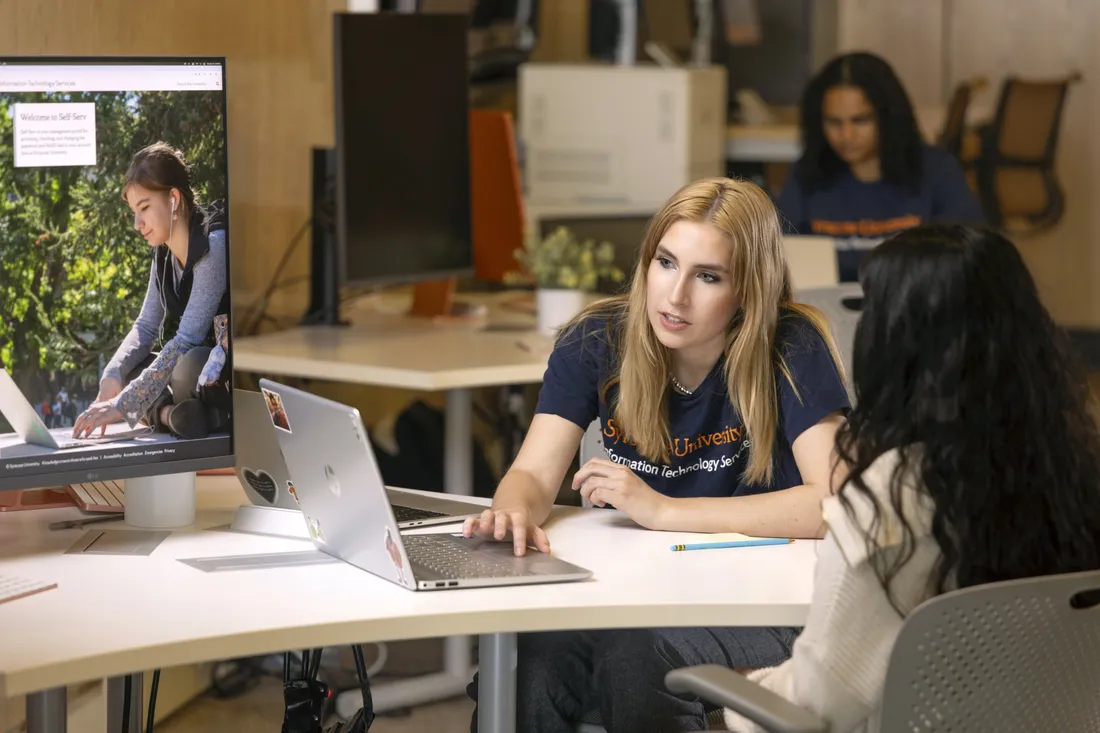
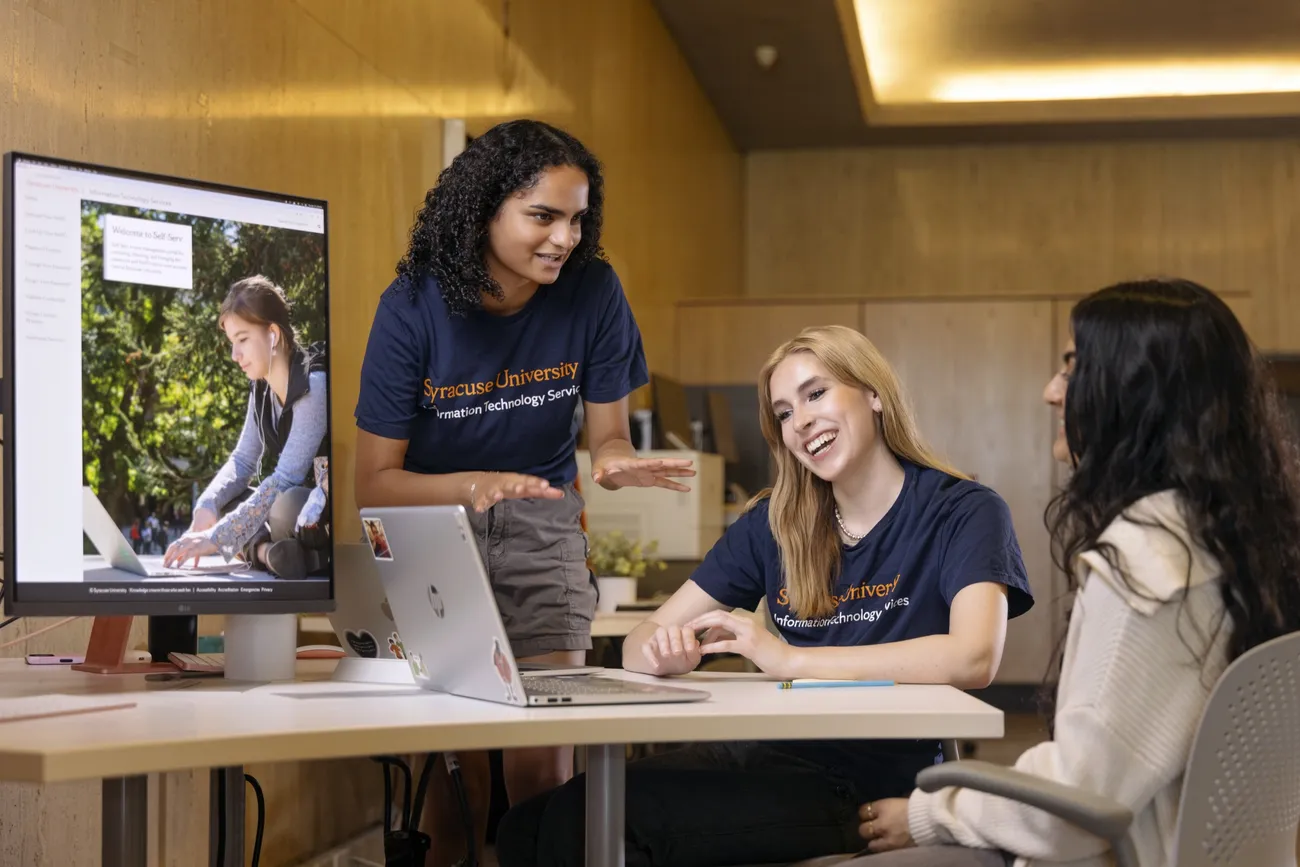
As a student consultant at the ITS Service Center, Ruby Dainesi ’27 walks clients through each step of solving a problem so they not only fix the issue, but understand it.
When a student walked into Syracuse’s Information Technology Services (ITS) center after falling for a phishing scam, they were overwhelmed. They had lost access to their accounts and didn’t know what to do next.
Ruby Dainesi ’27, an information management and technology major and student consultant at ITS, stepped in to help.
“I worked with them on resecuring their account and made sure to comfort them throughout the whole process,” Dainesi says. “The student seemed very relieved to regain access and promised to be careful when clicking suspicious links. I always find it really gratifying when a previously stressed student leaves with relief and a smile—it means I have done my job beyond just solving the technology problem.”
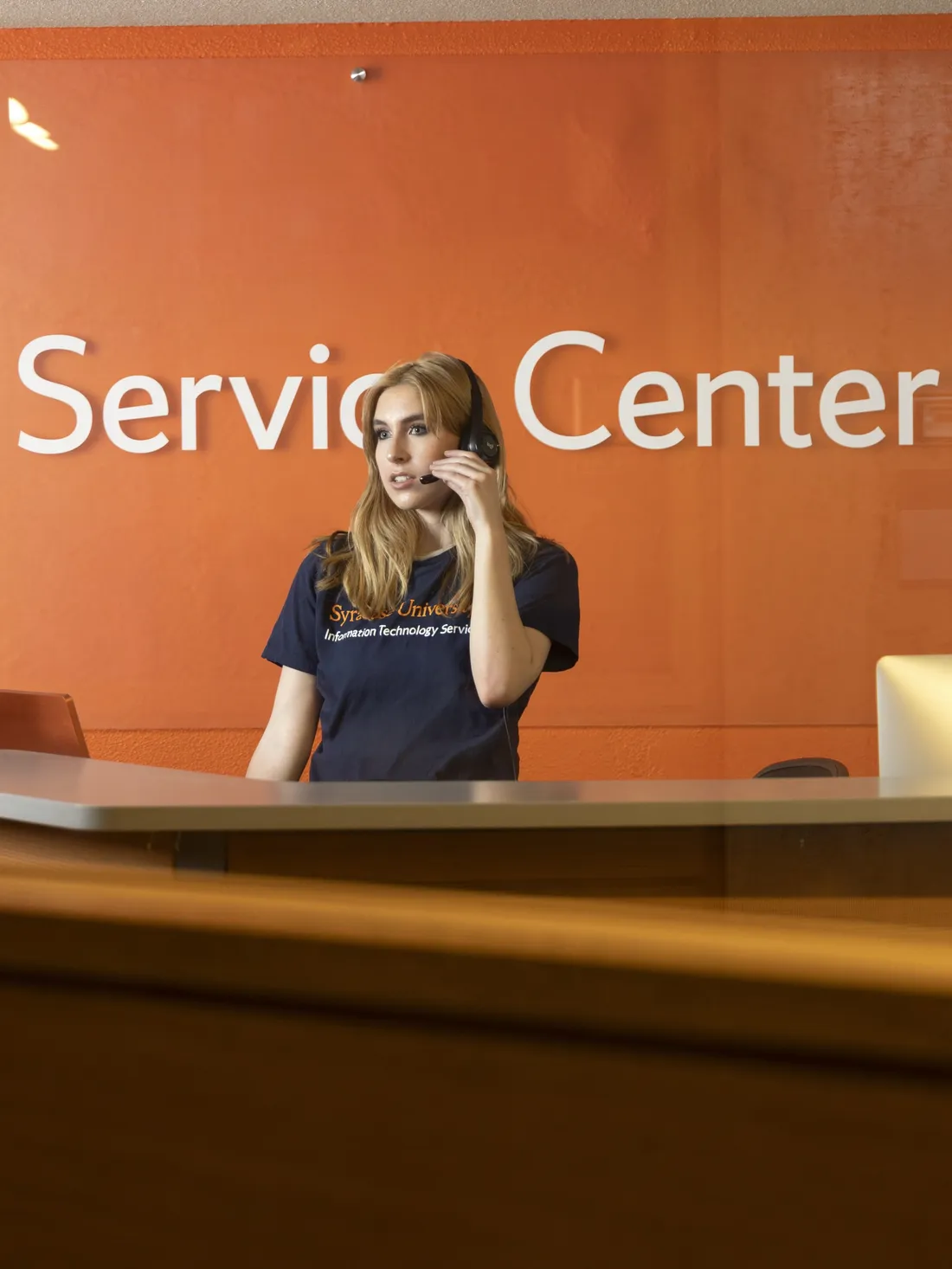
Dainesi takes a support call during her shift. Her work experience has helped her secure three professional internships.
Dainesi’s work includes troubleshooting password issues, multifactor authentication, Microsoft 365 access and classroom technology. Just as often, her role becomes instructional. She walks students through each step, so they not only solve the issue, but also understand it.
“I have secured internships over my last three summers due in part to companies being very impressed with my student employment experience,” she says.
Beyond technical troubleshooting, she has learned how to communicate under pressure, document issues clearly and solve problems with both precision and patience. The role has shaped how she approaches her academic interests in data analytics and cybersecurity.
“This job is preparing me not just with technical skills, but also with the ability to interact with clients in a professional manner,” Dainesi says. “I’ve learned how to ask questions, identify and replicate issues, and then solve them while informing and reassuring the client.”
Campos Connector
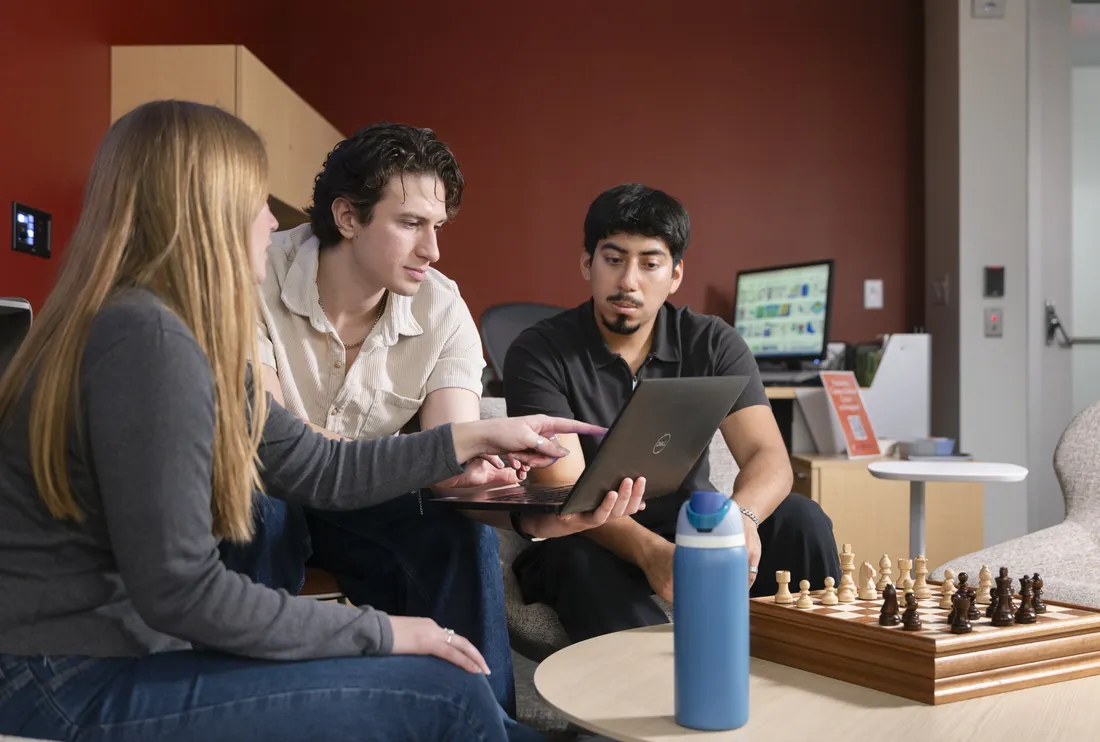
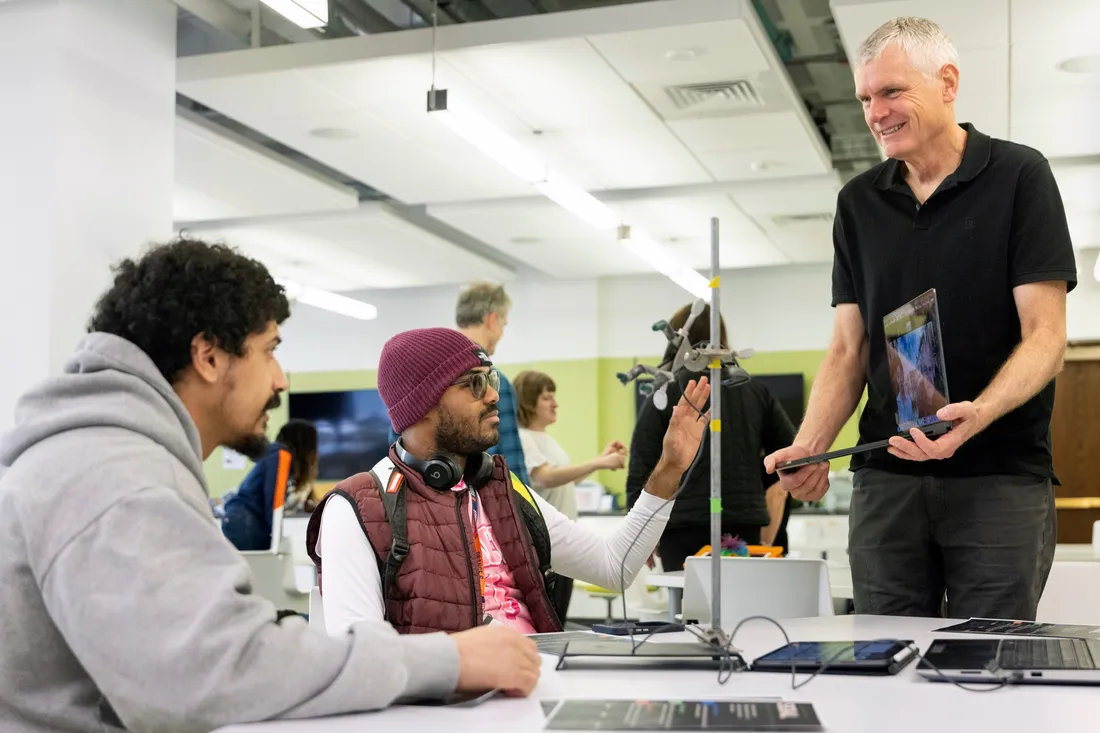
Christopher Prestia ’26 (middle) chats with peers at the Campos Student Center, a space in the College of Engineering and Computer Science where students can relax and connect.
For Christopher Prestia ’26, an aerospace engineering major and fellow at the Campos Student Center, the work begins with a smile.
“This place is a safe haven for the majority of us,” Prestia says. The Campos Student Center—housed on the second floor of the Center for Science and Technology—is a space in the College of Engineering and Computer Science where students can relax between classes, study, collaborate and find a sense of belonging.
“If you come in, you will always be guaranteed a smile,” Prestia says, “—and free coffee.”
No other role has allowed me to gain a better understanding of the student and human experience than working at the Campos Center.
Christopher Prestia ’26
When Prestia was a first-year student, an upperclassman introduced him to the Society of Hispanic Professional Engineers (SHPE), an organization in which he later held leadership positions. He remembers the impact that community had on him and now works to create similar connections for others.
“The majority of STEM work is very technical and difficult,” Prestia explains. “Finding people within the same major is almost imperative, and it’s a lot easier to find that community at the Campos Center.”
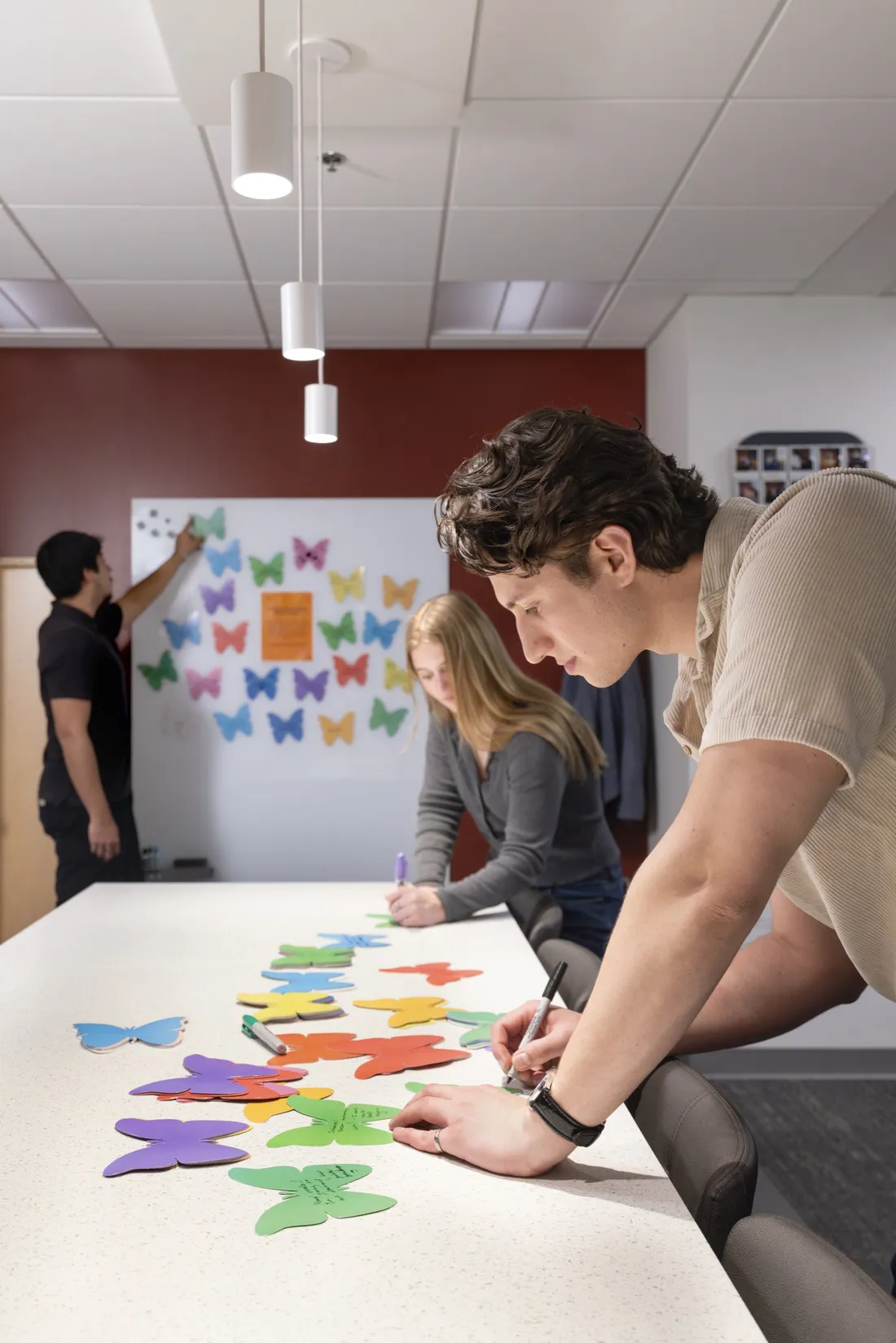
Prestia helps make the Campos Student Center a welcoming space for all.
During one shift, Prestia recalls casually talking to an international student about SHPE. “He decided to come to one of our events, and now he is going to have an executive board position next academic year—I’m glad to say I was the one who introduced him to the organization.”
After graduating this spring, Prestia has a full-time position lined up as a manufacturing engineer—though his long-term goal is to move to Europe and work in the defense industry.
“What’s most fulfilling to me personally is gaining perspective and seeing different ways people live,” Prestia says.
His campus job—greeting students, building connections and lending a listening ear—has helped shape that perspective. “No other role has allowed me to gain a better understanding of the student and human experience than working at the Campos Center,” Prestia says.