Do you know where your water comes from?
Do you know where it goes?
For residents of Central New York, the answer to the first question is clear: Skaneateles Lake, one of the world’s cleanest, most pristine bodies of water, located some 20 miles southwest of Syracuse University.
“Skaneateles provides unfiltered drinking water to more than 220,000 people in the region,” says Charles T. Driscoll, a faculty member of the College of Engineering and Computer Science (ECS).
The answer to the second question is murky. Few realize that most of the area’s treated wastewater is discharged into Onondaga Lake on the northern tip of the City of Syracuse. From there, it flows into the Seneca and Oswego rivers before reaching Lake Ontario.
Monitoring this weeklong journey is the work of Driscoll, the University Professor of Environmental Systems and the Distinguished Professor of Civil and Environmental Engineering. He’s part of an interdisciplinary team of researchers in ECS’ Center for Environmental Systems Engineering (CESE) studying the interplay of natural and human systems.
CESE combines geophysical modeling with field experiments and measurements to track the associated effects of climate change. It also examines land, air and water disturbances on different ecosystems.
“I’m concerned about the damaging effects of acid rain, mercury contamination and excessive amounts of nitrogen and phosphorus on ecosystems,” says Driscoll, whose research extends to the Huntington Forest in New York’s Adirondack Park and the Hubbard Brook Experimental Forest in New Hampshire. “The slightest disturbance can set off a chain reaction affecting the rest of the environment.”
A Tapestry of Resilience
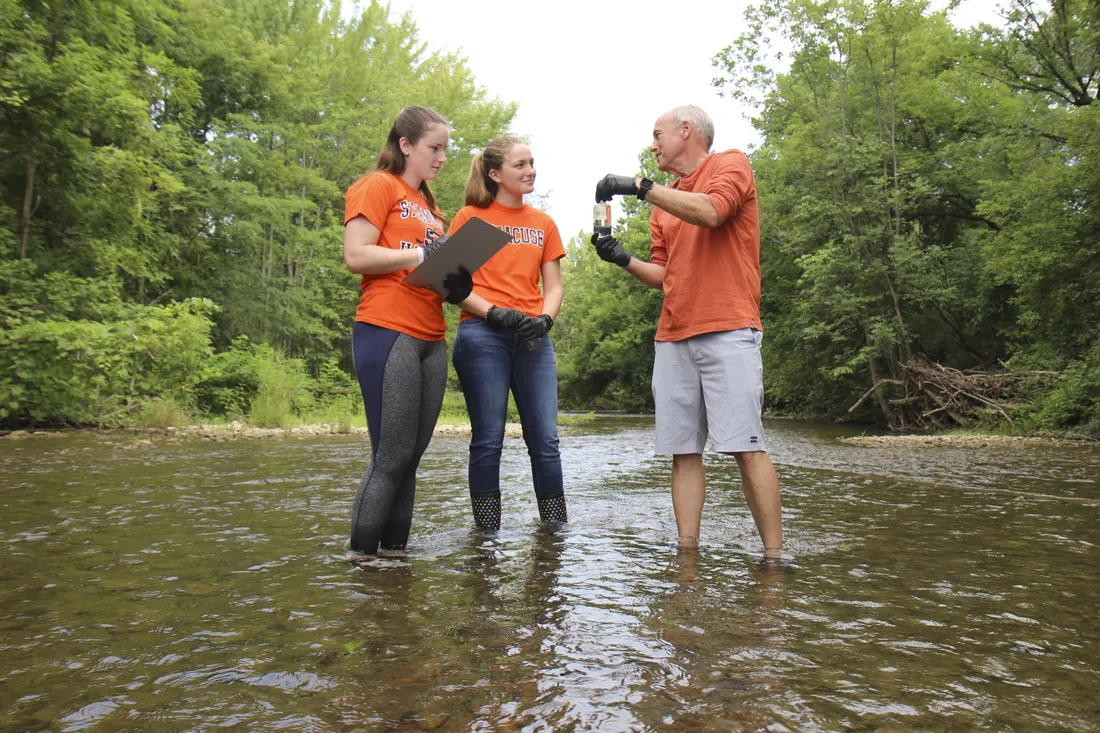
Charles T. Driscoll, the University Professor of Environmental Systems and the Distinguished Professor of Civil and Environmental Engineering, studies the interplay of natural and human systems.
Every drop of water has a story, from ancient rainfall locked in glaciers to modern pollutants carried through storm drains. Syracuse researchers unravel these experiences, which make up the water cycle, to weave a more resilient future.
While water lasts in the atmosphere for eight or nine days, it remains in oceans for thousands of years. Still, less than 1% of the world’s total water is available for human use.
For this reason, the movement and distribution of water, a phenomenon known as variability, is important to researchers. Members of ECS and the College of Arts and Sciences focus on the ecological aspects of variability—the interplay between water and climate—to understand why some global regions are plagued by drought and others by flooding.
“Rising temperatures cause evaporation to speed up, making the water cycle happen faster,” Driscoll says. “Variability is dictated by where you live and how you use your water, be it for commercial, industrial or agricultural purposes.”
A Geological Approach
Whereas CESE brings an engineering sensibility to water research, the Department of Earth and Environmental Sciences (EES) in Arts and Sciences takes a geological approach.
EES professor Christopher Scholz collects and analyzes lake sediments to reconstruct environmental changes over time. His work yields important clues about future climate change, like air temperatures, sea levels and weather patterns.
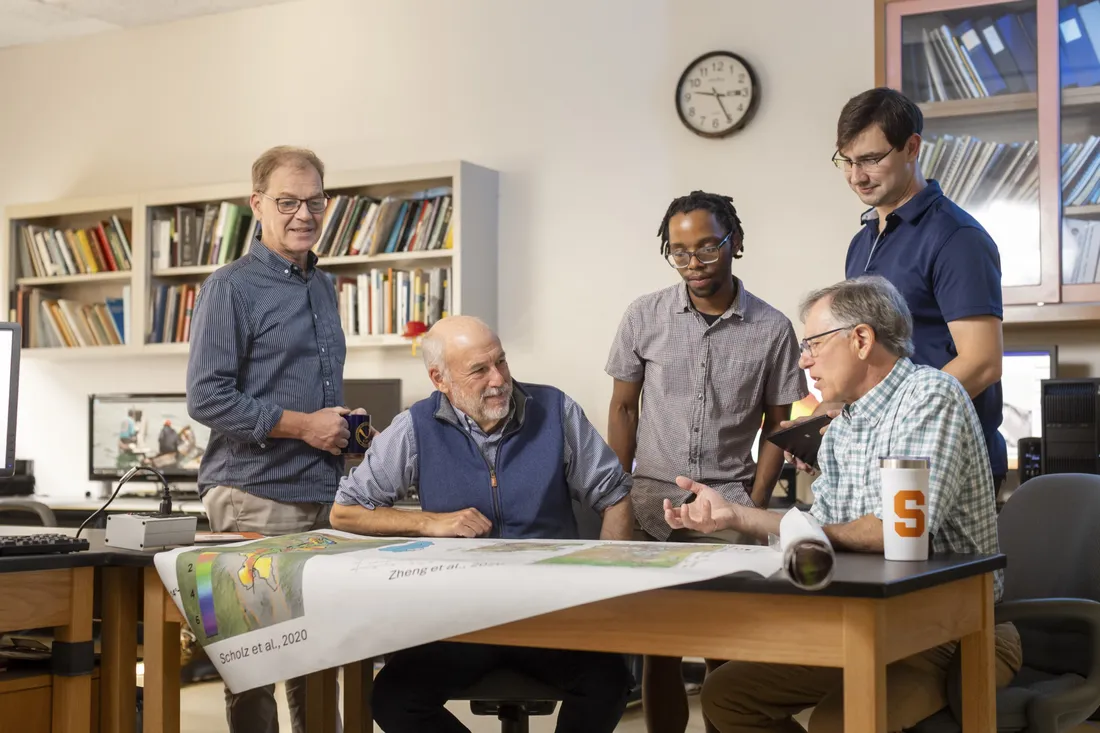
Christopher Scholz (bottom right), professor of Earth and environmental sciences (EES), with members of the Skaneateles Lake mapping project. He also leads research efforts in the lakes of Africa’s Great Rift Valley.
Scholz is known for his research into the lakes of Africa’s Great Rift Valley, including Lake Malawi, one of the oldest, largest and deepest bodies of freshwater in the world.
Today, Malawi is a half mile deep and almost twice the size of Lake Ontario. More than 150,000 years ago, it was only a few hundred feet deep and considerably smaller.
“Our drill cores show that Malawi has changed 24 times over the past 1.4 million years,” says Scholz, noting that the slightest shift in air temperature can alter Malawi’s temperature, volume, depth and water quality. “Subsistence farmers along the shoreline are at the mercy of their environment.”
An Understudied Process
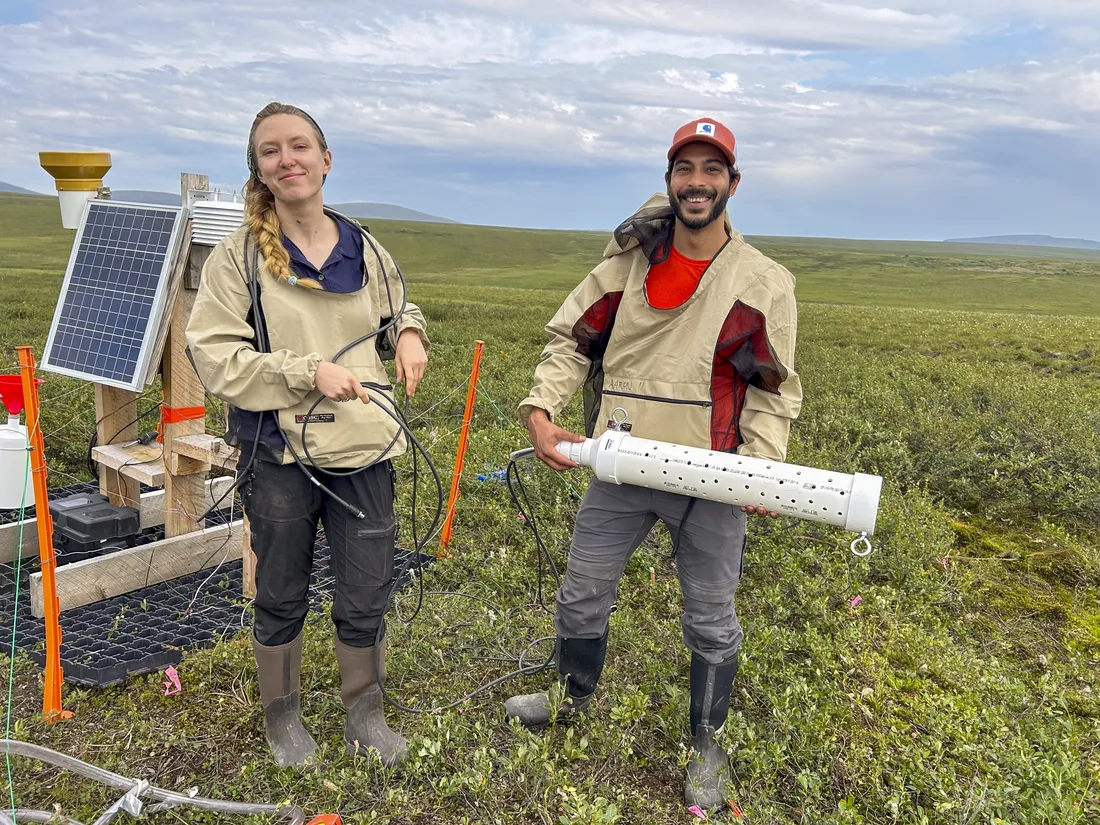
Assistant professor Aaron Mohammed studies permafrost thaw in Alaska. He says that excessive snowmelt often leads to flooding, which causes erosion, infrastructure damage and water contamination.
By contrast, EES professors Aaron Mohammed and Sam Tuttle investigate water cycle variability in cold regions.
Mohammed, who tracks permafrost thaw in Alaska, says that warming trends have caused this frozen layer of ground to disappear at an alarming rate. Excessive snowmelts often lead to flooding, resulting in erosion, infrastructure damage and water contamination.
“Rivers are turning orange because of the release of heavy metals trapped beneath Earth’s surface,” continues Mohammed, who’s also affiliated with ECS. “This ‘rusting’ harms drinking water, food security and wildlife habitats.”
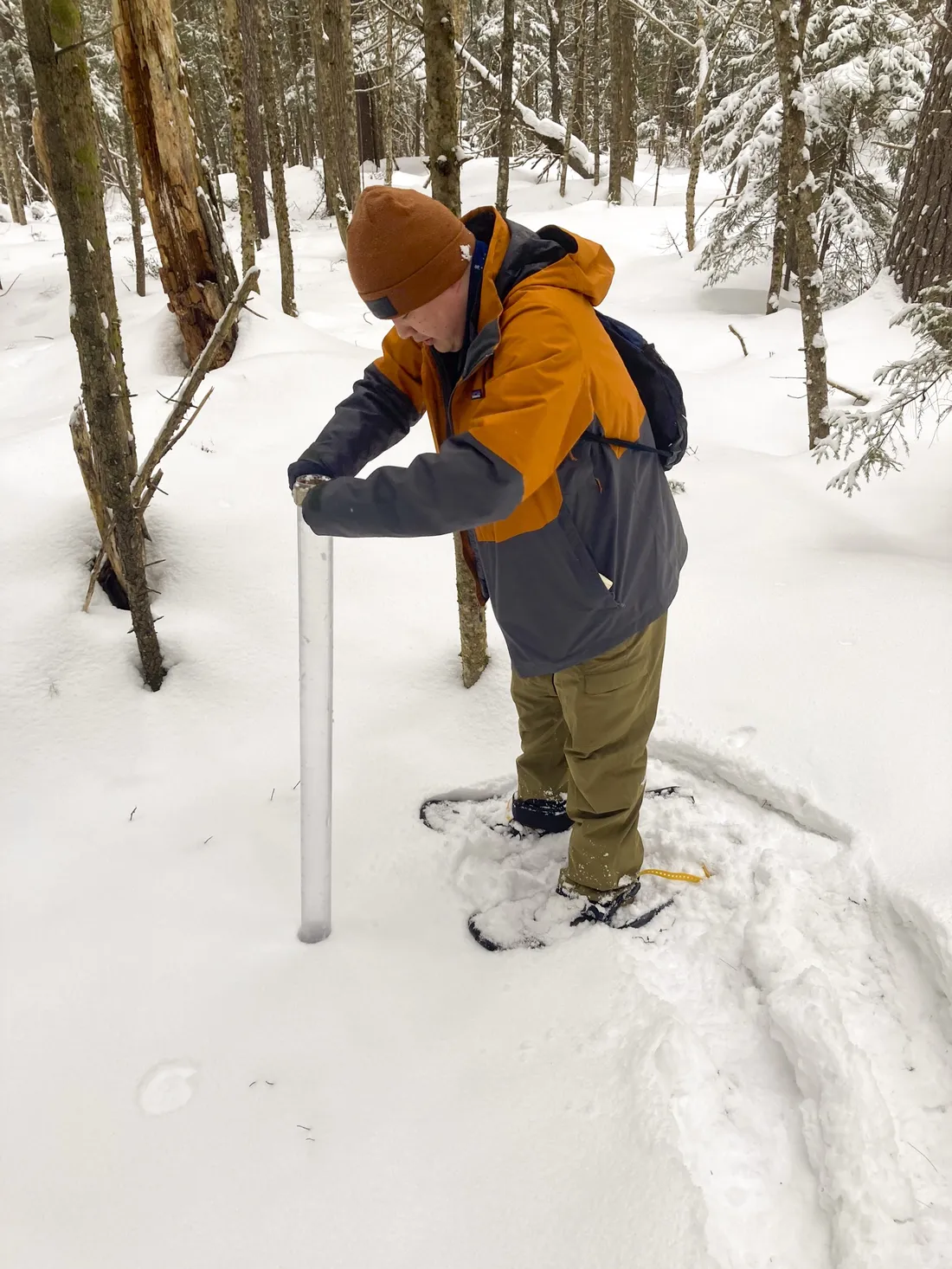
“Snowmelt is a crucial, understudied process,” says assistant professor Sam Tuttle, noting that too little snowmelt can trigger water shortages and ecosystem disruptions.
Likewise, too little snowmelt can lead to water shortages and ecosystem disruptions.
Tuttle monitors high-altitude snowpacks, like those in central Montana, which have been declining for the past 60 years. His team utilizes satellites to gather snow and moisture data as well as drones to measure the spatial and temporal viability of snowpacks.
They also use cosmic and gamma ray sensing techniques to study the water content of snow.
“Snowmelt is a crucial, understudied process,” Tuttle says. “Our techniques enable us to analyze snowpacks in a continuous, noninvasive way.”
Glimpsing the Unimaginable
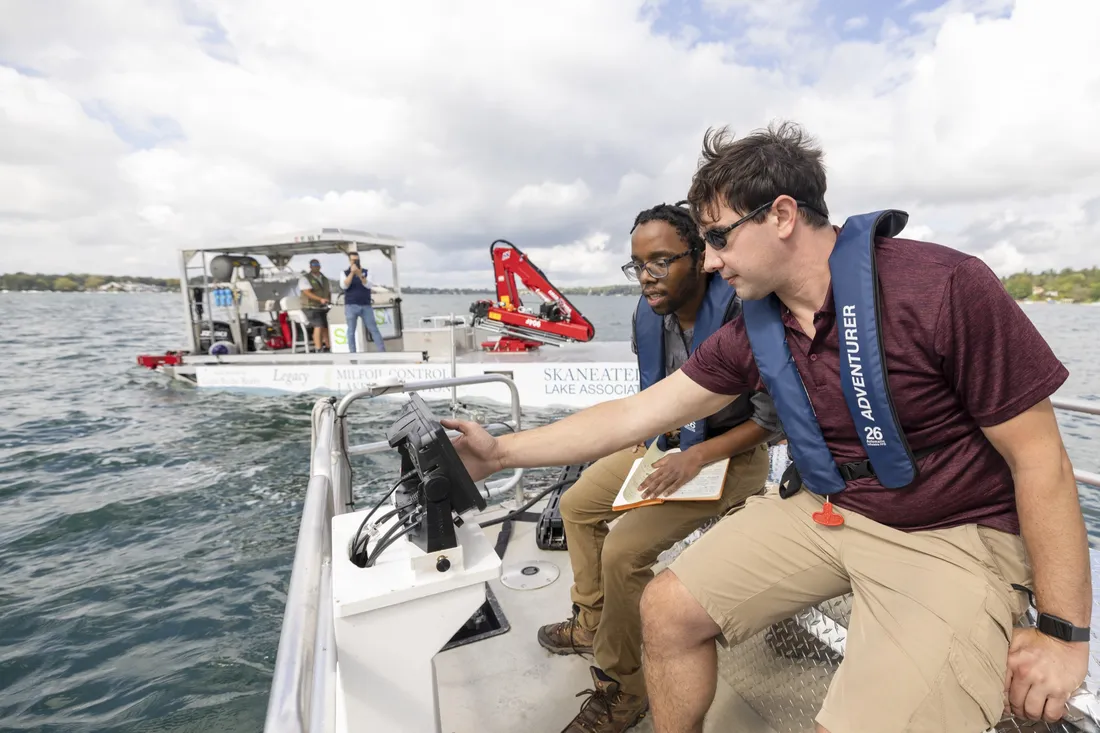
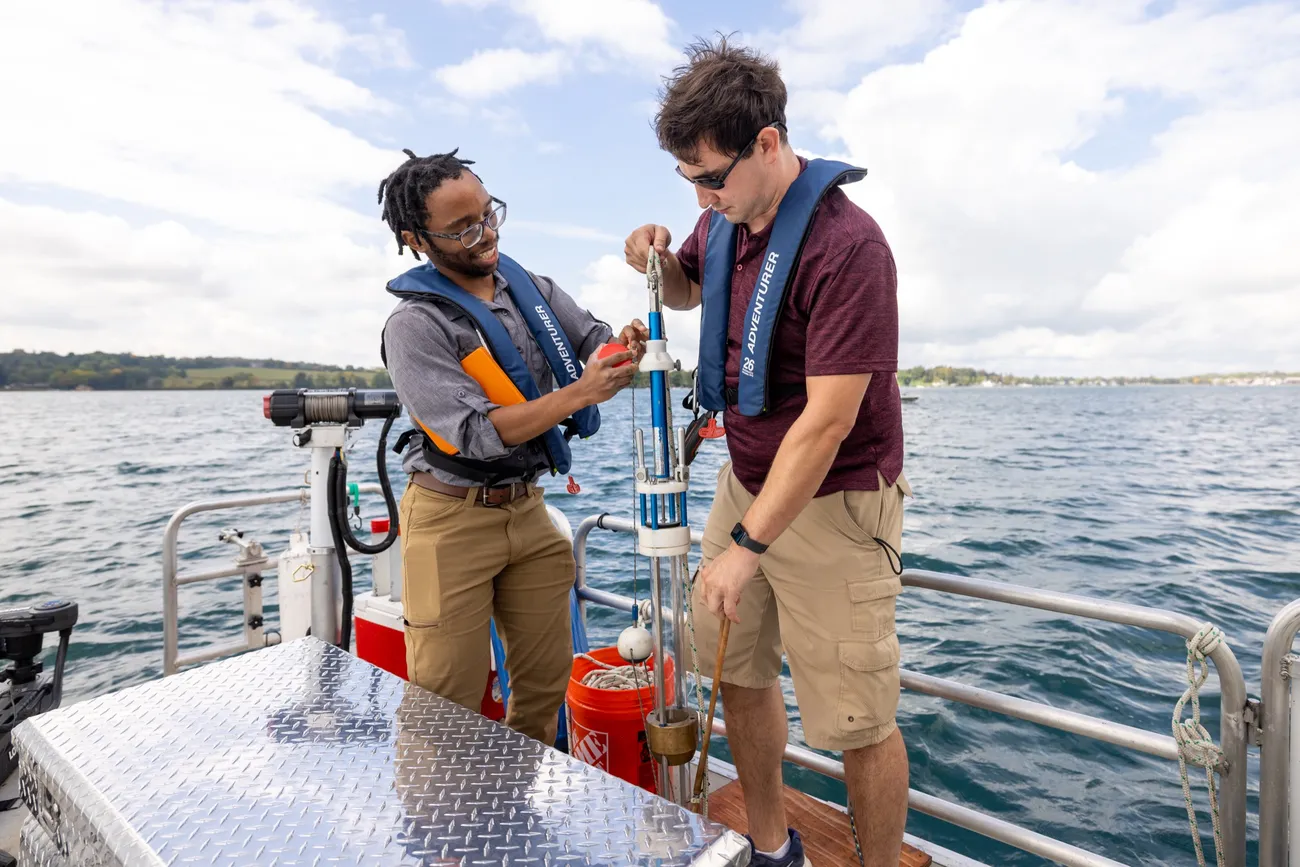
Students monitor Harmful Algal Blooms (HABs) on Skaneateles Lake in Central New York. Driven by nutrient pollution and warm temperatures, HABs negatively impact local ecosystems.
Technology reveals the unimaginable—from water’s invisible threats to its complex, physical and chemical properties. Tao Wen, assistant professor of EES, examines water and carbon cycles, the latter of which helps regulate Earth’s temperature. Excessive carbon, he warns, can lead to ocean acidification, flooding, heatwaves and wildfires.
He’s assisted by Ph.D. student Zanchenling Wang, who writes code to predict rock weathering and utilizes machine learning to track the behavior of solutes, like salt and nutrients. “Farming, construction and deforestation accelerate weathering and erosion,” Wang says.
While solutes like nitrogen and phosphorus are vital for the growth of plants and aquatic organisms, they can contribute to harmful algal blooms (HABs) if left unchecked. HABs are caused by nutrient pollution from agricultural and stormwater runoff as well as wastewater discharge.
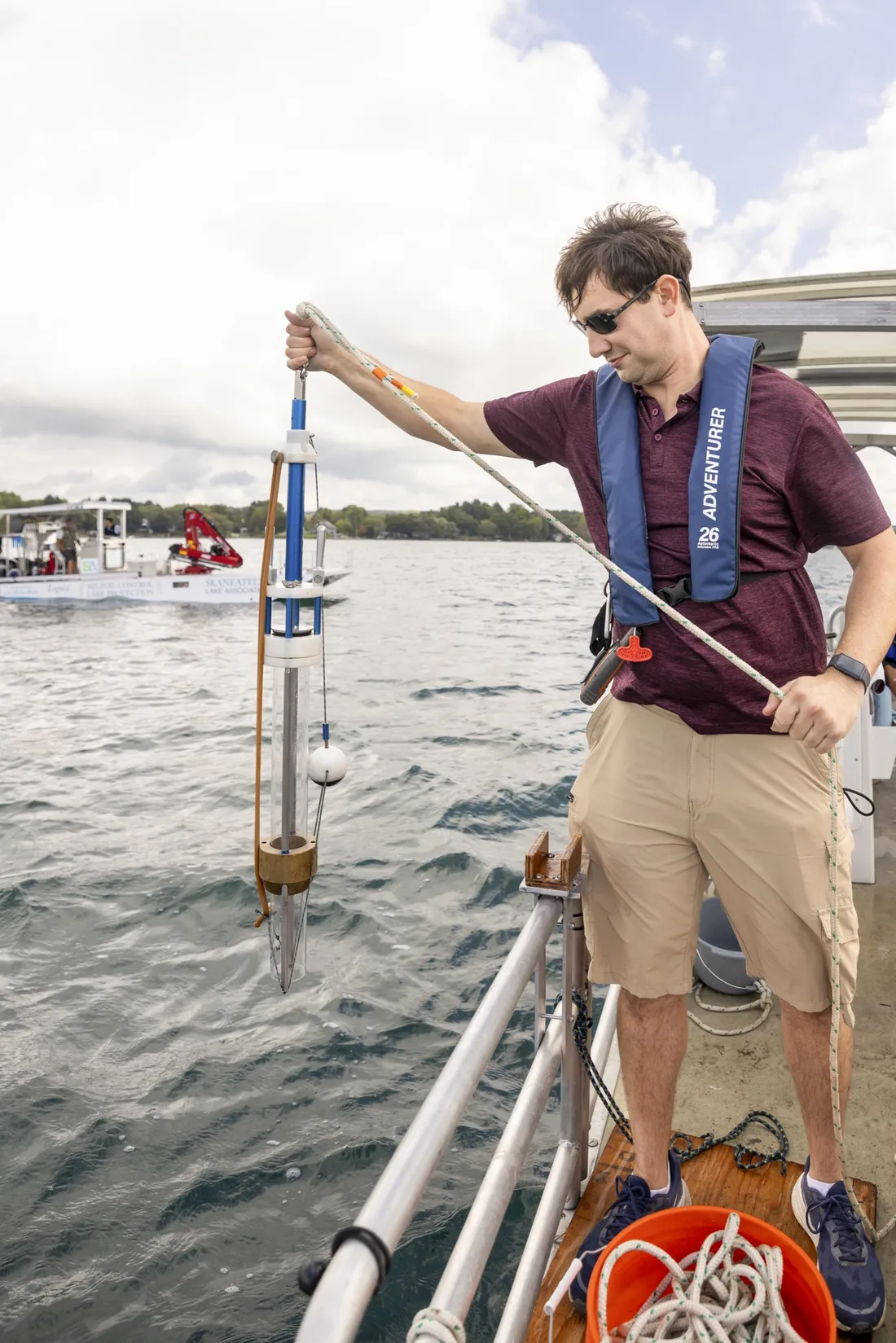
EES doctoral student Nick Brennan uses advanced sonar technology to map the bottom of Skaneateles Lake. His work helps inform lakeside infrastructure and maintenance efforts.
Scholz uses advanced sonar technology to map nutrient-enriched sediments at the bottom of Skaneateles Lake. In addition to determining the size, location and trajectory of HABs, his research guides lakeside infrastructure and maintenance efforts.
“We’ve identified areas of fine-grained mud, which are hotspots of phosphorus-rich sediment,” says Nick Brennan, one of Scholz’s Ph.D. students. “It helps us better understand the composition and layout of the lakebed.”
Freshwater habitats, like those in Central New York, are more than living laboratories. They’re also microcosms of different, sometimes competing worldviews.
Once one of the world’s most polluted lakes, Onondaga shows encouraging signs of recovery. The lake is not only a powerful case study for environmental neglect but also an unexpected example of ecological renewal. A testament to what research and responsibility can achieve together.