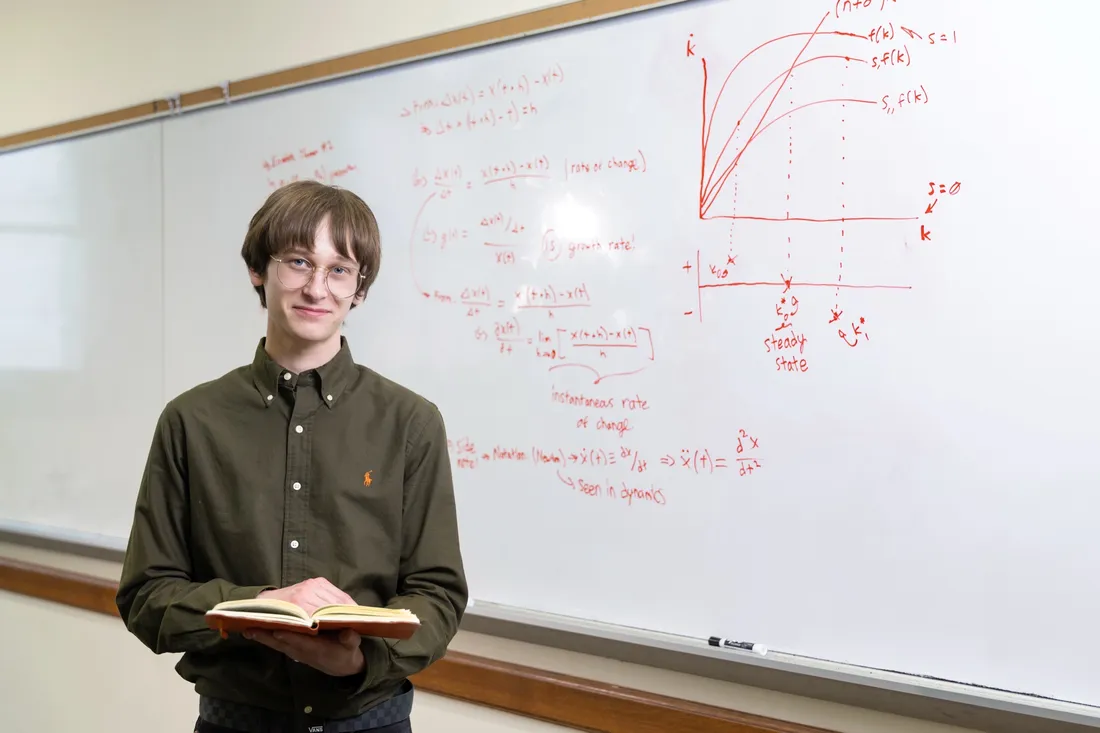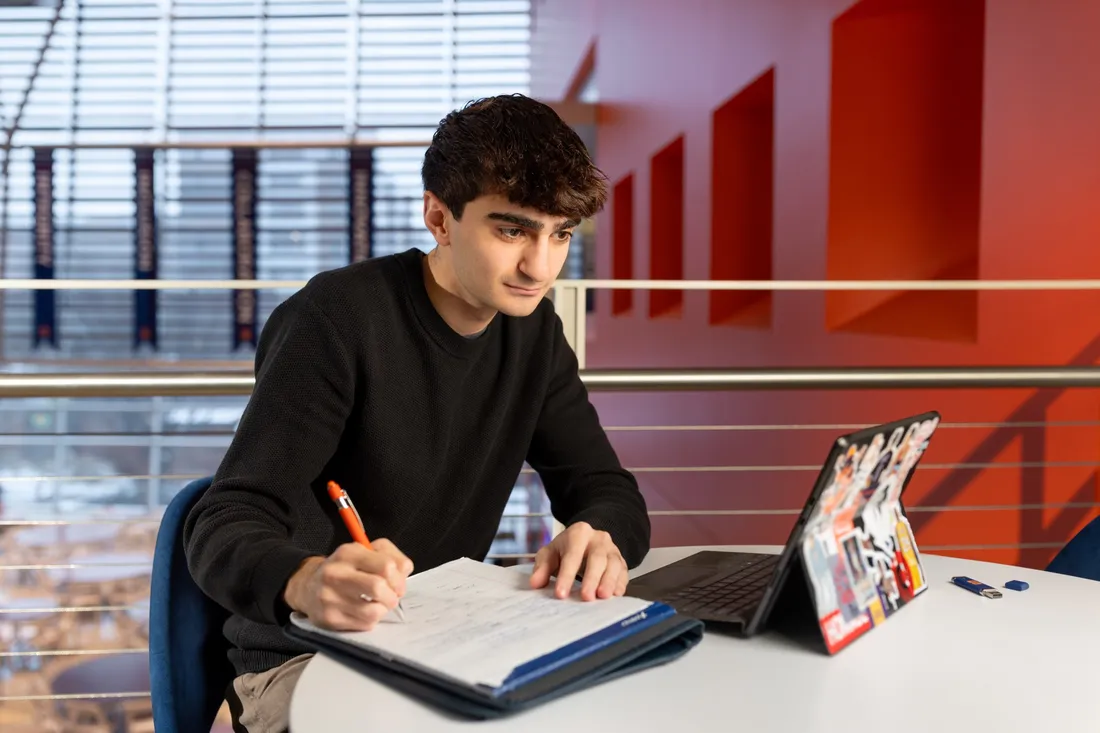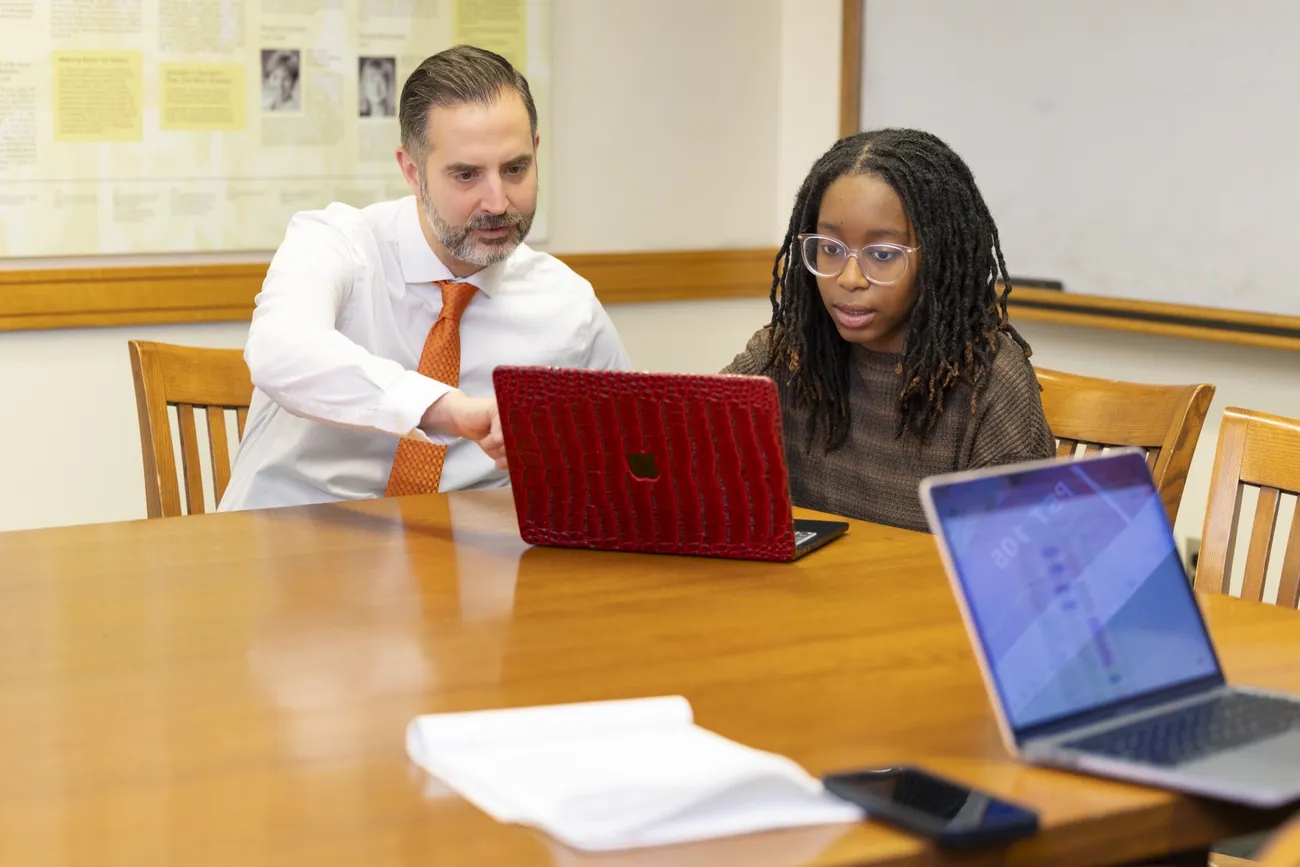
Like hundreds of first-year students, Eleanor Carvill ’29 entered Syracuse University as an undecided major.
“I didn’t know how to translate subjects I had enjoyed in high school into a viable degree option,” recalls the Suffolk, England, native. “I needed to figure out what worked best for me.”
She enrolled in Strategies for Career Success (PST 105), a foundational course for undeclared first-year students, offered by the College of Arts and Sciences’ and Maxwell School of Citizenship and Public Affairs’ Office of Student Success (OSS).
For Carvill, PST 105 was transformative. Using eight core competencies, like critical thinking, communication and leadership, she assessed her Career Readiness as defined by the National Association of Colleges and Employers (NACE) and considered different career paths.
“Core competencies are transferrable skills that prepare you for post-graduation success,” says the first generation student. “PST 105 helped me develop valuable and tangible career tools, like resume writing, professional networking and job searching strategies.”
Today, Carvill is a sophomore majoring in psychology. She also is an undergraduate course assistant (UCA) for PST 105, helping students find their way.
“I’ll never forget, while enrolled in the course, connecting with an alumnus who specialized in a field [of psychology] that I was interested in,” says the marketing minor. “And just as she helped me, I’ve been able to assist others.”
Recognizing Strengths, Exploring Interests
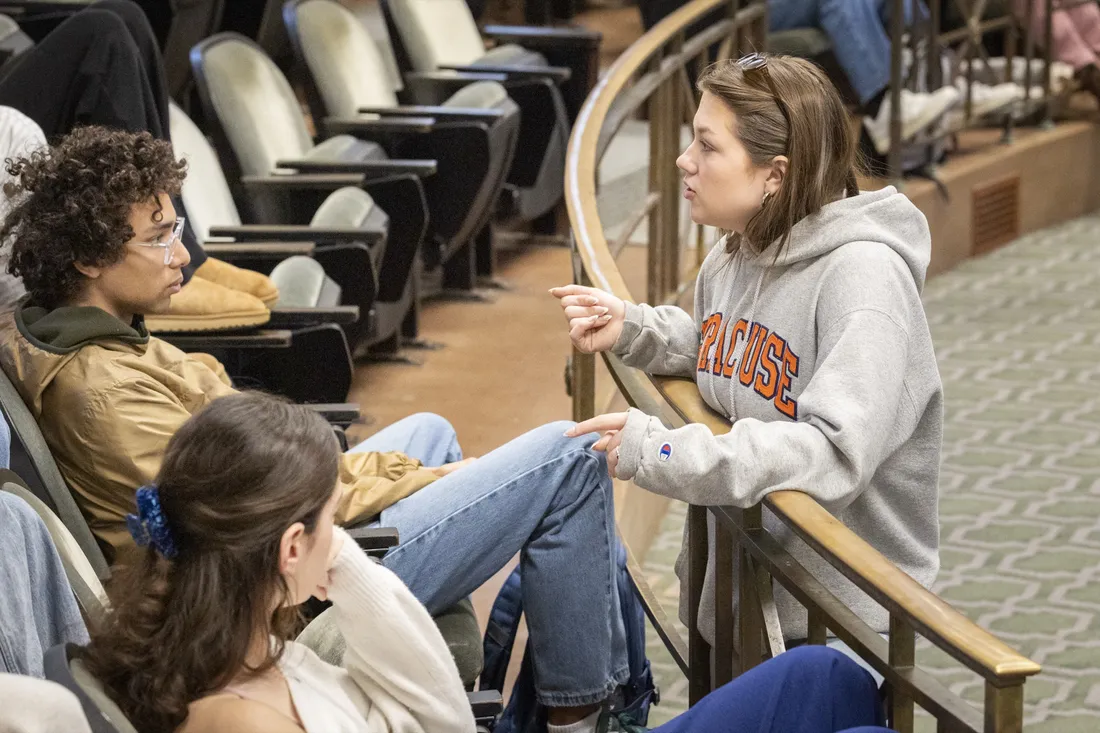
Strategies for Career Success (PST 105) helps undecided first-year students connect with career tools and resources, explains Steven Schaffling, assistant dean of student success. “It’s also linked to growing student retention rates.”
More than 240 students are currently enrolled in PST 105, whose two sections are led by a seasoned team of instructors and peer mentors.
Steven Schaffling, assistant dean of student success, teaches a section in Maxwell Auditorium. He’s joined by course administrators Mila Indeck ’28 and Hunter Tryloff ’27 and seven UCAs.
“PST 105 enables undecided students to immediately connect with career tools and resources,” says Schaffling, who, each week, orchestrates various thematic, small-group activities. “The near-term, direct and transparent value of the coursework is quickly parlayed by the student into the long-term value of a Syracuse University degree.”
PST 105 is part of a rich array of initiatives offered by OSS, including an alumni connections program, 10 immersion trips (giving students direct access to alumni and employers), internship opportunities and study-away options.
The combination of academic and cocurricular value is perhaps OSS’ distinguishing feature, opines Matt Wheeler G’26, who co-leads with Elena Williams G’28 a section of PST 105 in Stolkin Auditorium.
“You don’t need to know exactly where you’re headed when you start college,” says Wheeler, director of employer-alumni engagement. “What matters is that you are actively pursuing your interests, discovering your strengths and seeking out experiences that help you learn more about yourself and the possibilities available to you.”
‘Do Good and Do Well’
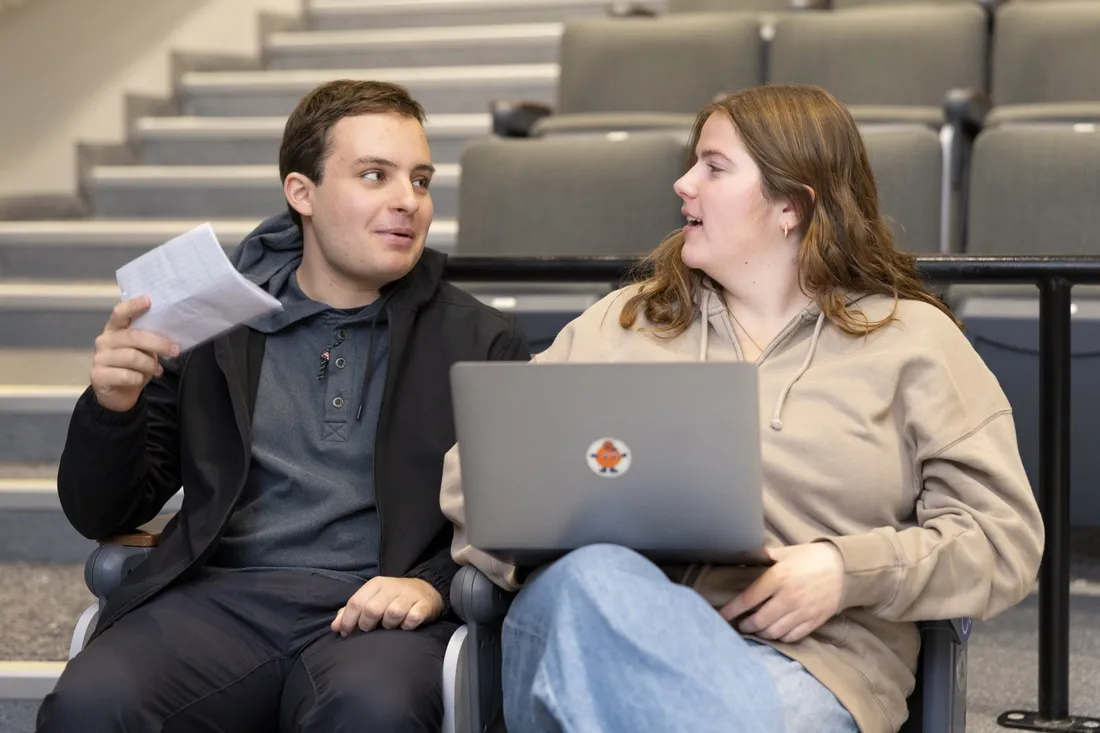
“The community culture here is real,” says Olivia Dunne ’28, shown here with fellow undergraduate course assistant Anthony Warren ’29.
PST 105 was conceived in partnership with Bill Coplin, a now-retired professor of policy studies, who offered the first section as a special topics course in 2023.
OSS has since carried PST 105 forward, helping thousands of first-year students, academically, while reinforcing core human values. Coplin’s “do good and do well” is a popular refrain, uttered at almost every class.

Elena Williams G’28 meets with a student in Strategies for Career Success (PST 105). In addition to co-leading a section of the course, Williams serves as director of first-year advising in the Office of Student Success.
Meanwhile, students-turned-UCAs consider PST 105 nothing short of life-changing:
- Jnana Velamuri ’28, an applied mathematics major, used it to improve her resume and LinkedIn profile. “Being a coach was the first true root I put down on campus,” says the finance minor, who also has managed the course’s student recruitment and alumni connections efforts.
- Ronit Hizgiaev ’28, an international relations major, discovered the importance of alumni networking. “Collaborating across disciplines helped me cultivate the adaptability skills required of a mature professional,” says Hizgiaev, who minors in Middle Eastern studies.
- Olivia Dunne ’28, a psychology major minoring in marketing, uncovered “reciprocal, collaborative relationships” between PST 105 students and their peer mentors. “The community culture here is real,” says the course administrator for Wheeler’s section.
NACE data speaks to such realness, confirming that where there’s a sense of community, there’s also student persistence and degree completion. No surprise that PST 105 is linked to growing student retention rates, year over year.
“As students gain professional competencies, they realize and appreciate, even if they’re undecided, the curricular and cocurricular opportunities afforded to them,” Schaffling says.
Estrella Rosario Carrasco ’29, a UCA majoring in journalism, puts it this way: “PST 105 shaped my trajectory when I felt like I didn’t have one. It gave me the confidence to succeed.”