“What kind of artist are you?”
It’s a question Rochele Royster has been asked before, but her answer doesn’t point to a specific medium. “I see community as my material,” she says.
That perspective has shaped Royster’s career as an artist, licensed art therapist and Syracuse University assistant professor. Helping people rediscover their creativity, her research explores how art therapy can not only improve clinical settings, but strengthen neighborhoods, support mental wellness and encourage healing as a collective.
“How can I create art that will create hubs of health and wellness?” Royster asks.
Rooted in Play
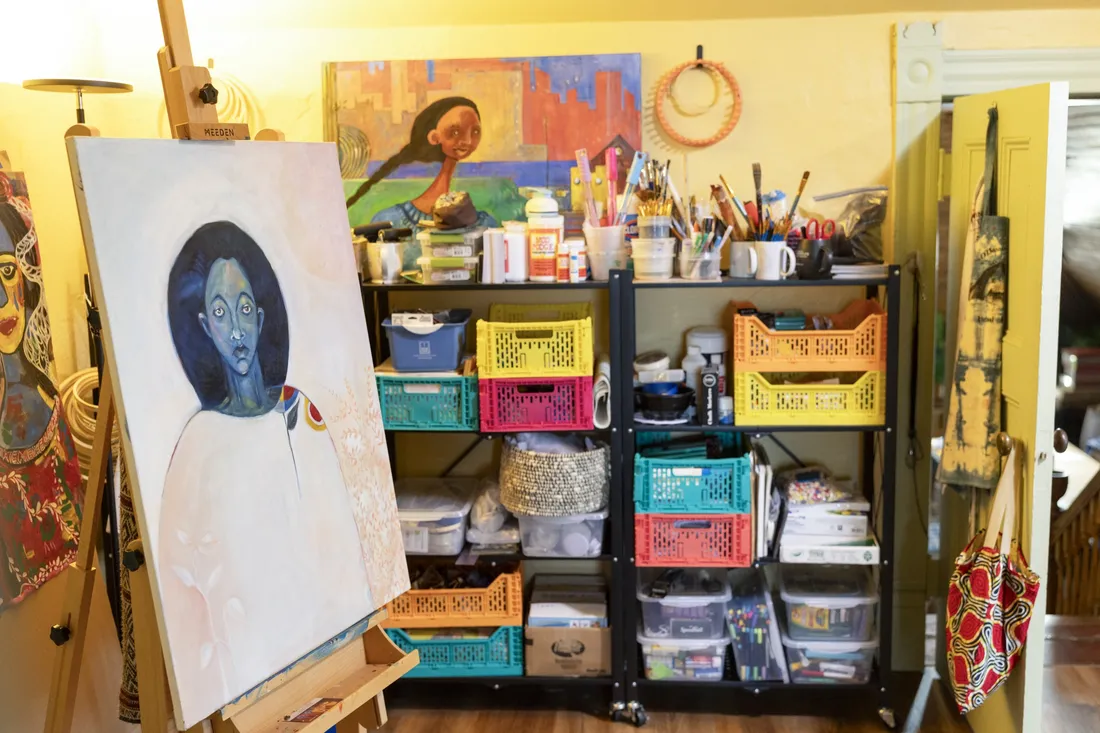
Assistant Professor Rochele Royster explores how art therapy can support mental health within communities through her ME/WE Creative Arts Therapy Lab.
Royster’s research grew out of two decades spent teaching in Chicago public schools. After earning degrees in studio arts and special education, she set out to create a different learning environment—one that values freedom of play. The classroom became a studio; students became artists. “Children need low consequence failure to learn problem-solving,” she says.
But she quickly realized many children were carrying trauma she wasn’t equipped to handle. “Kids were coming into my classroom and bringing their homes and communities with them,” she says. “I realized there were so many things they were dealing with that I didn’t have the skills to address.”
That led her to pursue degrees in art therapy and community psychology, disciplines that continue to shape her work today in the Syracuse area.
“I want to be able to use art as a form of infrastructure that would impact public health policy and institutions,” she says.
Local Impact
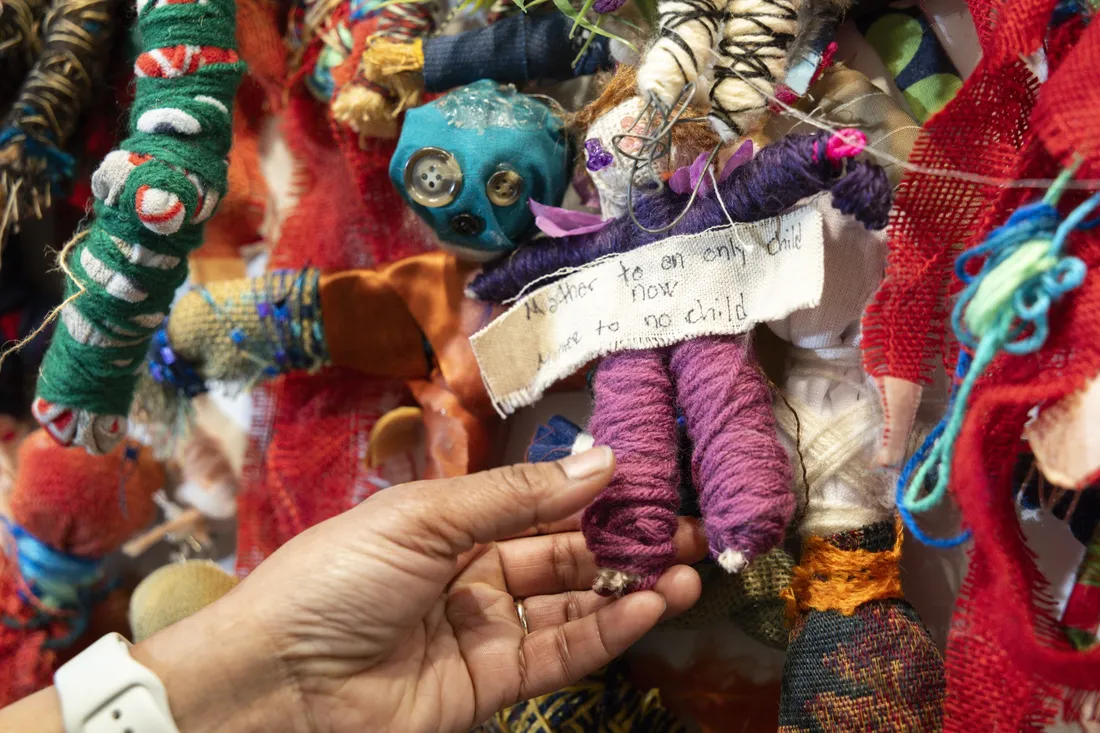
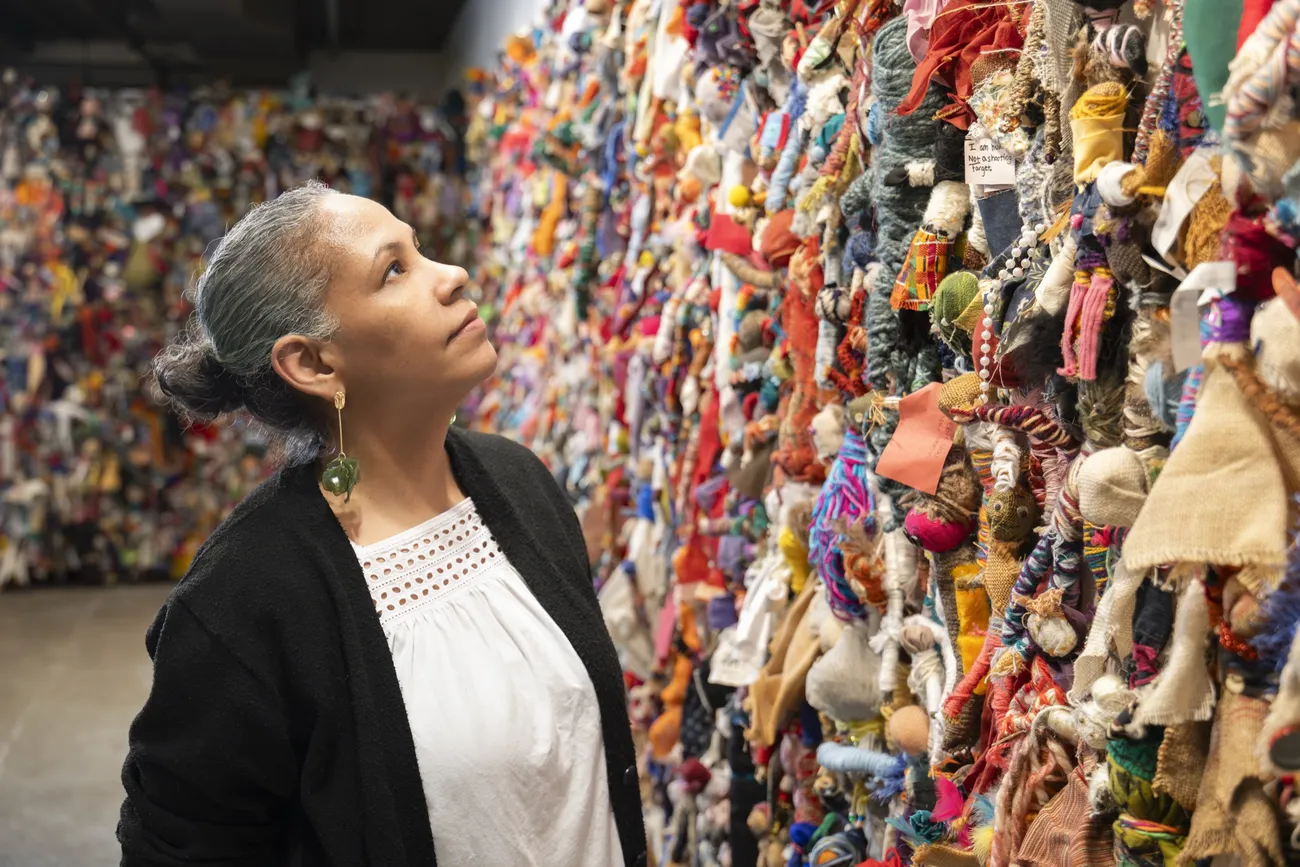
Royster holds up one of the creations from her Dolls4Peace workshop, which encouraged participants to explore grief through the making of dolls with dyed fabric and yarn. “When we experience trauma, we don’t always have the words to understand it,” Royster says. “We can use art as a way to process—to get unstuck.”
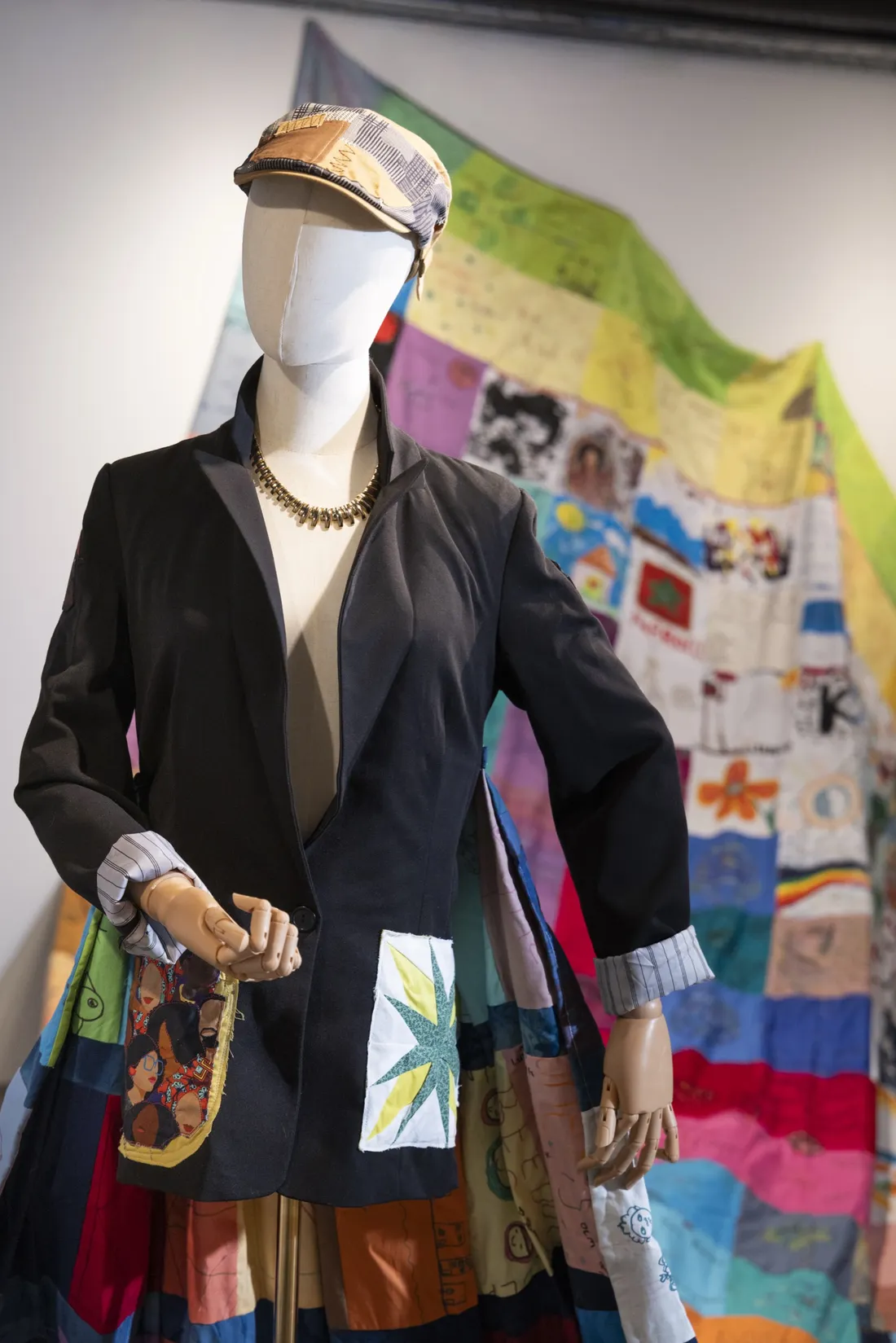
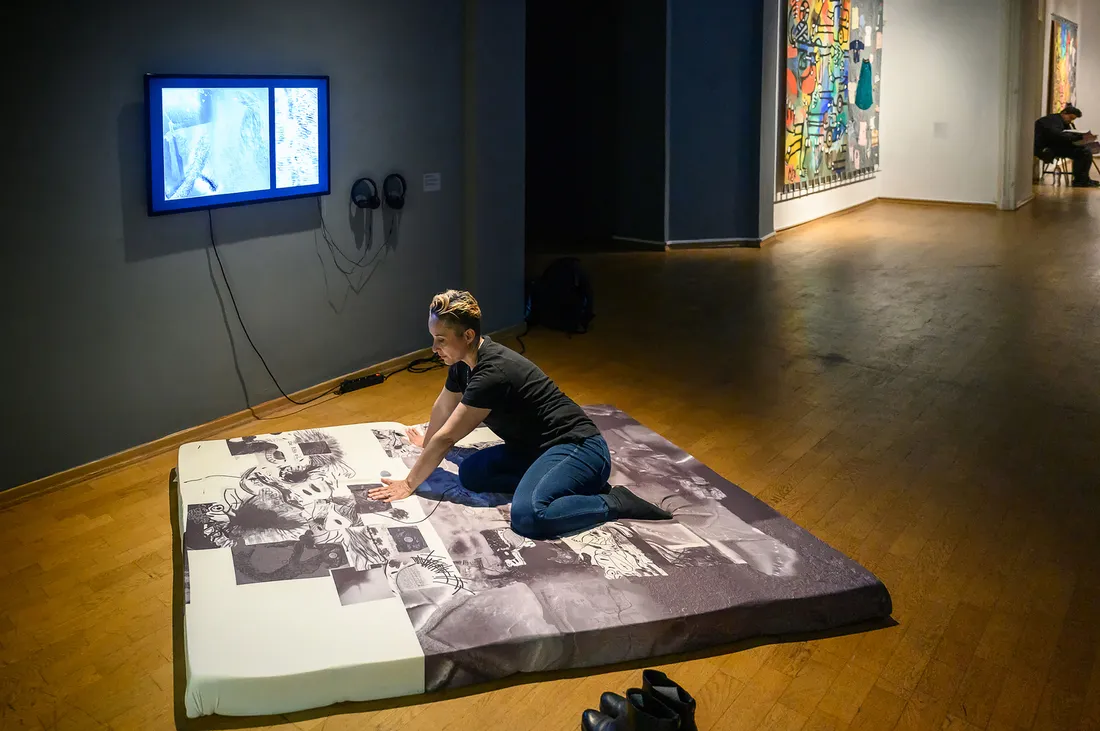
For the Syracuse Living Freedom Jacket, participants designed quilt patches reflecting what freedom, and the loss of it, means to them. “It’s so large,” Royster says, “it turned into a cape.”
At Syracuse, Royster puts that foundation into practice through the ME/WE Creative Arts Therapy Lab, where community-based art projects encourage participants to reflect, create and connect with one another.
In the Dolls4Peace workshop, participants explore grief by writing what they’re carrying—the loss of a loved one, of youth, of a sense of belonging—onto pieces of cloth that are dyed with indigo, embroidered and made into dolls. In another project, the Syracuse Living Freedom Jacket, children and community members designed quilt patches reflecting what freedom, and the loss of it, means to them, and the piece was exhibited in the Syracuse University Art Museum.
The goal: to create collaborative works of art that tell a larger story. “When we connect ourselves to something bigger than us, we start to see the humanity in others,” she says. “We grow and learn in relation to others—we can’t be single entities.”
Student Involvement
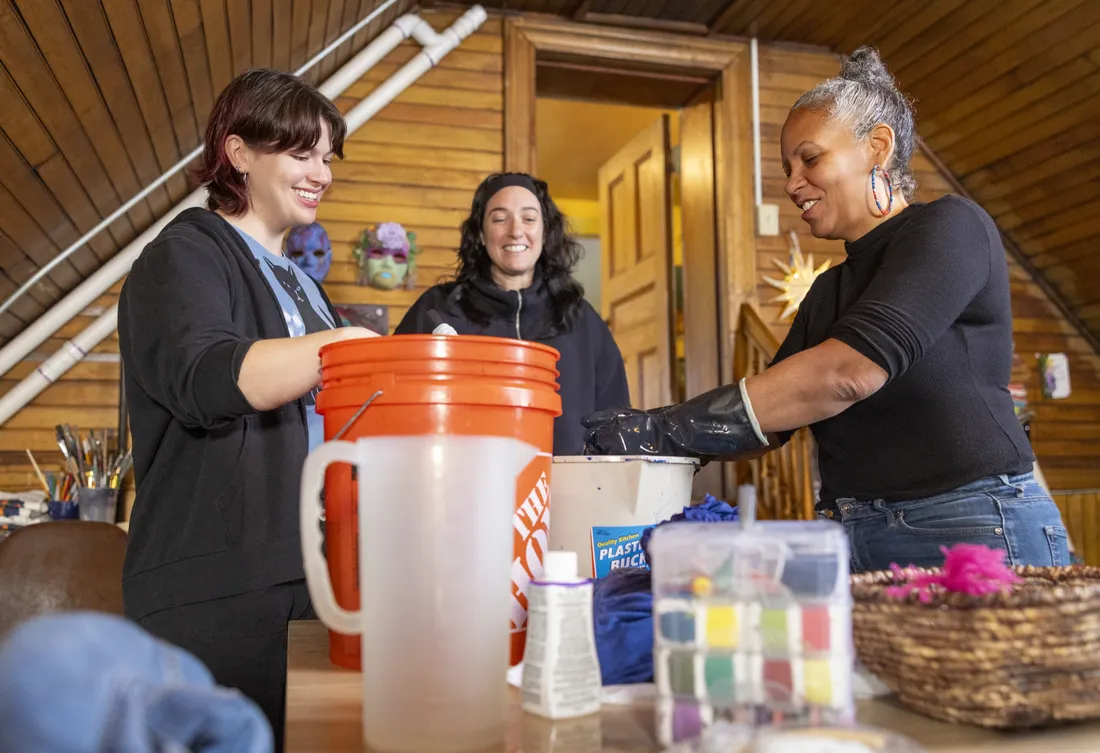
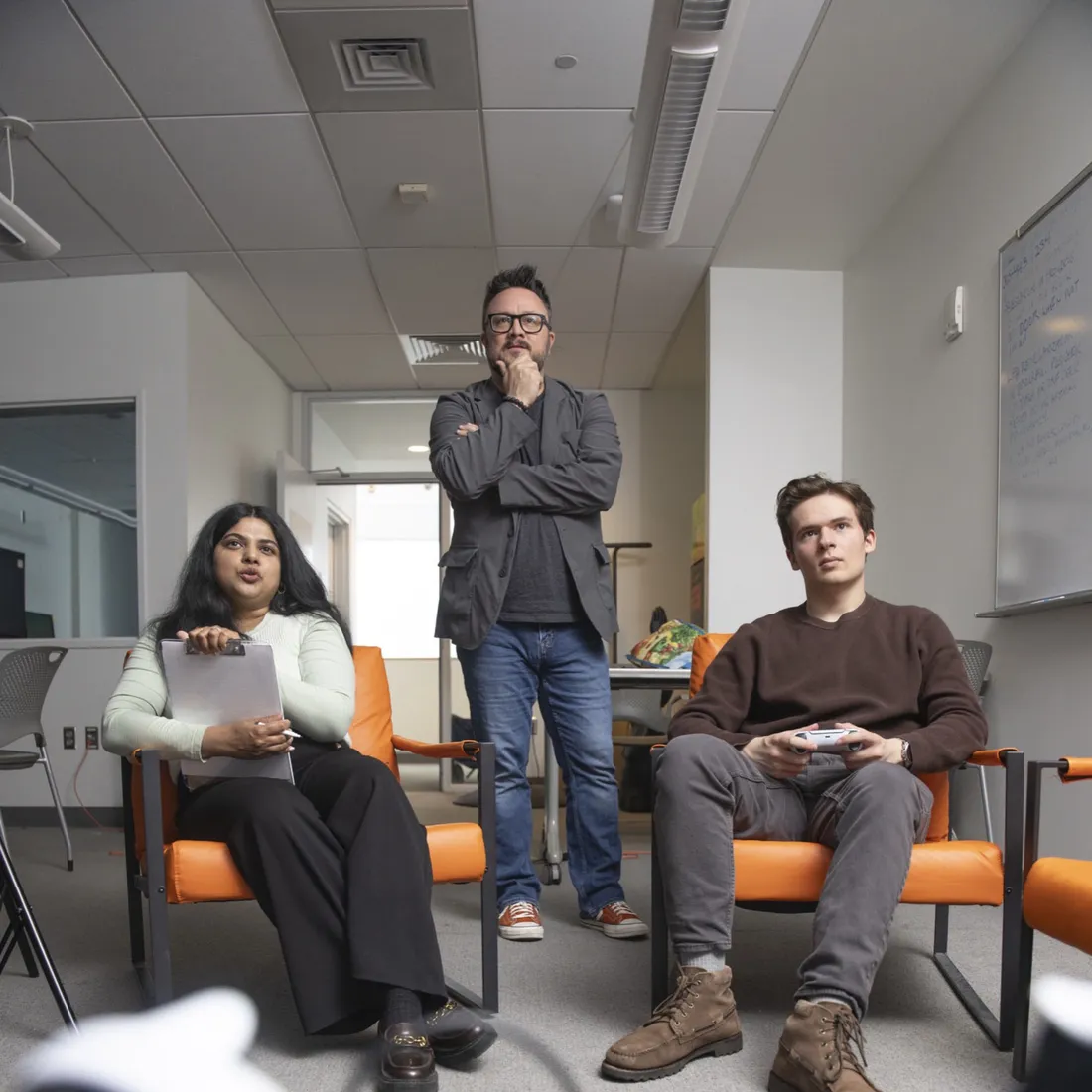
Royster (right) works on community projects with the help of graduate students like Catie Kobland ’21, G’26 (left) and Sarah Nagle. “I feel called as an art therapist to create the time and space for people to reengage with the creative, expressive and intuitive parts of themselves,” Kobland says.
Community involvement is also key to Royster’s curriculum in the University’s graduate art therapy program, where she prepares future therapists to become both clinicians and community practitioners. While students learn to help clients process trauma, relationships, stress and anxiety through psychotherapy, they also leave the classroom to create wellness-focused art experiences alongside community partners.
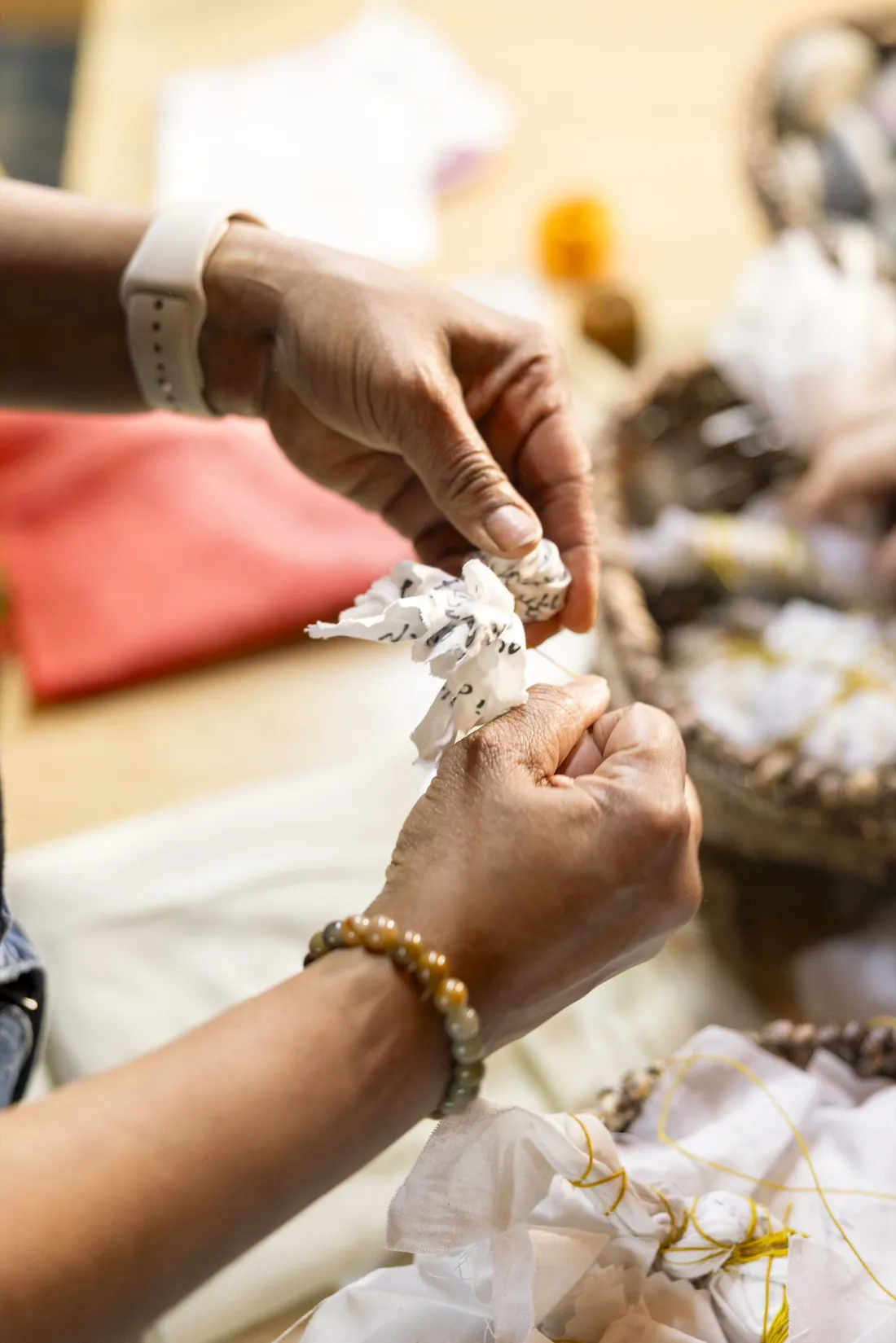
Royster says creating with your hands not only releases serotonin and dopamine, but also gives you a sense of accomplishment, which has an overall positive impact on well-being.
“For emerging art therapists, it’s important to get experience working in the communities you will serve,” Royster says. “When a student is able to go into the community, barriers are broken.”
Graduate student Sarah Nagle put theory into practice while helping facilitate art-making workshops for adults with early-stage memory loss through the Syracuse Jewish Family Service, establishing a support system where participants felt understood. “I came to see how community-building is preventative mental health care,” Nagle says.
For Royster, creating joyful spaces around art is at the heart of her work. “When you create within a community and talk about the world outside of yourself, you create this infrastructure of care you can depend on if something happens,” she says. “Having a safety net of community is central to our health and well-being.”