By 2030, roughly one-third of the water sector workforce is eligible to retire, according to the U.S. Environmental Protection Agency, leaving a gap in skilled workers tackling issues such as water pollution, sewer overflow and flooding.
“If we don’t overcome that challenge, we will lose expertise and won’t be able to maintain critical public health services,” says Tess Clark, assistant director of water resilience at Syracuse University’s Institute for Sustainability Engagement (ISE).
ISE partners with communities on environmental projects and recruits the University’s students, staff and faculty for support. “We have to invest in our workforce now,” Clark says. “We need students, and we need to make sustainability personal.”
A Community-First Approach
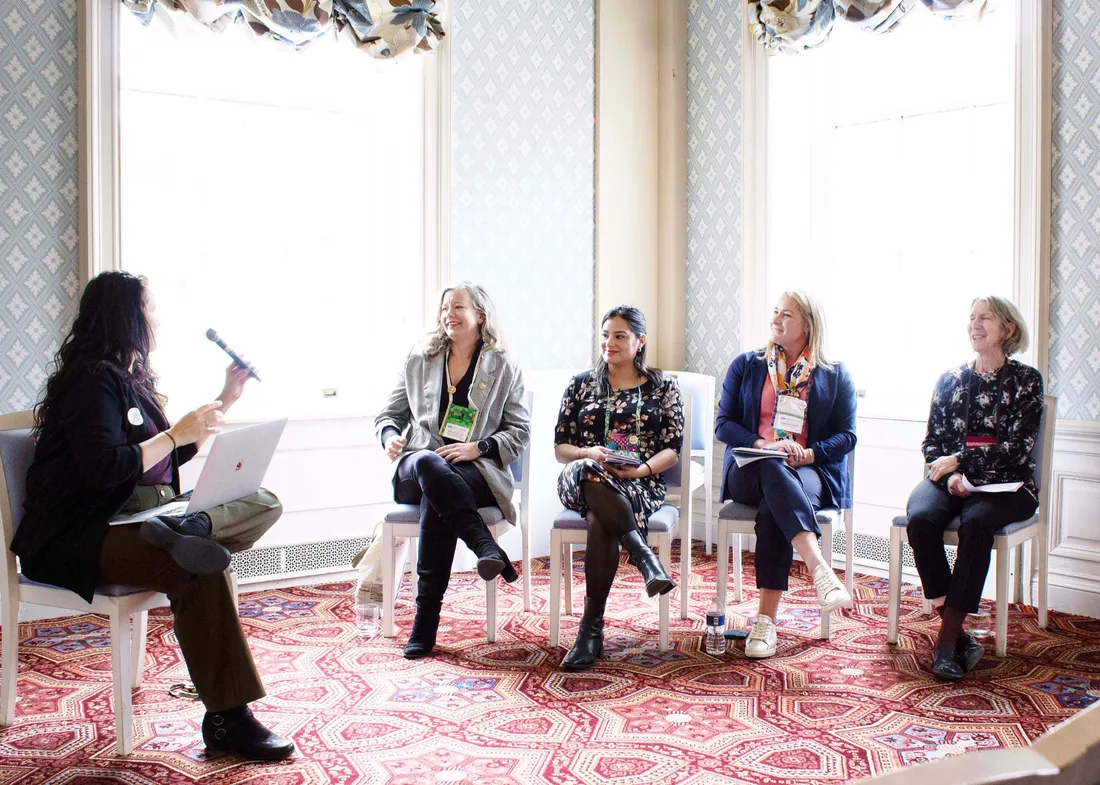
Melissa Young (left), director and principal investigator of Syracuse University’s Institute for Sustainability Engagement (ISE), moderates “Shared Success: How to Build Meaningful Strategic Partnerships,” a panel with women leaders in the materials management industry.
Opening in 1993 as the Syracuse University Environmental Finance Center and evolving into a more holistic resource housed in the College of Engineering and Computer Science in 2024, ISE works with private and public sectors in New York, Puerto Rico and beyond on projects related to water resiliency—drinking water and wastewater infrastructure—and sustainable materials management—waste reduction, reuse and recycling practices.
ISE takes an issue—such as lead contamination—and works with the community to develop an action plan through applied research, technical assistance, workshops and focus groups. Whether it’s building infrastructure, connecting the community to funding, assisting with communication and outreach or designing informational publications, ISE sees the plan through implementation and helps them to sustain it.
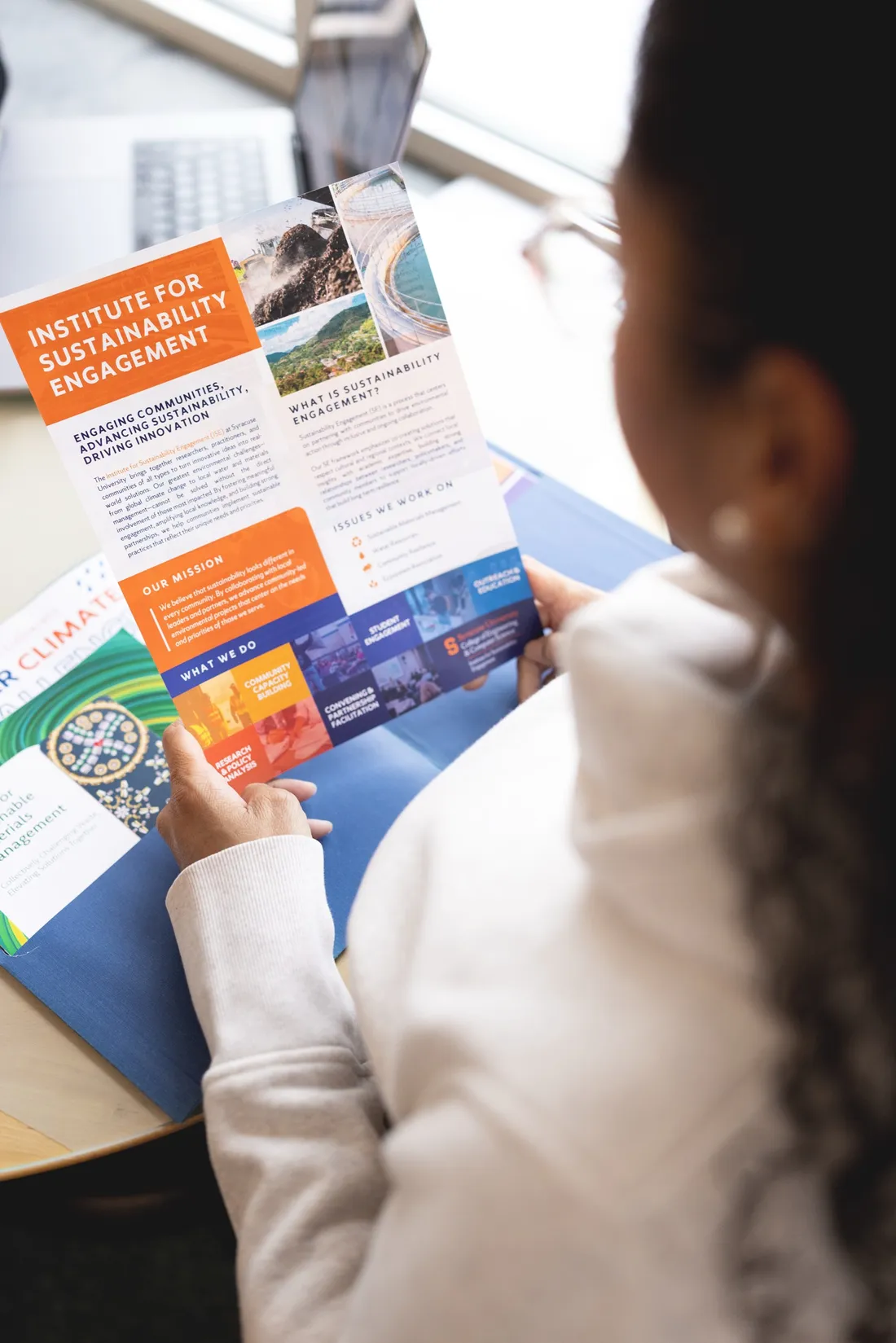
ISE combines research, technical expertise and communication strategy to support communities tackling environmental challenges. “We meet them where they are in their sustainability journey,” says Tess Clark, ISE’s assistant director of water resilience.
“Because sustainability is interdisciplinary, it takes a holistic strategy to produce solutions,” says Melissa Young, principal investigator and director of ISE who leads a team of more than 25 staff members. “Our communities know us as individuals, and they trust us.”
Young’s team is made up largely of graduates from Syracuse University and SUNY College of Environmental Science and Forestry (ESF)—a reflection of the institute’s commitment to cultivating talent close to home. The team works closely with SUNY ESF’s Center for Sustainable Materials Management, developing its outreach materials, educational programming, websites and films.
“I lead a group of authentic, genuinely passionate people who each bring unique knowledge, capabilities and skillsets,” Young says. “This is challenging work, but the passion and care they bring has a huge impact, and it’s my job to elevate them.”
Listening Before Leading
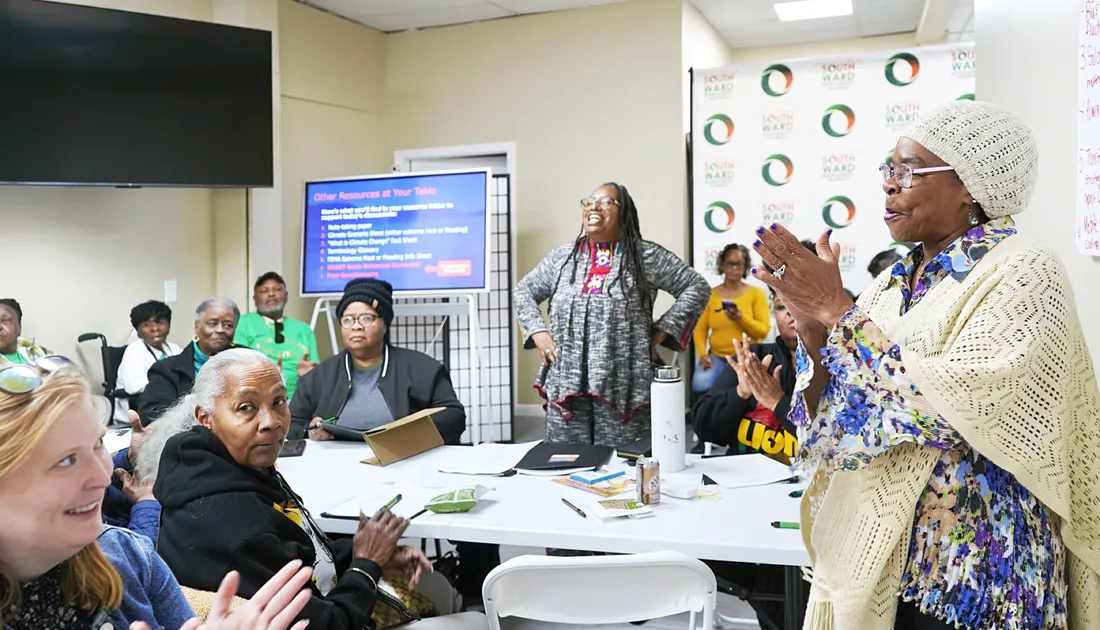
Community members gather for ISE’s Climate Action Planning Community Workshop with the South Ward Environmental Alliance in Newark, New Jersey, helping shape local climate resilience efforts.
One ISE community project lies on Lake Las Curias in San Juan, Puerto Rico. Two and a half years ago, ISE was asked to recommend best practices regarding septic systems near the polluted lake. ISE partnered with the University of Puerto Rico to conduct research, and together with the community designed, produced and delivered an information booklet home by home.
The booklet, written in Spanish, incorporates local color palettes, familiar animal imagery and culturally resonant design elements to make the technical information more accessible and relevant to residents. “The trick is creating something informative enough for an 80-year-old, but accessible enough for an 8-year-old,” says Kaira Fuentes G’17, ISE’s assistant director of Caribbean programs.
Students really add value to the work we do, and it’s been a joy to watch them build confidence in sustainability concepts and practices and go into the world to develop their own expertise.
Tess Clark, Syracuse University Institute for Sustainability Management
It’s a challenge when local community members haven’t been properly informed of an issue, Clark says, because then they’re not invested in the solutions. And oftentimes, money isn’t the biggest issue for capacity-constrained communities—it’s time. ISE takes on jobs to lift the burden from those with an overload of responsibilities.
“It’s not about imposing—it’s about asking what they need and how we can make it happen,” Fuentes says. “We do not move forward unless the community feels comfortable with the way we are going.”
Other ongoing ISE projects include Recycle Right New York, a statewide education and outreach campaign to help residents reduce contamination in the recycling stream, and the Sustainable Materials Management Stewardship Program, a paid internship opportunity for students interested in exploring concepts of sustainability and waste systems offered in both New York and Puerto Rico.
Purpose in Practice
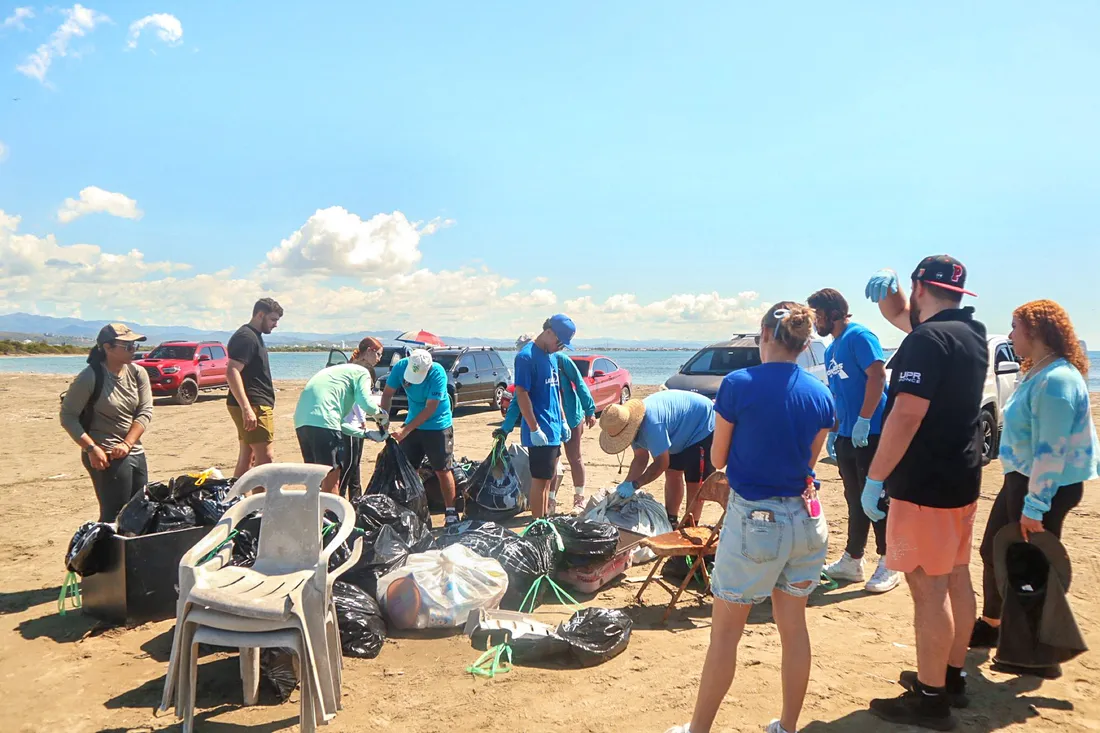
Nearly 50 volunteers—local residents and students—collected about 500 pounds of waste, including 20 pounds of recyclables, from Punta Cucharas Nature Reserve in Ponce, Puerto Rico, as part of ISE’s Sustainable Materials Management Stewardship Program.
One gap in this sort of work, Clark says, is underutilizing students. ISE is trying to change that through the Syracuse University Water Climate Challenge, a paid training fellowship where undergraduate students work directly with a community and share their findings with students at other partnering universities.
This year, the students are working with Mount Vernon, New York, to reach people impacted by lead service lines for their drinking water. They are researching service line policy and looking at replacement funding applications and learning about issues such as backwashing and flooding.
“We have students, staff and faculty from across the University in engineering, communications, visual arts, public policy, design and web development,” Young says, “because sustainability engagement work demands a cross-campus effort.”
They learn to collaborate with a team, organize meetings, perform background research and outreach with communities. And many of these students have been hired by ISE after graduation.
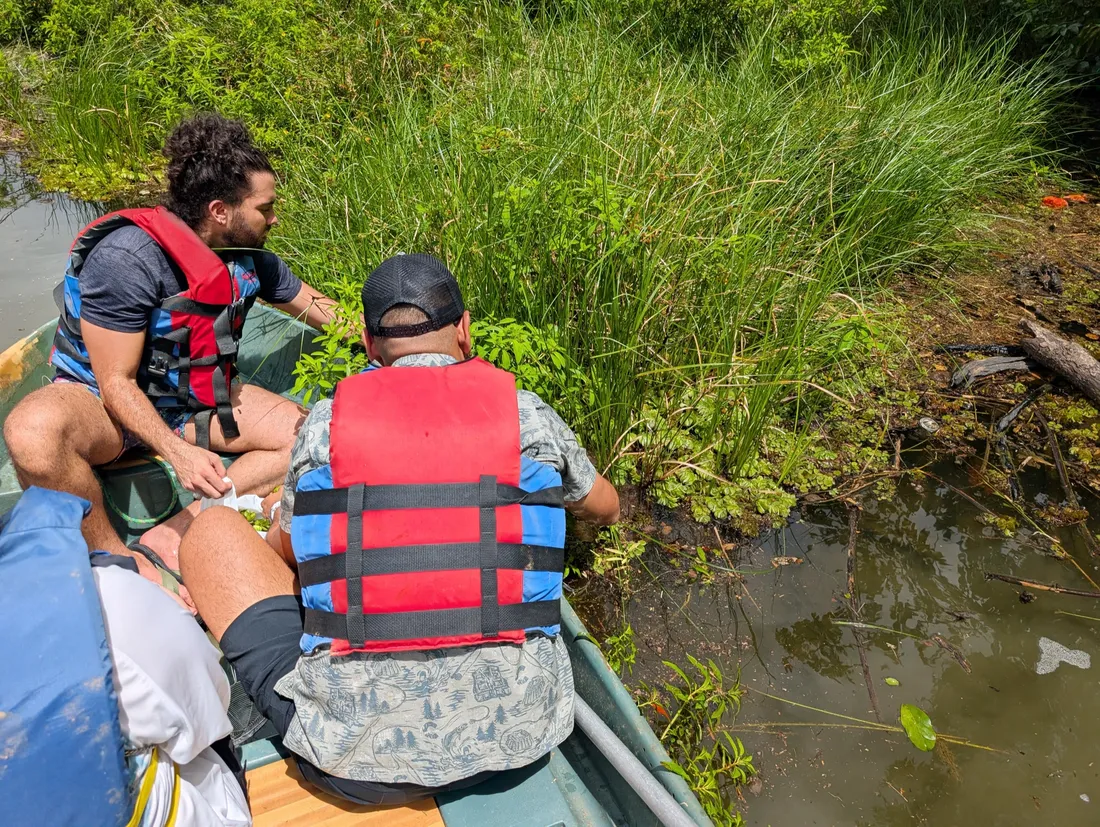
Researchers collect water samples near Lake Las Curias in San Juan, Puerto Rico, to monitor pollutant levels. For the past two years, ISE has worked with the local community to promote best septic-system practices and help protect the water source.
“Students really add value to the work we do, and it’s been a joy to watch them build confidence in sustainability concepts and practices and go into the world to develop their own expertise,” Clark says. “Young people are the champions of sustainability.”
ISE’s ultimate goal is both ambitious and grounded: to deepen sustainability understanding, expand partnerships with communities and ensure young people see themselves in this work. Because when communities are empowered and students are equipped with real-world experience, the future of the environment—and the people who depend on it—becomes more resilient.