Surrounded by architectural wonders during her study abroad, Kate Tang ’27 expected to be transformed. She was—just not in the way she imagined.
“I expected a visceral response to the projects we’d studied and admired in school,” Tang recalls. “Alas, the strongest emotional response I felt was walking back into my own suburban, cookie-cutter house—no pretense or immaculate curation—but a sense of instant relief that I had been missing.”
So, what makes a space feel like home? It’s a question that cuts across architecture, culture and everyday life. At Syracuse University’s School of Architecture, the search for that answer runs deep through history, material and personal memory.
Writing on the Walls
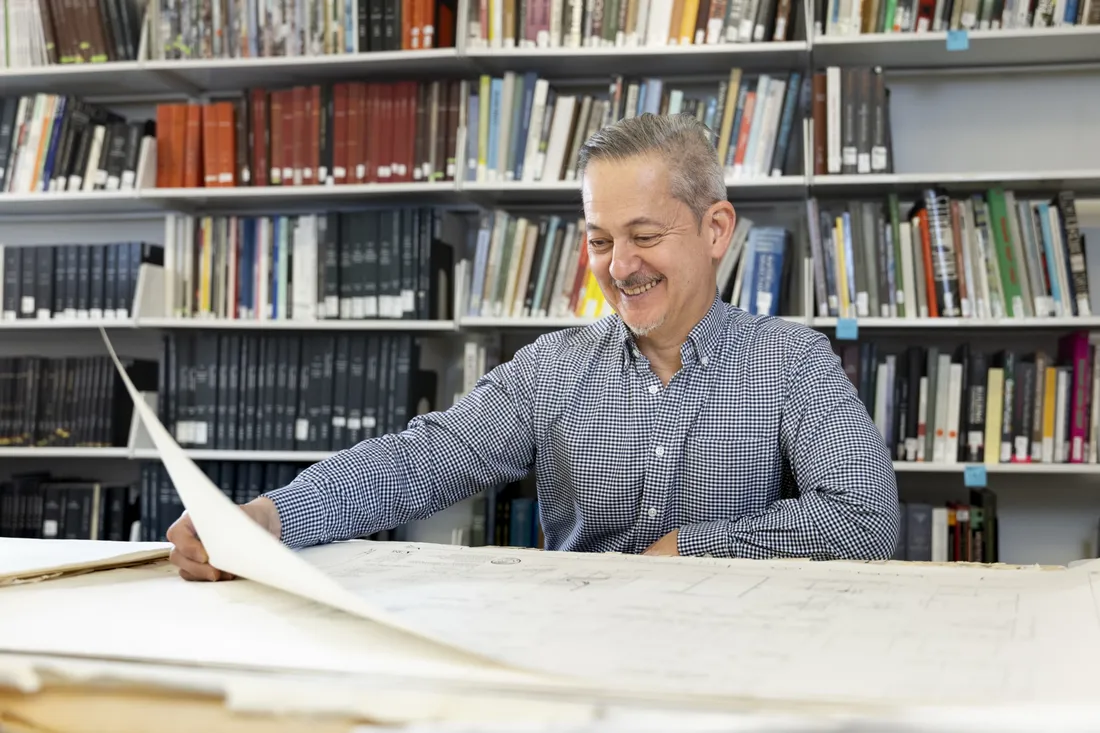
Lawrence Chua brings a background in writing to his teaching, encouraging students to think about architecture through the lens of human experience.
Professor Lawrence Chua’s path to architecture started with a story. Working as a journalist and novelist, he was commissioned to write about Samuel Mockbee, a MacArthur “genius grant” architect who ran a design-build program in one of Alabama’s most impoverished counties. Mockbee’s students designed homes for people selected from Hale County’s welfare rolls.
“They took the idea very seriously—that these people were their clients,” Chua says. “They wanted to provide a shelter for their lives—not prescribe a design or a map for living.”
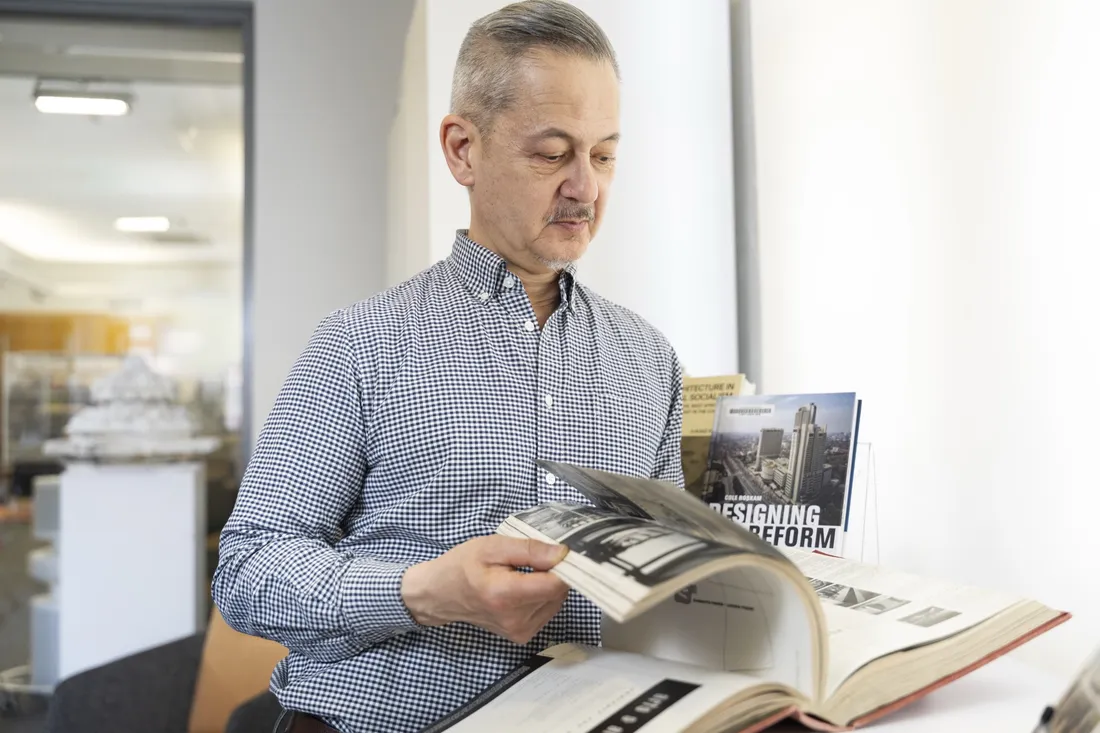
Chua uses architectural history to show students how everyday spaces—including their own homes—can be studied as reflections of culture and identity.
Chua spent several days traveling through Alabama and Mississippi with Mockbee, visiting projects built by the Rural Studio and touring Mockbee’s own home. “Seeing the work up close was formative,” Chua says. “It offered a glimpse of what architecture could make possible.”
That experience led Chua to pursue a Ph.D. in architectural history, where he focused on the history of modernism and Southeast Asia. This dual focus informs his research, writing and teaching at Syracuse.
For over a decade, Chua had students in his Introduction to the History of Architecture II class write a research paper about their own homes. “I wanted students to treat their homes as an object worthy of historical study,” he explains. Students peer reviewed each other’s drafts and gained a deeper sense of what home meant to one another.
“In the U.S., home is often imagined as fixed,” Chua observes. “Diasporic histories tell a different story—of home as something inherited unevenly, marked by distance and shaped as much by loss as by belonging.”
Material Matters

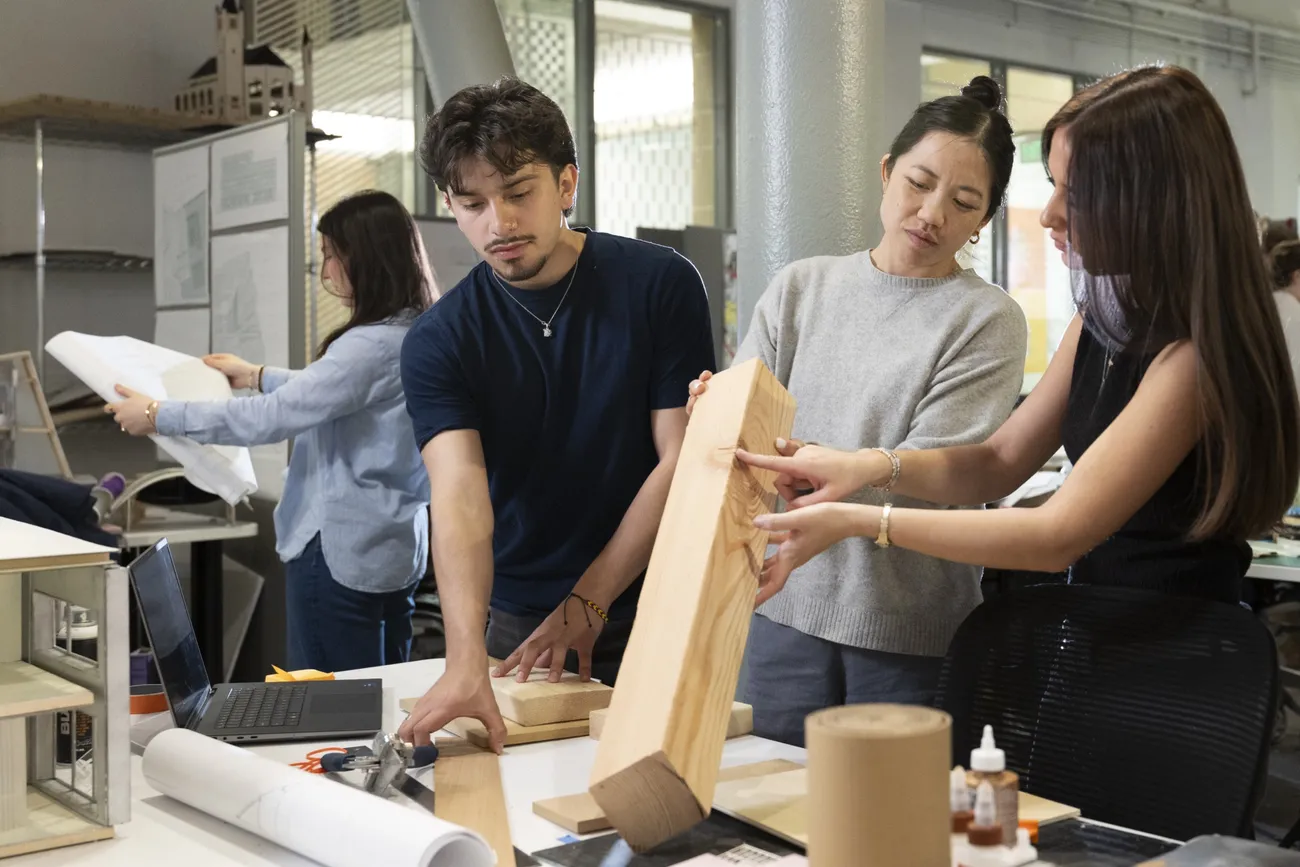
Tiffany Xu (right) works with students to understand how building materials like timber shape both the structure and experience of a space.
Like Chua, Tiffany Xu believes that understanding a space starts with understanding the person who inhabits it.
Xu found architecture by way of art history, conservation studies and a stint in San Francisco’s tech industry. After going back to school, she became a practicing architect in the Bay Area, working primarily with light timber framing on single-family homes—the affordable nail-based construction method behind most American houses today.
“I never had a class that explained timber framing as a construction system,” Xu says. “It’s maybe a little too low-tech to fit into most large architectural narratives. So, I wanted to do a deeper dive.”
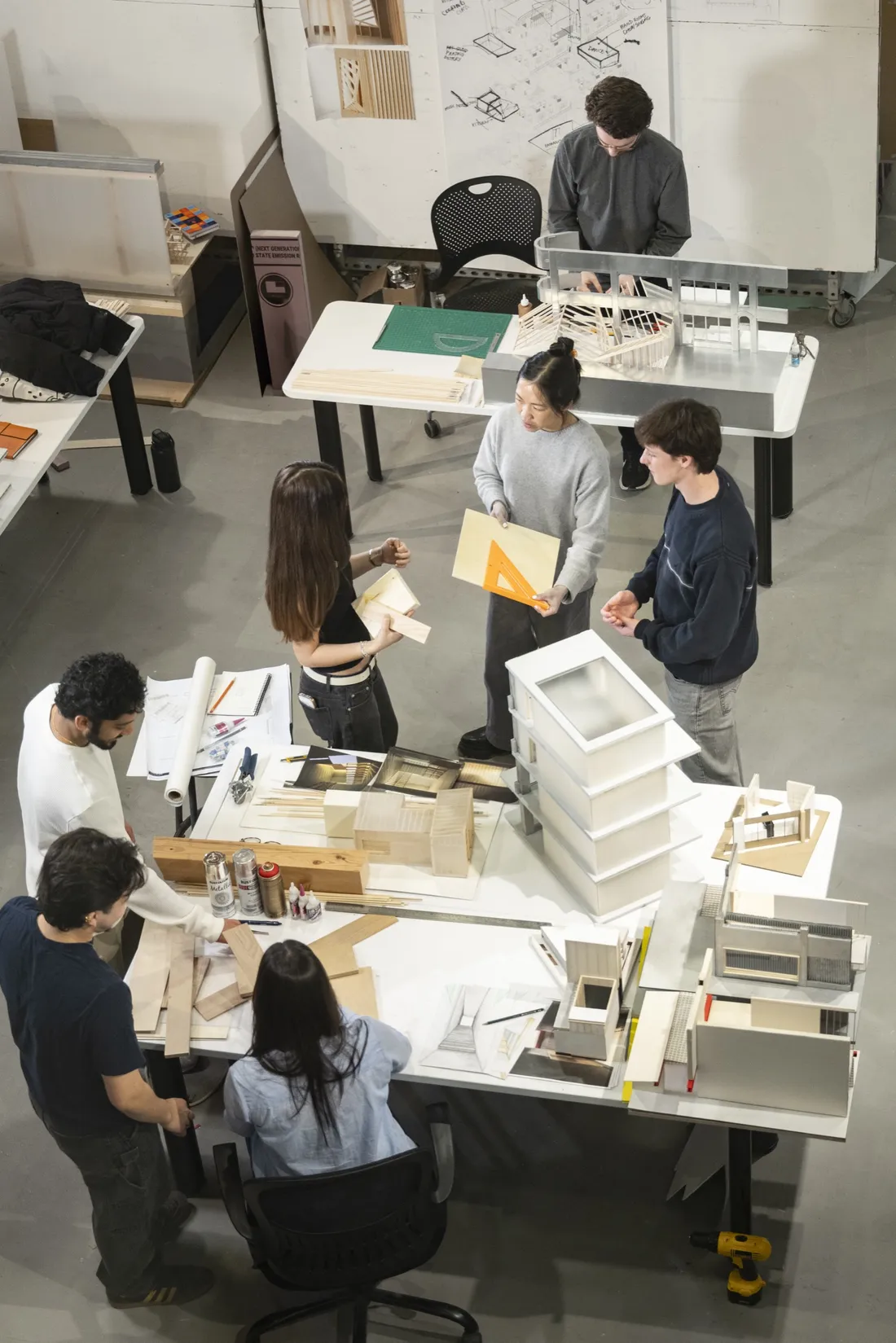
In the studio, students build timber models as they learn to think critically about the spaces they design.
As the Harry der Boghosian Fellow, she came to Syracuse to research and teach, running two seminars and an architecture studio. Over spring break, she led students on an immersion trip to California, where they traced timber from source to structure—visiting forests, mills, build sites and completed homes.
In her studio course, she helps students explore the human and emotional experience of space. Inspired by George Saunders’ books of short stories, she assigned them to read literature, identify a character, chart the character’s emotional arc and translate that experience into a timber model.
“I’ve always thought there’s so much you get out of a narrative piece of work that we tend not to be able to get out of architecture—but that there is a lot of crossover in how one experiences space,” Xu explains. “This was an experiment to see if students could discuss and engage with emotional states—which are always related to someone’s upbringing and where they’re from.”
Built to Belong
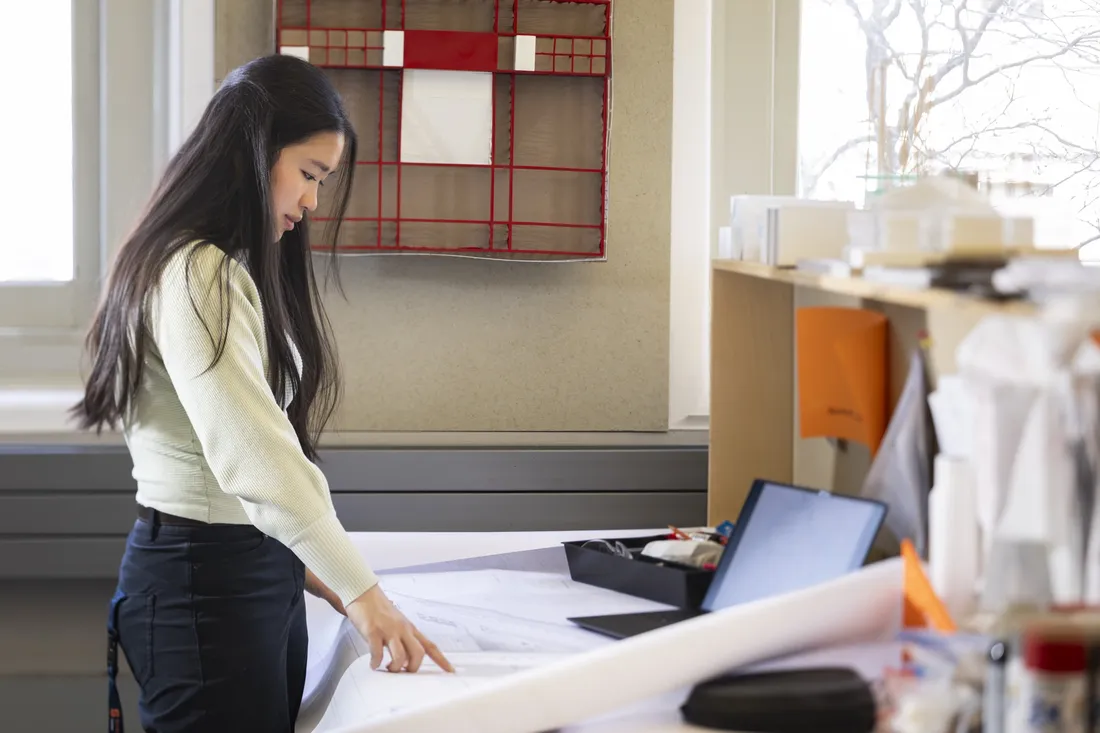
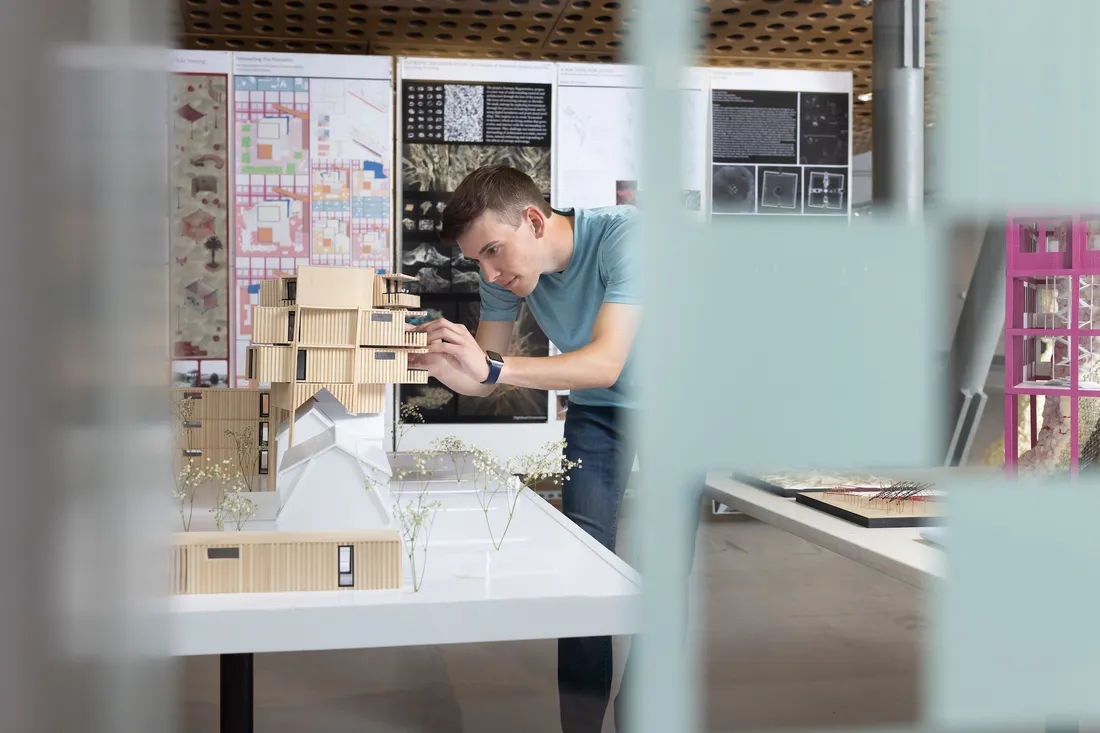
Kate Tang draws on her experiences of family and community as she develops her approach to designing spaces that feel welcoming and connected.
For Tang, a fourth-year architecture student at Syracuse, home has always been connected to people. Growing up, she had a large support system of cousins, aunts and uncles.
“Childhood felt like a constant, joyful rotation between houses in this extended family network where I truly belonged,” she says. “I could probably draw each of those floor plans from memory.”
I remember just having this sense of closeness between students, faculty and administrators.
Kate Tang ’27
That feeling is part of what drew her to Syracuse from her first visit to campus. “I remember just having this sense of closeness between students, faculty and administrators,” Tang recalls.
She’s worked to carry that feeling forward as vice president of the Syracuse chapter of the National Organization of Minority Architecture Students.
“It was incredibly comforting to have this organization where I immediately belonged with people from various backgrounds, hometowns and graduating classes,” she says. “As time passed, I stayed involved to help create that same sense of community and connection for others.”

Tang recalls feeling at home at Syracuse from her first visit, drawn to the close-knit community of students and faculty.
In her design work, Tang is drawn to sustainable materials like wood. A semester in Spain deepened that sensibility, taking her from rural build sites to Madrid’s prominent adaptive reuse projects.
“This experience allowed me to connect with the context for which we were designing on a more personal level and introduced me to a scale of design that feels intimate and tangible,” she says.
Across Chua, Xu and Tang’s approaches, “home” takes many forms—emerging through archives, materials and memory, while remaining tied to the lives unfolding within it.
“While I want to explore the design of grand public spaces and large-scale projects during my career,” Tang reflects, “I suspect I will always return to the home—creating spaces where people and families feel that same sense of belonging and respite that has shaped me.”