The future of green technology is so close that you can see it for yourself.
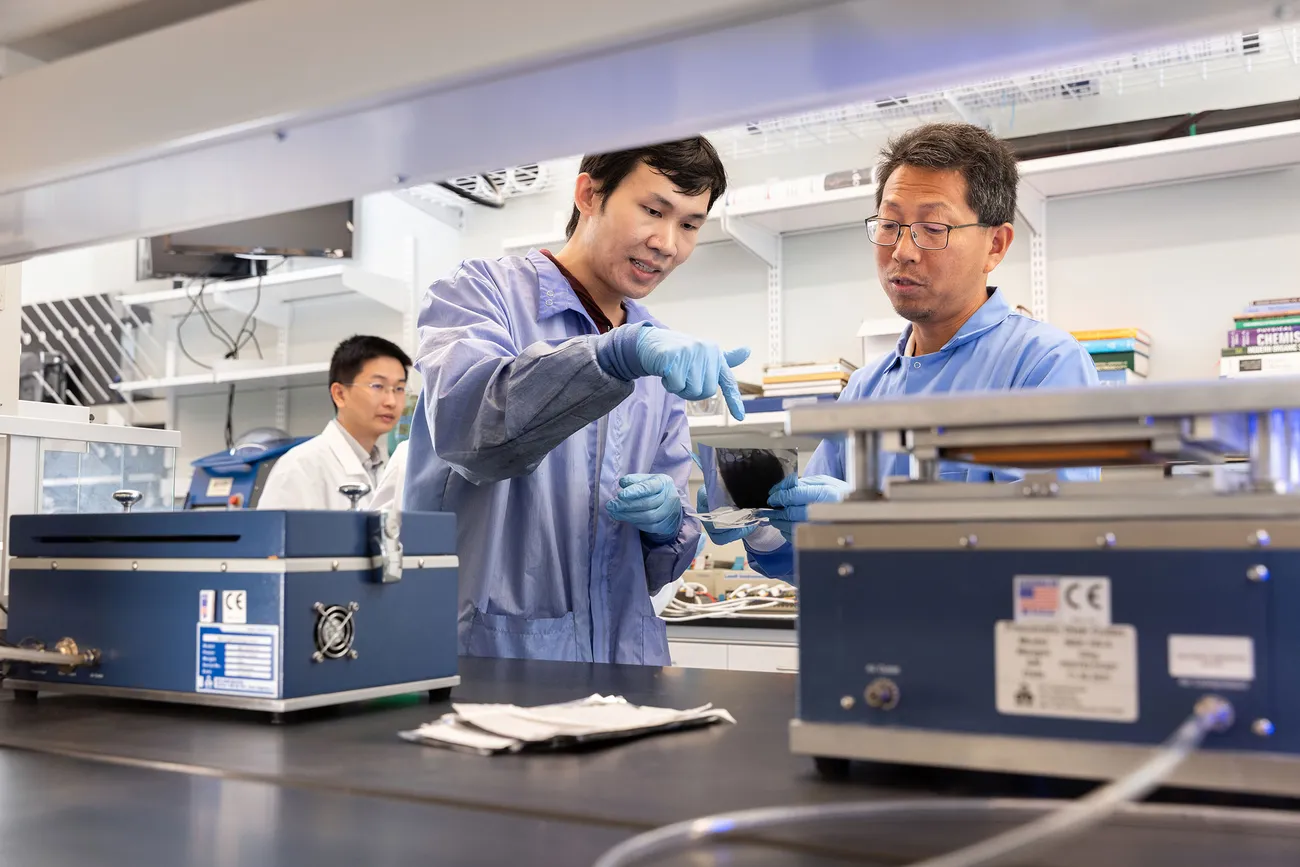
At Syracuse University, Professor Quinn Qiao is ushering in a new era of battery power and energy storage technology. He and his students design solid-state batteries, which are cleaner, safer and more affordable alternatives to traditional lithium-ion batteries.
“Solid-state batteries are the holy grail of energy research,” says Qiao, who chairs the mechanical and aerospace engineering (MAE) department in the College of Engineering and Computer Science (ECS). “Compared to conventional batteries, they have a greater storage capacity and leave a smaller carbon footprint.”
Public interest in sustainability and low greenhouse gas emissions is at an all-time high. Qiao is capitalizing on this trend through his involvement with the federally funded Center for Solid-State Electric Power Storage (CEPS), where he serves as the University's site director.
His lab in Link Hall reflects a broad commitment to experiential learning and new technologies. “It's a rich research ecosystem, all under one roof,” he says.
Synthesizing Opportunity
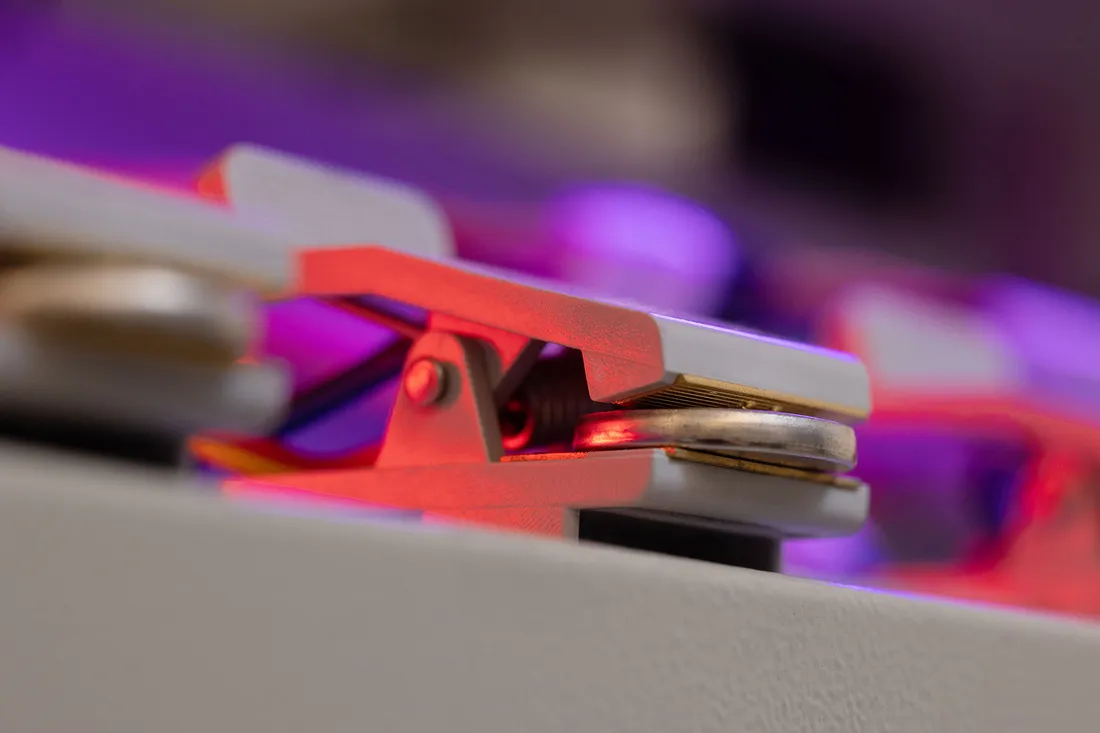
Professor Quinn Qiao gauges a coin-cell battery’s performance by repeatedly charging and discharging it over time—a process known as cycling.
To appreciate Qiao's research is to understand how batteries work. A battery contains cells that convert chemical energy into electric energy, explains Qiao, who joined Syracuse’s faculty in 2020. “This happens through ions that move electrons between contacts.”
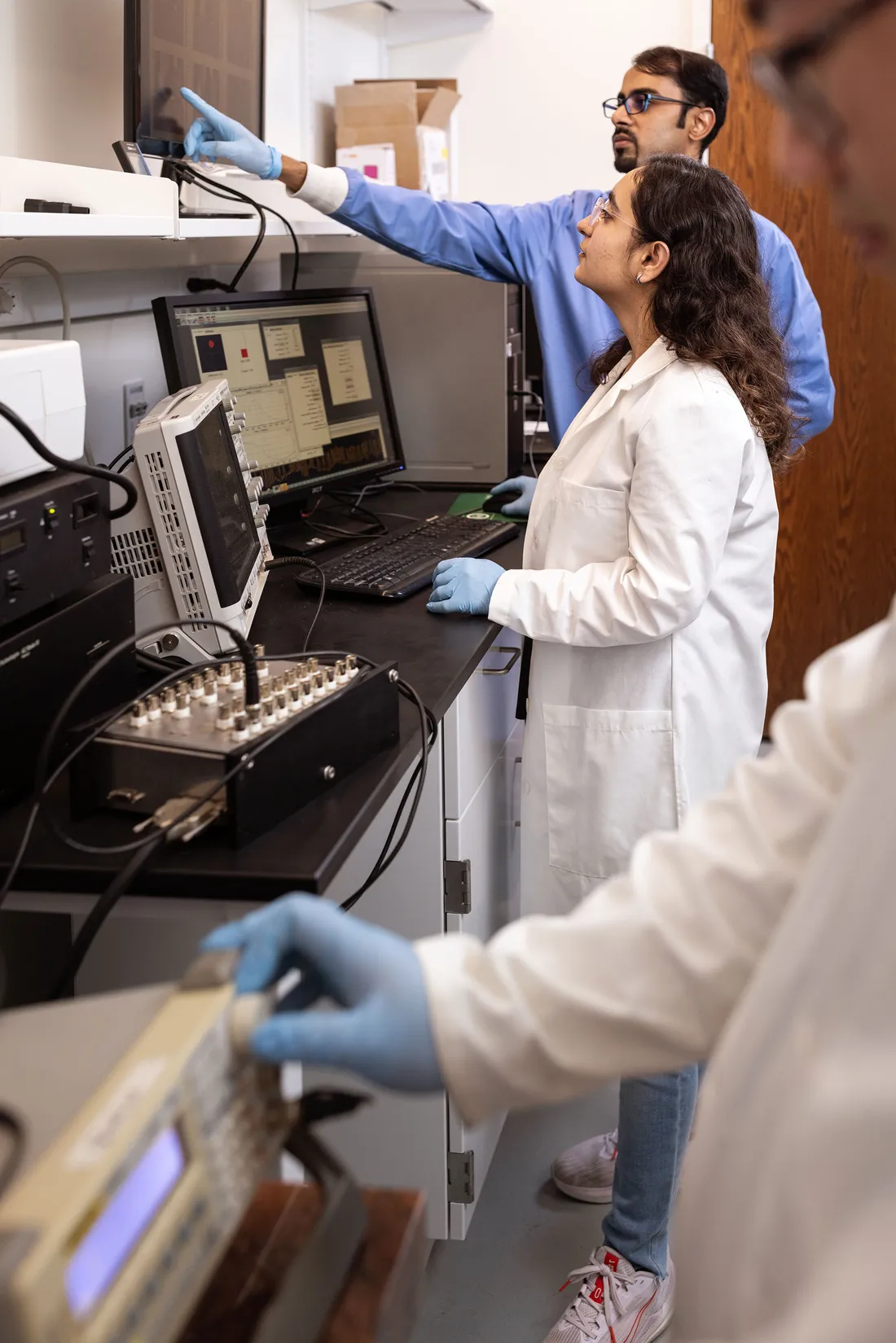
“Link Hall is like one-stop shopping for research and design,” says Ph.D. candidate Muhammad Bilal Faheem Sattar, who is reviewing atomic force microscopy images with fellow candidate Vanshika G’26.
While lithium-ion batteries are known for their quick recharge and long cycle life, their liquid electrolytes are environmentally harmful and potential fire hazards.
Thus, Qiao sees vast potential in solid-state batteries, which use solid electrolytes and can store up to 10 times more energy.
This has inspired one of his Ph.D. students, Muhammad Bilal Faheem Sattar, to investigate battery chemical compositions and flexible “pouch batteries.” His work involves instruments like gloveboxes, spectrometers, testing stations and electron microscopes.
“Link Hall is like one-stop shopping for research and design,” he says.
Getting High-Tech, Hands-on Experience
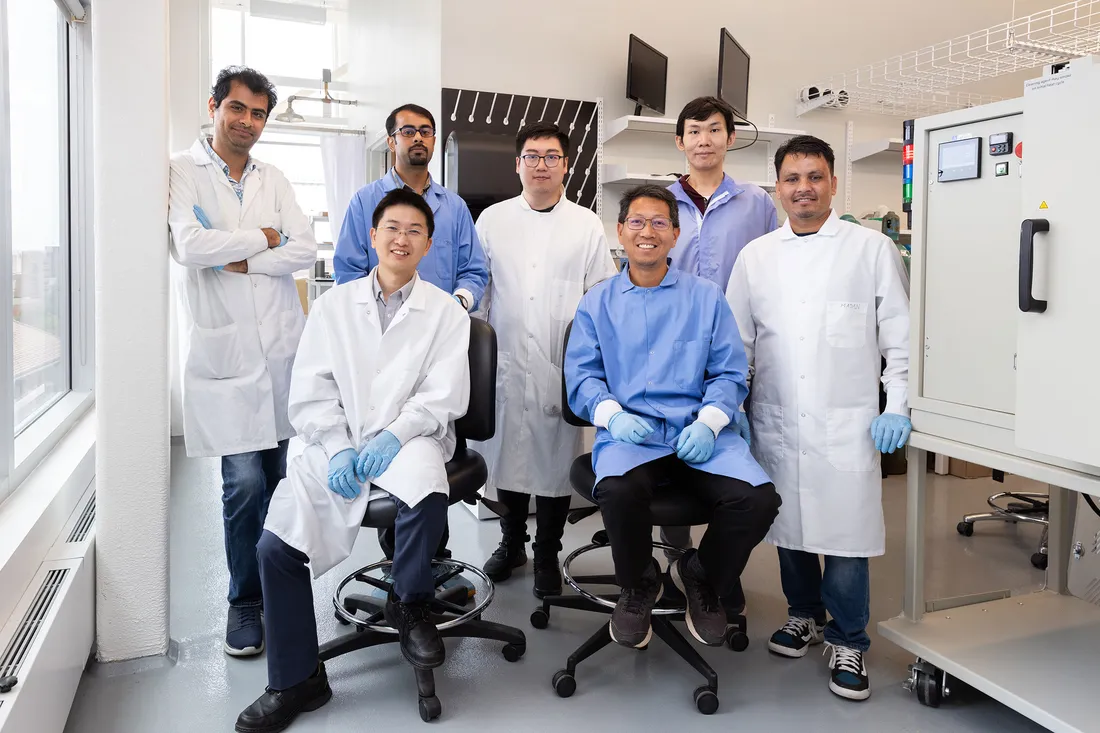
(Clockwise from left) Ph.D. candidates Amirreza Tarafdar, Sattar, Yuchen Zhang G’25, Hansheng Li G’18 and Madan Bahadur Saud G’26 as well as Professors Qiao and Yeqing Wang.
Another student, Hansheng Li G’26, has designed lithium-rich manganese oxide cathode materials. “We're accelerating materials synthesis by almost 90%,” he says, noting his use of a high-tech microwave reactor system, an ultra-high-resolution scanning electron microscope, multichannel battery testers and a vacuum lamination sealer.
His work goes beyond academic outcomes. “I'm getting hands-on experience in fabricating batteries,” says Li, who has worked with Infinity Energy, MTI, Honda, Carrier Global and the C4V battery technology company. “We’re developing a cost-effective, scalable process for manufacturing.”
Qiao’s pipeline keeps growing. Earlier this year, his lab received funding from The Raymond Corporation (part of the Toyota Industries family) for research into sophisticated material handling technologies.
“We’re exploring the possibilities of lithium iron phosphate batteries, which are commonly used in electric forklifts,” Qiao says. “These rechargeable batteries are incredibly safe and long lasting, making them ideal for many kinds of vehicles.”
We’re turning today’s students into tomorrow’s leaders.
Professor Quinn Qiao
Today’s Students, Tomorrow’s Leaders
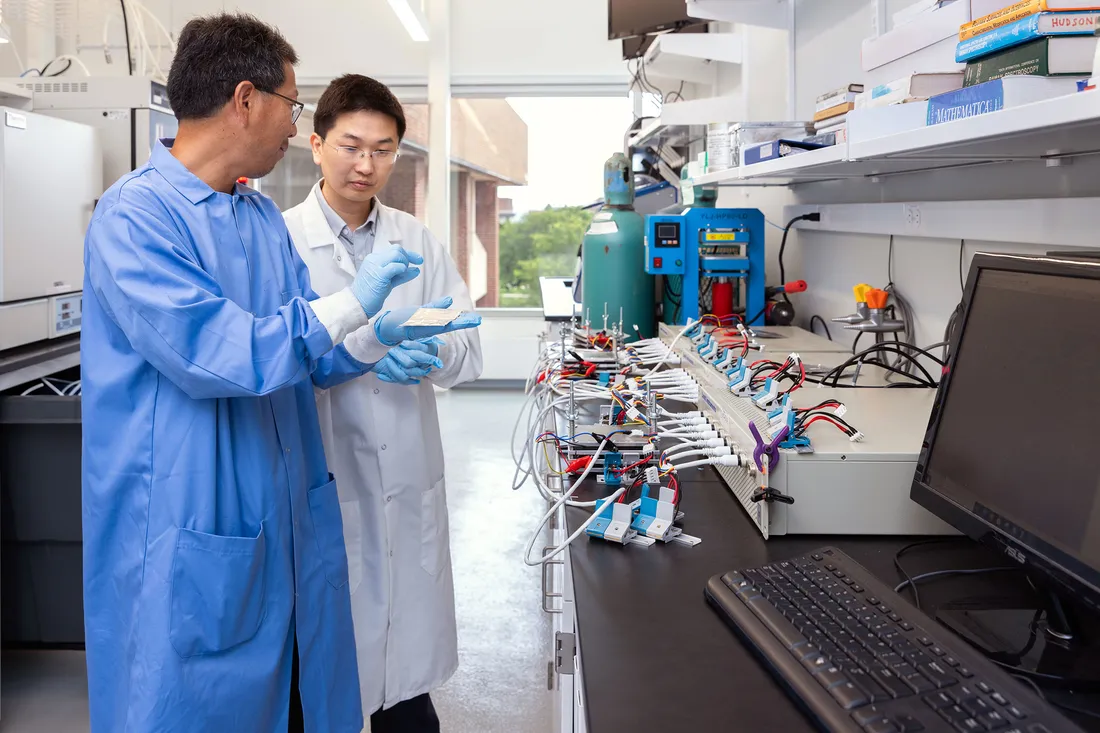
Quinn and Wang with a “pouch battery” testing system.
Evidence of Syracuse's research culture permeates Qiao's lab, which is more of a shared workspace than an individual faculty area. Engineers rub elbows with scientists and mathematicians, while students from myriad backgrounds cut their teeth on all manner of projects.
For instance, Qiao works closely with Associate Professor Yeqing Wang. Using ECS’ Composite Materials Lab, Wang designs and fabricates sustainable binder materials for lower energy consumption and faster processing.
Afterward, he transfers the binders to Qiao's lab, where they’re assembled into coin-cell batteries.
“We use a glovebox to build the specimens and then coin-cell and pouch-cell battery testers to characterize and measure their charge-discharge performance,” Wang says. “By incorporating sustainable materials, like frontal resins, we reduce energy consumption during materials processing and improve battery efficiency.”
Qiao shares an interest in materials science with Yeqing Wang, an assistant professor of MAE who designs and fabricates sustainable anode materials in ECS’ Composite Materials Lab. Wang transfers the anodes to Qiao’s lab, where they’re assembled into coin-cell batteries.
“We use a glovebox to build the specimens and a coin-cell battery tester to characterize and measure their charge-discharge performance,” Wang says. “By incorporating sustainable materials, like flake graphite, we reduce energy consumption during materials processing and improve battery efficiency.”
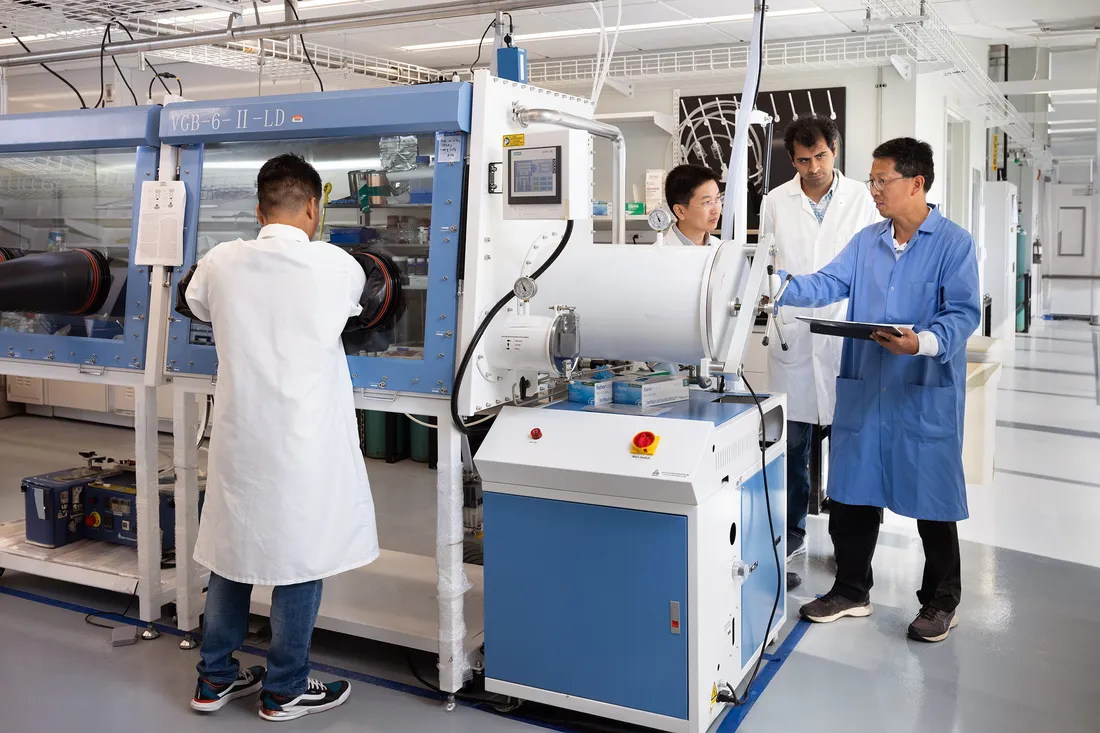
Saud uses a glovebox to manipulate materials in a separate environment. He’s joined by Wang, Tarafdar and Qiao.
Other success stories abound.
Madan Bahadur Saud G’26 has designed a lithium-metal battery that could help revolutionize the EV and energy storage industries. He inserts trace amounts of impurities called “dopants” into battery cell electrolytes to increase their ionic conductivity and improve their electrode stability.
And there’s Yuchen Zhang G’25, who has refined an atomic force microscopy (AFM)-based technique that could benefit off-grid power systems, solar-powered vehicles and large-scale electricity generation.
“We have a patent on a characteristic of this AFM technique,” says the solar cell specialist. “Our findings support the environmental and economic impacts of green energy.”
Qiao notes the urgency of this research. “We're turning today’s students into tomorrow's leaders,” he says. “It’s work with educational, environmental and economic consequences.”