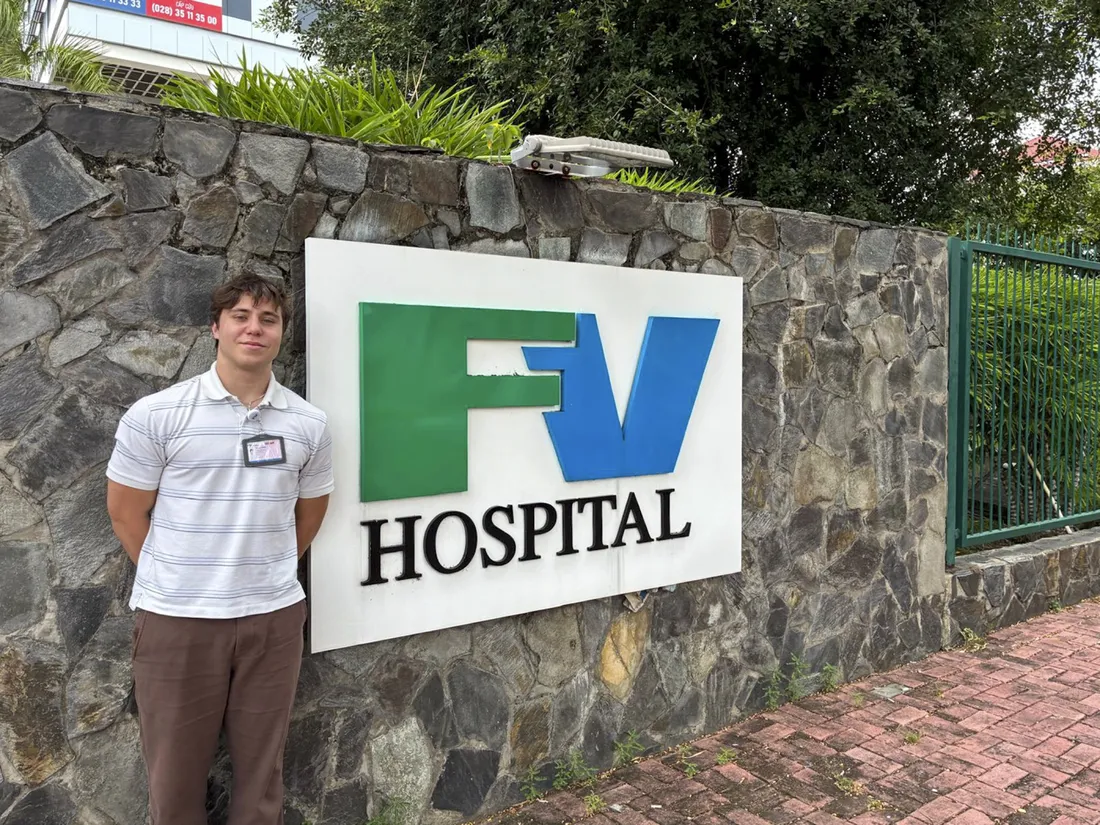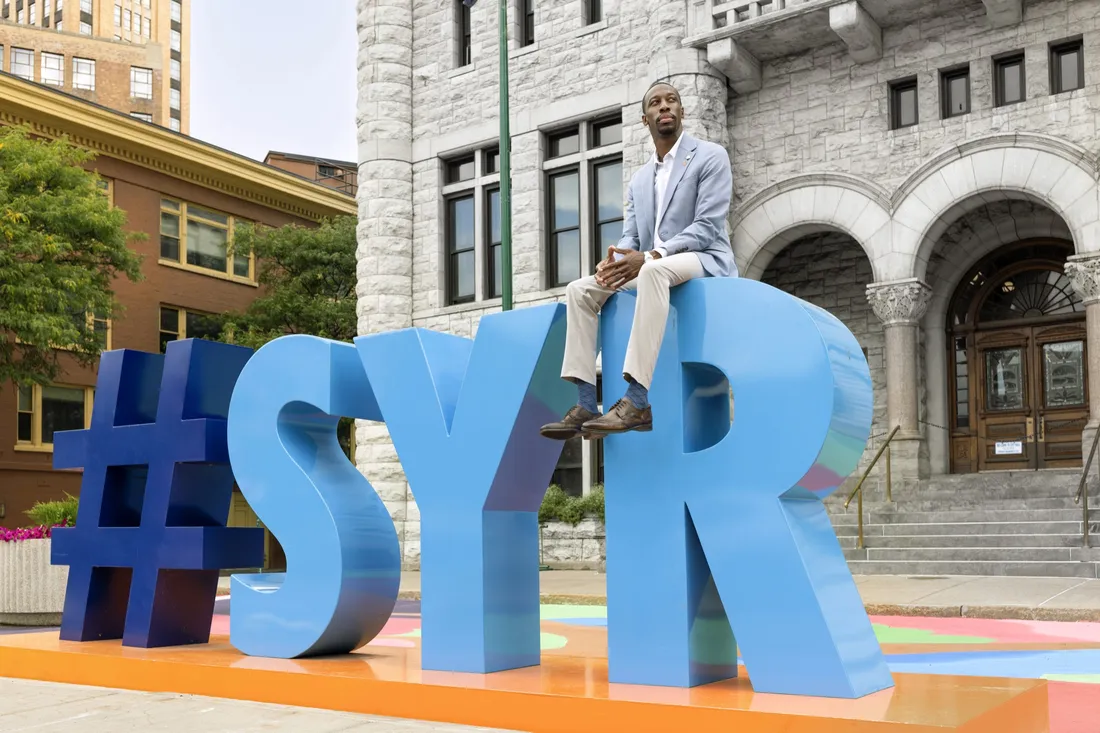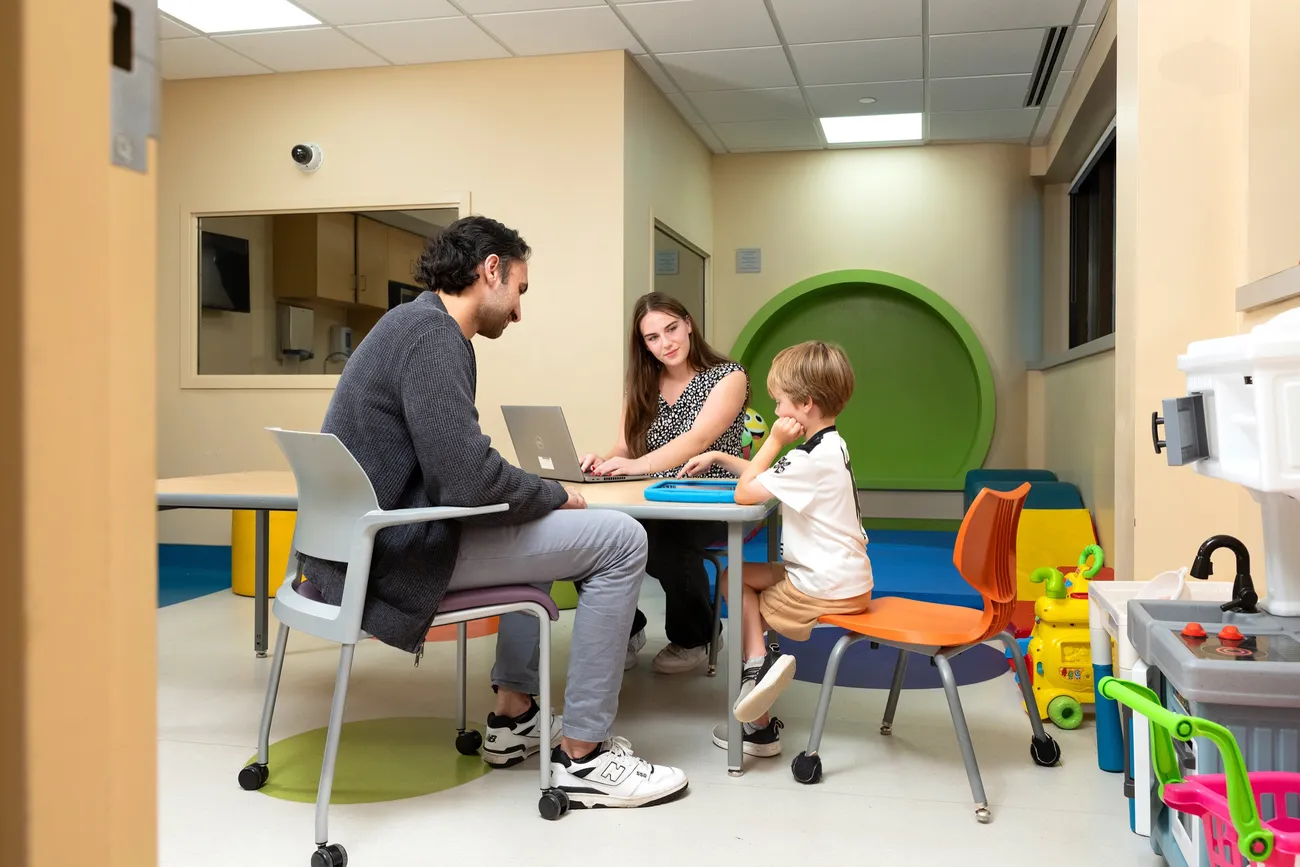
Internships that have launched Carter Rowe ’25 into a career at the Golisano Center for Special Needs (GCSN) are now available to a wider population of Syracuse University students, courtesy of a new pilot program with SUNY Upstate Medical University.
The program enables 20 undergraduates to gain clinical and translational research experience at GCSN, a national leader in the treatment of patients with intellectual and developmental disabilities.
GCSN is part of Upstate Golisano Children’s Hospital, the primary training ground for SUNY Upstate medical students, pediatric residents and nursing fellows.
“Meeting with clients and talking to family members gave me a new appreciation for my field,” says Rowe, who interned at GCSN for two years while majoring in psychology at Syracuse. “Those moments catalyzed my interest in severe behavior disorders and led me to the path I’m on.”
Today, Rowe is a behavioral technician at GCSN, where he’s pursuing a master’s degree in behavioral analysis studies. His thesis advisor is his former internship supervisor, Courtney Mauzy, a licensed psychologist and pediatrics professor at SUNY Upstate.
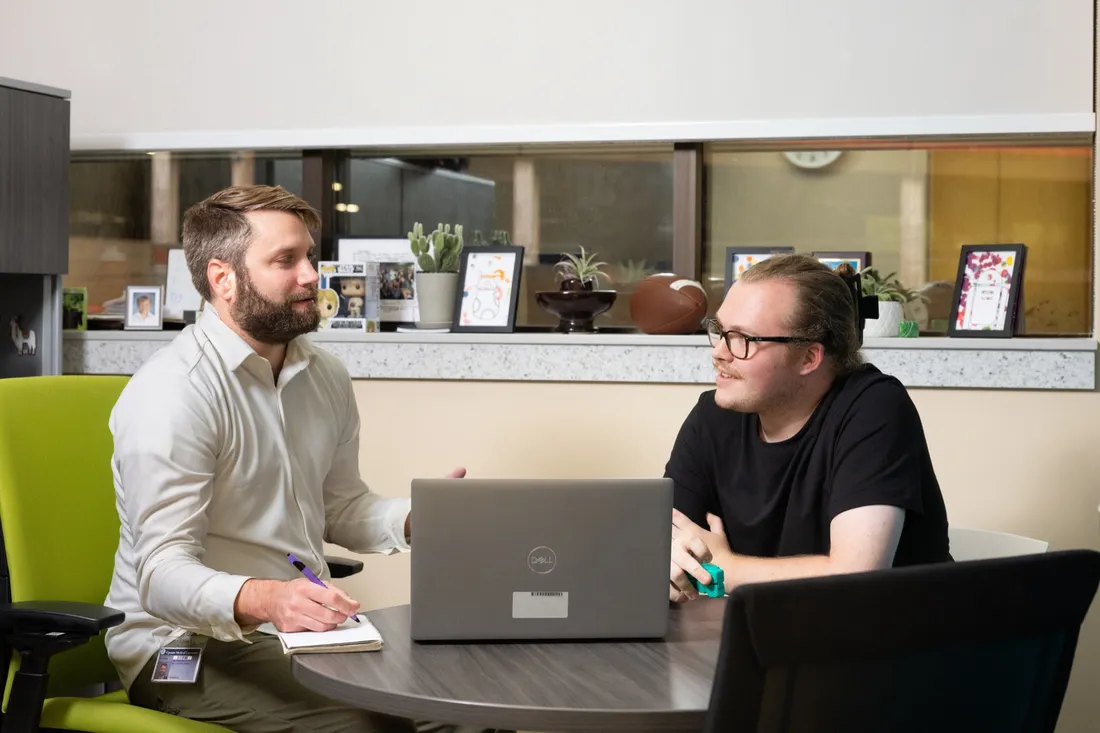
Dr. Courtney Mauzy (left) and Carter Rowe ’25 at the Golisano Center for Special Needs (GCSN). The center is the site of a new pilot program between Syracuse University and SUNY Upstate Medical University.
Mauzy helped design the new initiative with Kristen Aust, director of career advising in Syracuse’s Office of Student Success, which serves the College of Arts and Sciences and Maxwell School of Citizenship and Public Affairs.
“With the successful start of the pilot, the plan is for GCSN to host 20 new students each semester,” she says.
Students work in one of four areas at GCSN: the Biobehavioral Health Unit (BBHU), an inpatient psychiatric unit; the Complex Behavior Program, an outpatient psychiatric unit; the Behavior Analysis Murine (BAM) Lab; or the Pediatric Feeding Disorders Program.
“Most of them are juniors and seniors majoring in biology, psychology or human development and family science,” Aust says. “Each one spends 10-20 hours a week [at GCSN] putting theory into practice.”
Congruity of Care
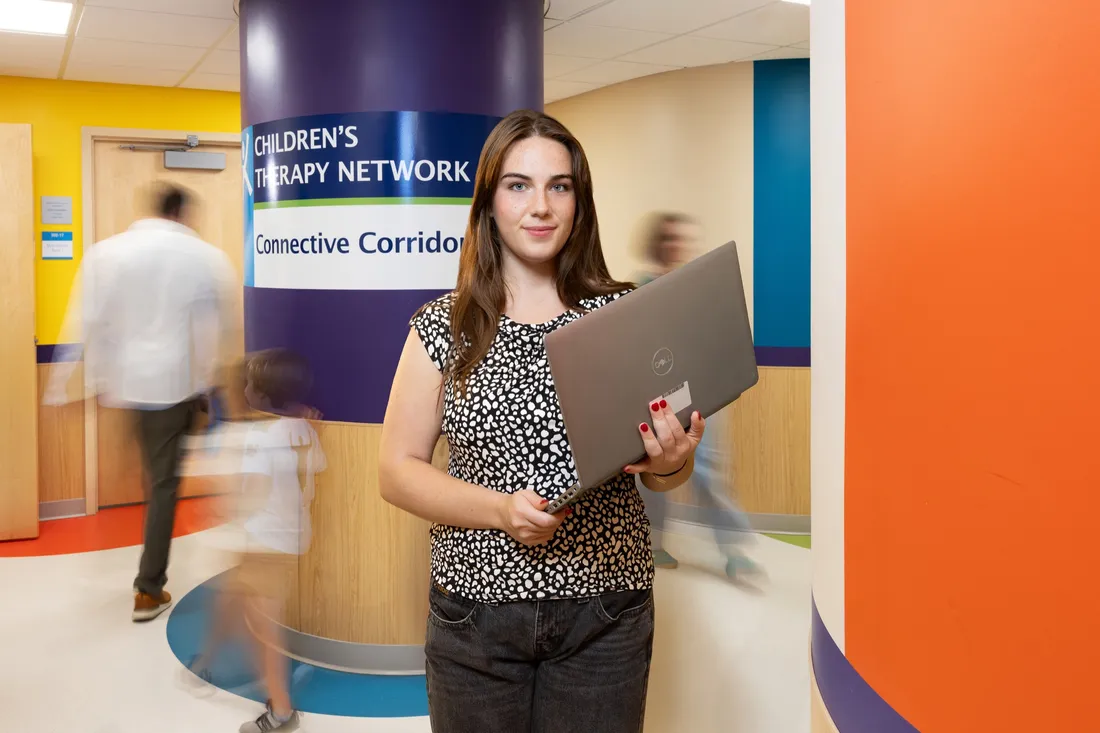
Gabby Garcia ’27 is a member of the pilot program’s inaugural cohort. She has interned at GCSN for the past two years.
Biology major Gabby Garcia ’27 is part of this fall’s inaugural cohort, drawn from a pool of more than 120 applicants.
Fresh from a SUNY Upstate Summer Undergraduate Research Fellowship, she began interning at GCSN two years ago—first at the Complex Behavior Program and then the BBHU. “I was exposed to outpatient and inpatient programs before getting traditional lab experience in the BAM Lab,” says Garcia, who also has studied pediatric feeding disorders.
She’s currently completing an externally funded undergraduate research project in behavioral analysis.
“This program makes me a more well-rounded candidate for med school and a more confident member of the scientific community,” Garcia adds.
Located near Syracuse’s main campus, GCSN enables students to engage with patients diagnosed with autism spectrum disorder, genetic disorders and severe behavioral or feeding challenges.
This program makes me a more well-rounded candidate for med school and a more confident member of the scientific community.
Gabby Garcia ’27
Mauzy, who oversees the Complex Behavior Program, notes the “congruity of inpatient and outpatient care” that sets GCSN apart from other behavioral treatment centers.
“There are only four or five other places in the country that do what we do,” he says, noting GCSN’s outpatient treatment success rate and “unique” support services for parents and guardians. “Our goal isn’t to keep patients institutionalized but, rather, to return them to everyday community living.”
Training the Next Generation

Kristen Aust (center) is director of career advising in the Office of Student Success, serving Arts and Sciences and the Maxwell School. She designed the pilot program with Mauzy at SUNY Upstate.
Aust traces the origins of the pilot program to Syracuse’s Health Professions Immersion Trip, where undergraduates in Arts and Sciences and the Maxwell School spend a day visiting area hospitals, health centers and pharmaceutical companies.
“The trip is so popular that students often inquire about opportunities at SUNY Upstate,” she says.
Aust is “thrilled” to help train the next generation of healthcare professionals, a workforce reeling from post-pandemic shortages and burnout. She notes that plans are underway to replicate the GCSN model elsewhere in Central New York.
That the average intern-to-job conversion rate has surged to 63.1%—its highest in five years, according to the National Association of Colleges and Employers—is potentially good news for students like Garcia.
“Syracuse is helping me get my foot in the door,” she says. “This program is a strong addition to my resume.”