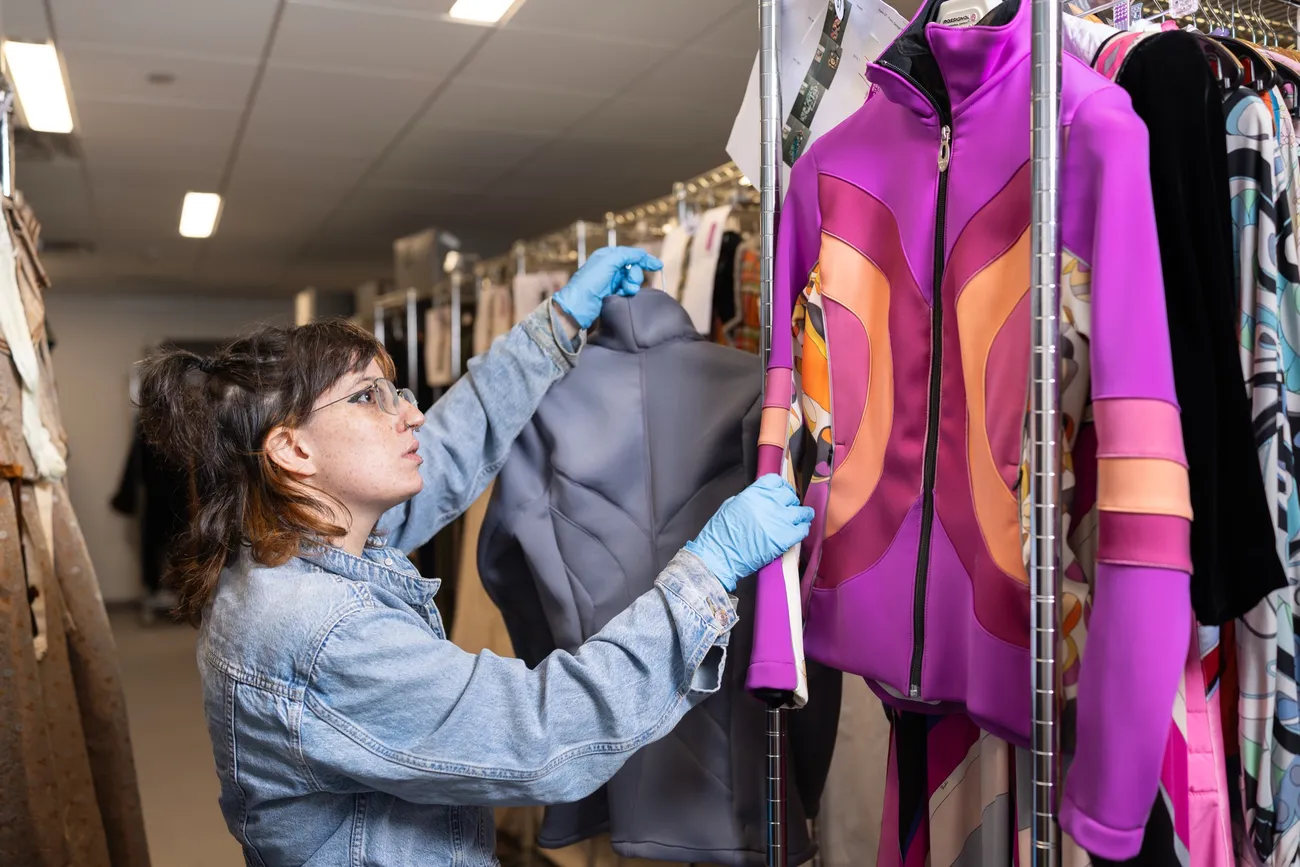
Located on the seventh floor of the Nancy Cantor Warehouse, the Sue Ann Genet Costume Collection contains thousands of women’s garments and accessories from the past two centuries.
The first thing one notices upon entering Syracuse University’s Sue Ann Genet Costume Collection is the temperature.
“We keep everything cold to reduce the rate of decay,” says Kirsten Schoonmaker, an assistant teaching professor in the School of Design. “Because textiles are organic and fragile, environmental control is vital to their preservation.”
Occupying the seventh floor of the Nancy Cantor Warehouse in downtown Syracuse, the 92-year-old collection is curated by Schoonmaker’s colleague, Professor Jeffrey Mayer, who also coordinates the fashion design B.F.A. program.
They point out that the collection contains more than 3,200 functional and decorative objects for women from the past two centuries. Special emphasis is on the American Progressive Era (1890-1920), marking the transition from rigid Victorianism to a more functional, informal aesthetic.
Also featured are garments and accessories by such 20th-century stylists as Geoffrey Beene, Bill Blass and Mary McFadden.
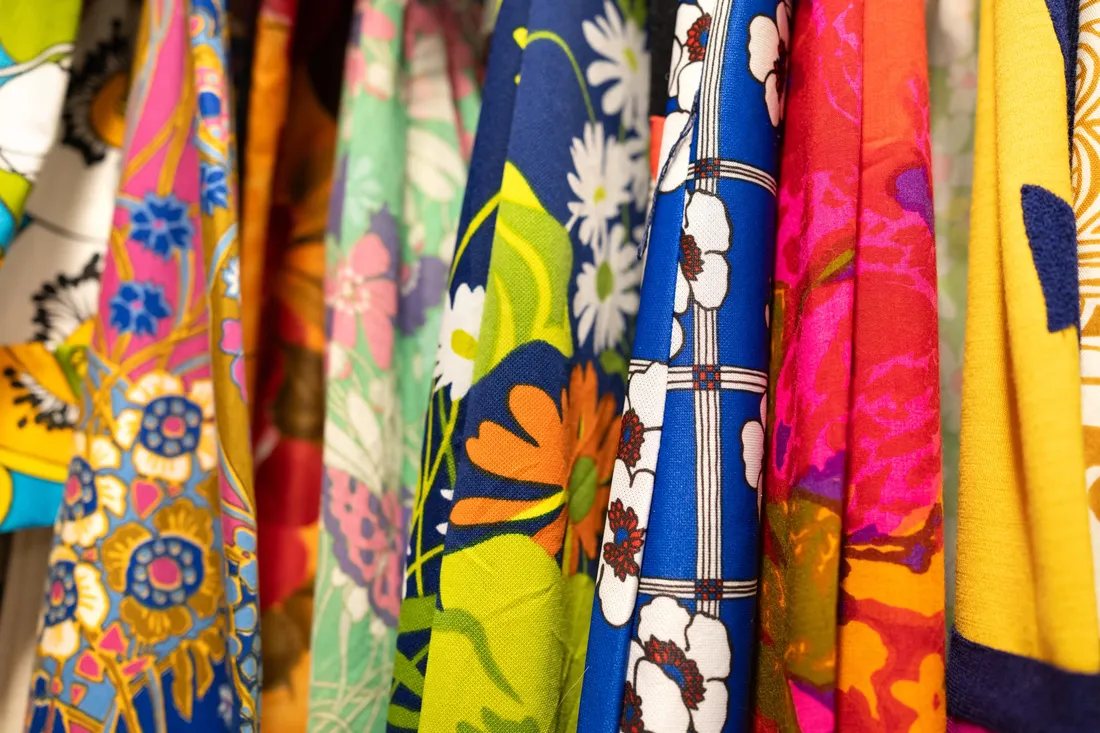
“Our holdings highlight a range of textiles, fashions and production techniques,” observes Schoonmaker, noting that some of the objects—like the gown that Vanessa Williams ’85 wore upon being crowned Miss America—have compelling backstories.
Kieran Romano, a senior majoring in fashion design, marvels at the sartorial splendor. “Many pieces are rare and very delicate,” he says. “They’re wrapped in acid-free tissue for their own protection.”
Of course, he and Schoonmaker have more than conservation on their minds.
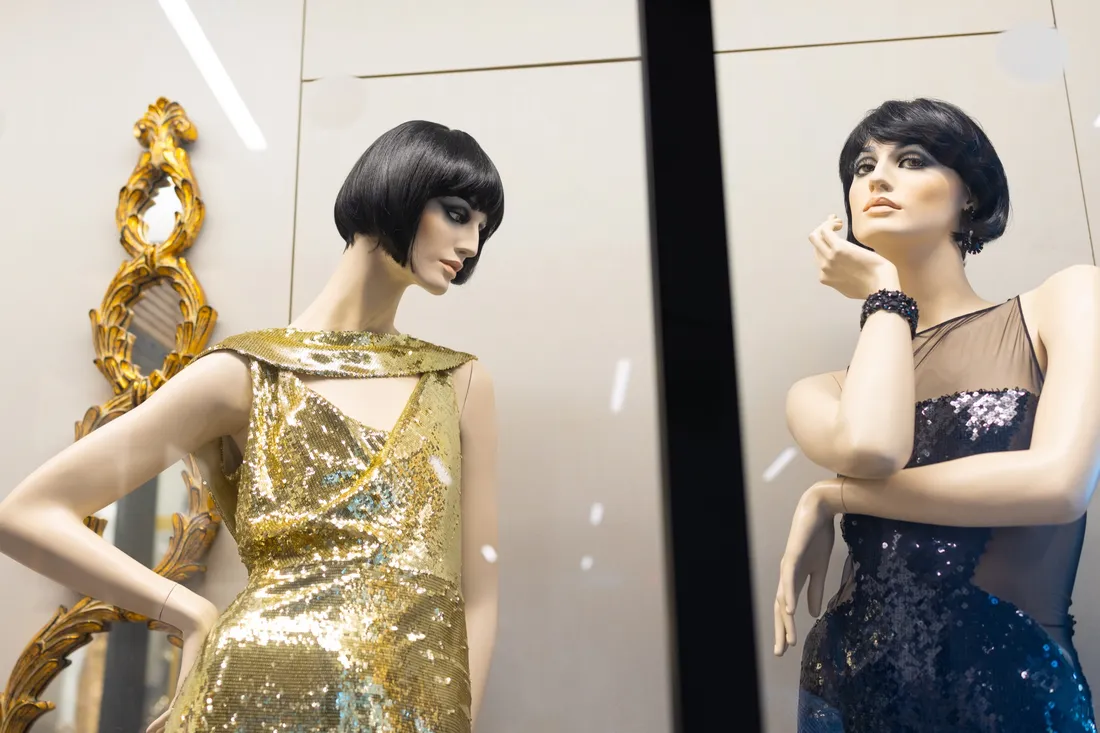
The collection provides hands-on access to period objects, explains Kirsten Schoonmaker, an assistant teaching professor in the School of Design. “They’re vital educational tools.”
“In our industry, there’s a big debate over preservation and accessibility,” says Schoonmaker, who’s based in the College of Visual and Performing Arts (VPA). “I believe we should let students hold, manage and manipulate objects. They’re vital educational tools.”
Romano agrees, noting “physical engagement” with the collection informs his practice, whether he’s creating original garments or recreating existing ones.
An aspiring technical designer, Romano is excited about VPA’s acquisition of 2,500 pieces from the estate of Claire Shaeffer, a legendary couture expert and educator.
“They will inspire students, teachers and scholars for generations to come,” he adds.
Fashion as Art
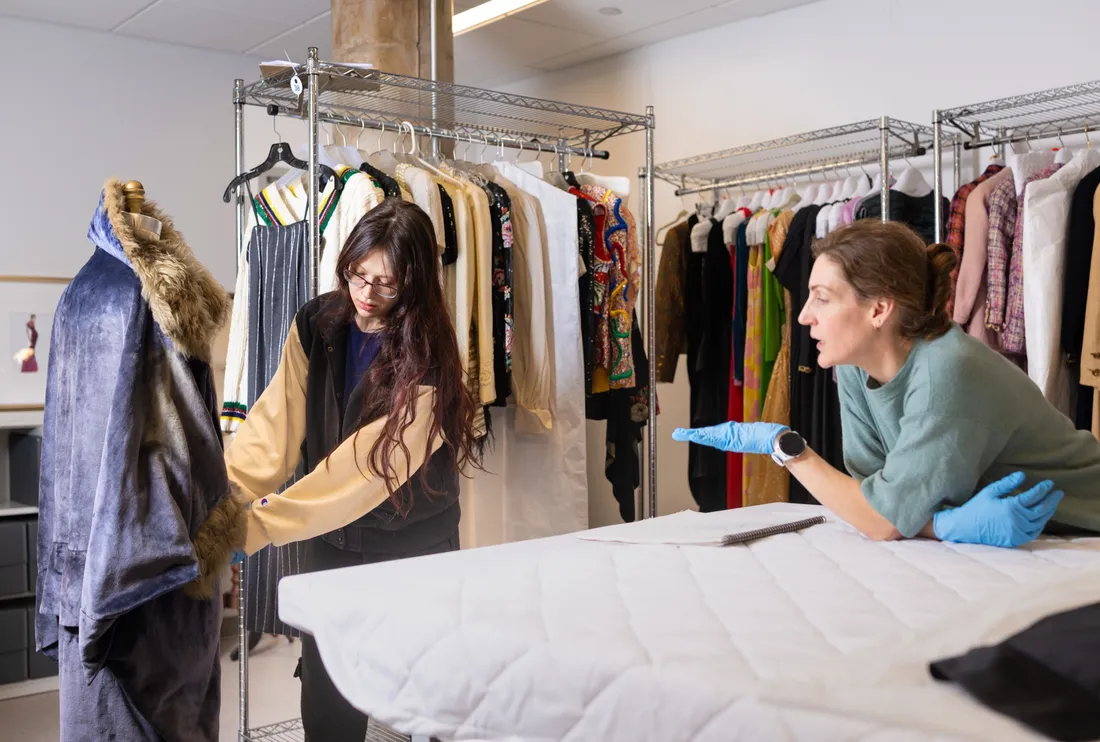
“In our industry, there’s a big debate over preservation and accessibility,” says Schoonmaker (right), a self-avowed “garment archaeologist.” “I believe we should let students hold, manage and manipulate objects.”
Spring semester is a critical time for Schoonmaker’s students because it coincides with the Senior Capstone Fashion Show in March and the Met Gala in May.
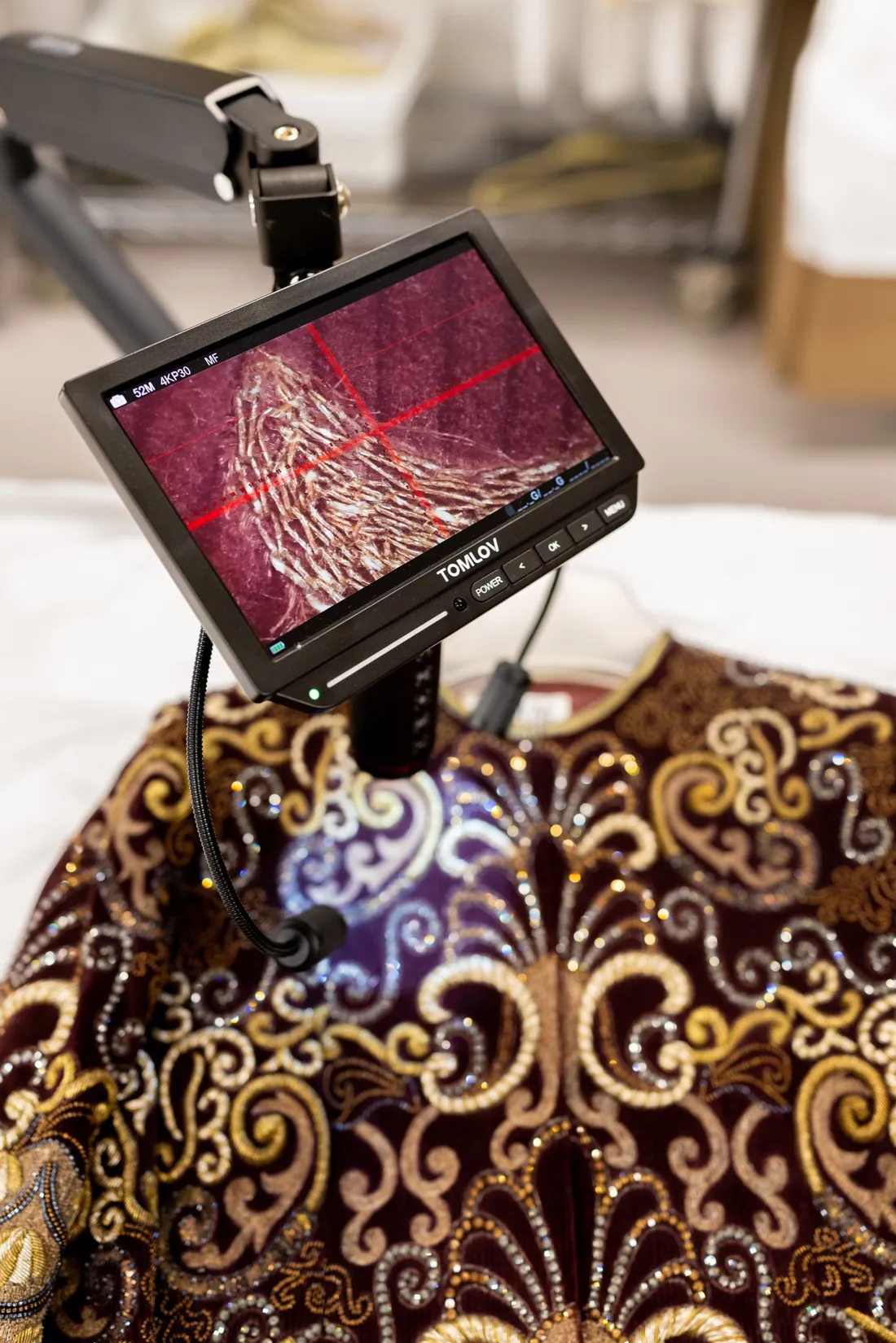
Microscopy supports the conservation and study of the Genet Costume Collection, revealing detailed information about how historical clothing has been made and utilized.
This year’s capstone featured collections by 26 seniors, the largest cohort in recent memory.
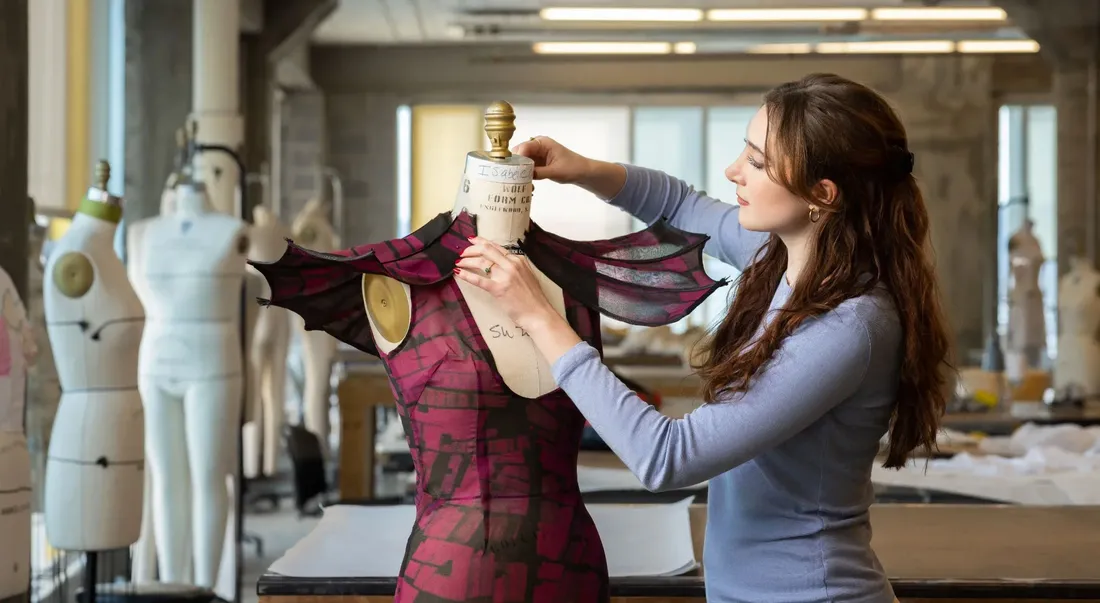
Senior Paige Mathes spent months constructing a small, tightly curated capsule of pieces—a “six-look collection,” in runway parlance. Although her pieces leaned toward high fashion, they drew inspiration from vintage cocoon coats in the Genet collection.
“I looked at their construction up close and then used them as reference for my own design process,” says Mathes, whose award-winning collection included an eclectic black and white set made from woodgrain faux fur, boiled wool knit and felt.
Mathes credits Syracuse “in a big way” for helping her find her voice. “I’ve had a stutter my whole life, so non-verbal communication is close to my heart,” she says. “Fashion enables me to express myself on my own terms.”
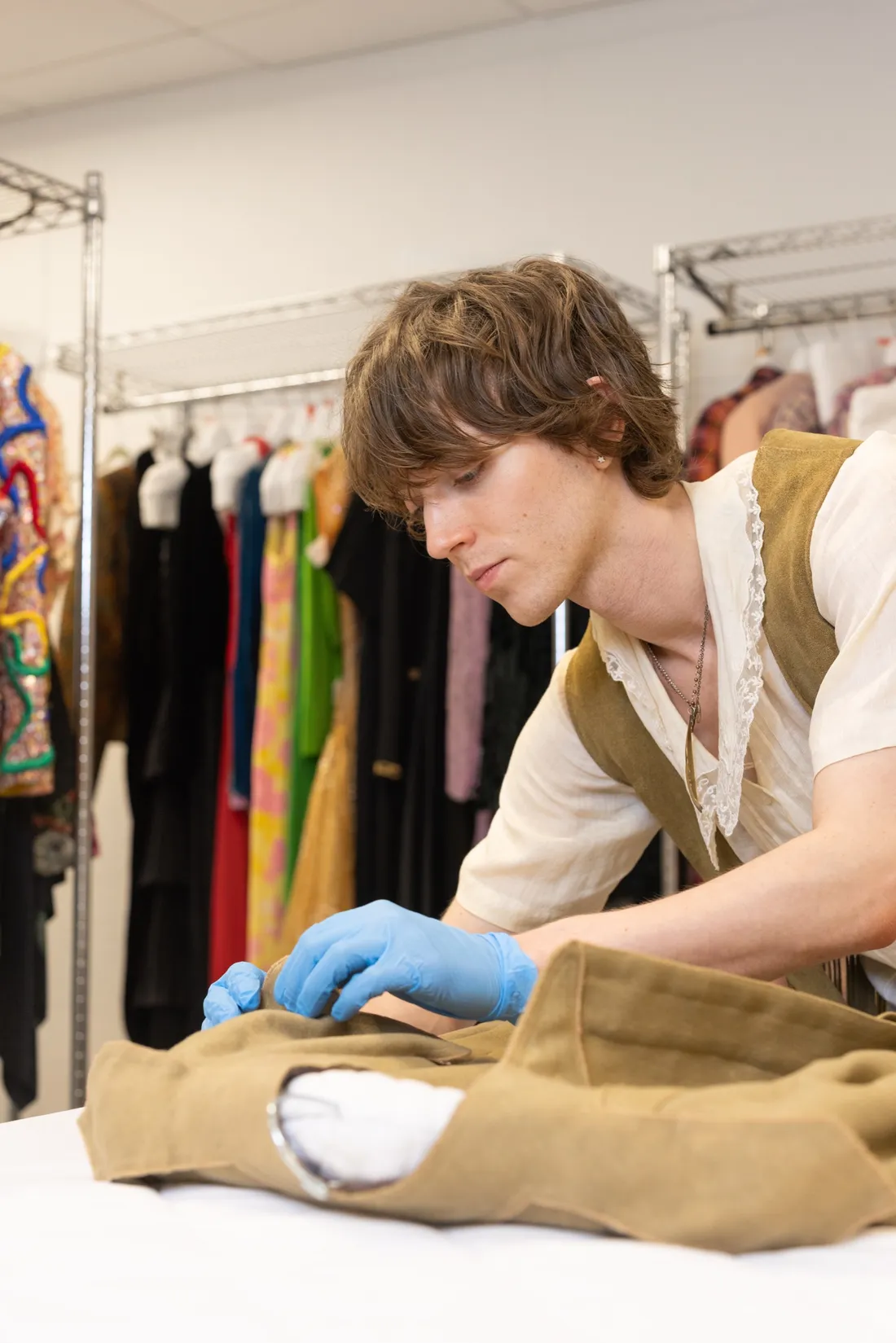
Kieran Romano ’26 says “physical engagement” with the collection informs his practice, whether he’s creating original garments or recreating existing ones.
Romano also considers fashion a form of self-expression, one that communicates moods and values. Even a seemingly innocuous activity, like converting 2D flat sketches to 3D designs, can “speak volumes about one’s identity,” he says.
“I’m more interested in making period-accurate clothing than sourcing mass-produced materials,” says Romano, a sustainability in design minor whose interests include drawing, sewing and dyeing.
Like most aspiring designers, he splits time between Syracuse and New York City, having interned at such luxury brands as Proenza Schouler and Kiki de Montparnasse.
The Metropolitan Museum of Art’s Costume Institute is another reason to visit Manhattan. For Schoonmaker’s students, the institute’s 33,000-piece collection, spanning 5,000 years, is a laboratory of sorts.
“The Met Gala, which raises money for the institute, is important not just for philanthropic reasons,” she says. “It embodies what we teach here, that fashion is art.”
Theoretical Knowledge, Practical Experience
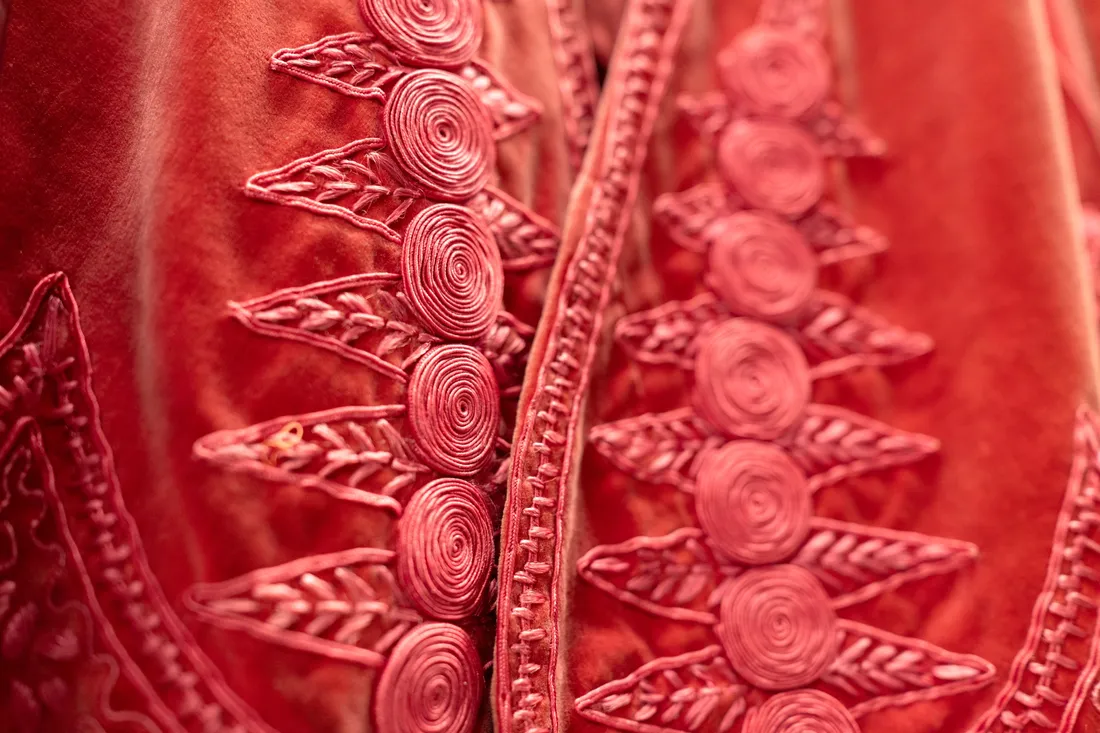
Committed to longevity and artisanal craftsmanship, haute couture (“high dressmaking”) provides a blueprint for sustainable design practices, Schoonmaker explains.
Students like Mathes and Romano reflect the current crop of designers, blending creativity, innovation and sustainability.
Not that zero-waste is a new concept.
A self-avowed “garment archaeologist,” Schoonmaker explains how early designers used natural, biodegradable materials to create garments that were easy to repair, reuse or repurpose.
That changed in the second half of the 20th century with the advent of “fast fashion.” The market suddenly became flooded with inexpensive, low-quality clothing while wreaking havoc on the environment.
“Now it’s quantity over quality,” says Schoonmaker, who teaches in the fashion design and museum studies M.A. programs.
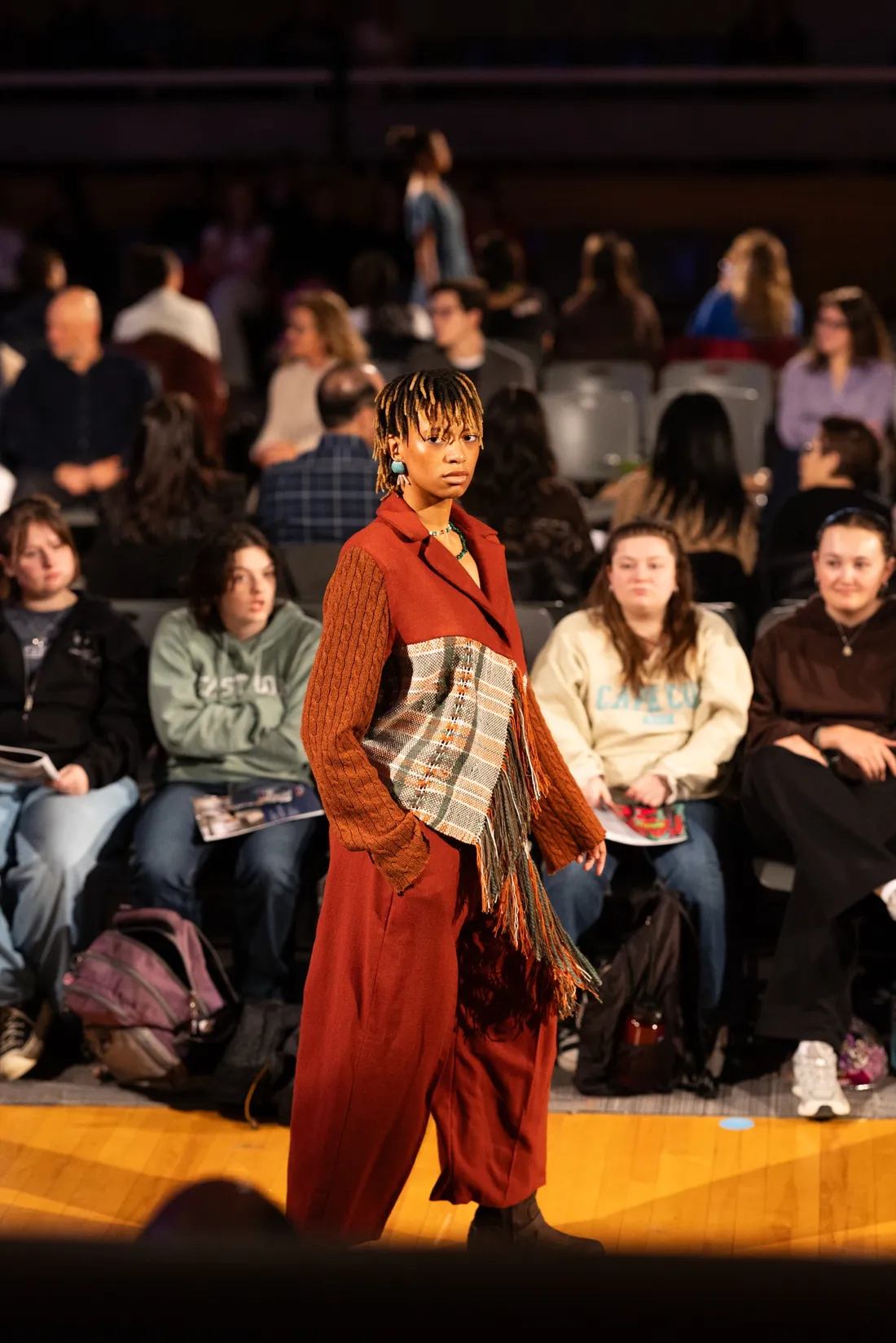
The Genet Costume Collection informs contemporary pieces in the Senior Capstone Fashion Show. This year’s event featured 26 seniors, the largest cohort in years.
Fast fashion stands in sharp contrast to haute couture, which refers to exclusive, custom-fitted garments. “My job is to see that students understand both approaches,” Schoonmaker adds.
Because fashion design is a broad, interdisciplinary field, many of her students declare minors to complement their learning. They include Kai Blunt ’26, who minors in jewelry and metalsmithing and museum studies. He wants to work in industry before earning a master’s degree in museum conservation.
Blunt lauds VPA’s holistic approach. “Where else,” he asks rhetorically, “can you study technical design, silversmithing, fashion marketing, and museum conservation and curatorship all at the same time?”
And having a teaching collection that “bridges theoretical knowledge with practical experience is a phenomenal recruiting tool,” says Schoonmaker, who’s organizing a two-day, multi-site program in June for the Textile Society of America.
Access equals opportunity. Blunt recalls helping mount and install a Victorian-era velvet dolman coat for a class exhibition.
“It was one of the greatest experiences I’ve ever had,” he exclaims, adding that the piece predates the 20th century. “Interacting with properly tailored garments is what hands-on learning is all about.”