- Syracuse University’s S.I. Newhouse School of Public Communications hosted 20 active-duty service members for its inaugural Air Force District of Washington Video Storytelling Immersion.
- Participants strengthened their visual storytelling and production skills through real-world assignments.
- The workshop reflects Syracuse University’s longstanding commitment to veterans, service members and military-connected students.
“My original plan was to get out of the Air Force, do a couple years here, get my feet under me. And, 20 years later, I’m still here,” Chancellor J. Michael Haynie says in an interview on being at the helm of Syracuse University. “This is home—it’s more than a job.”
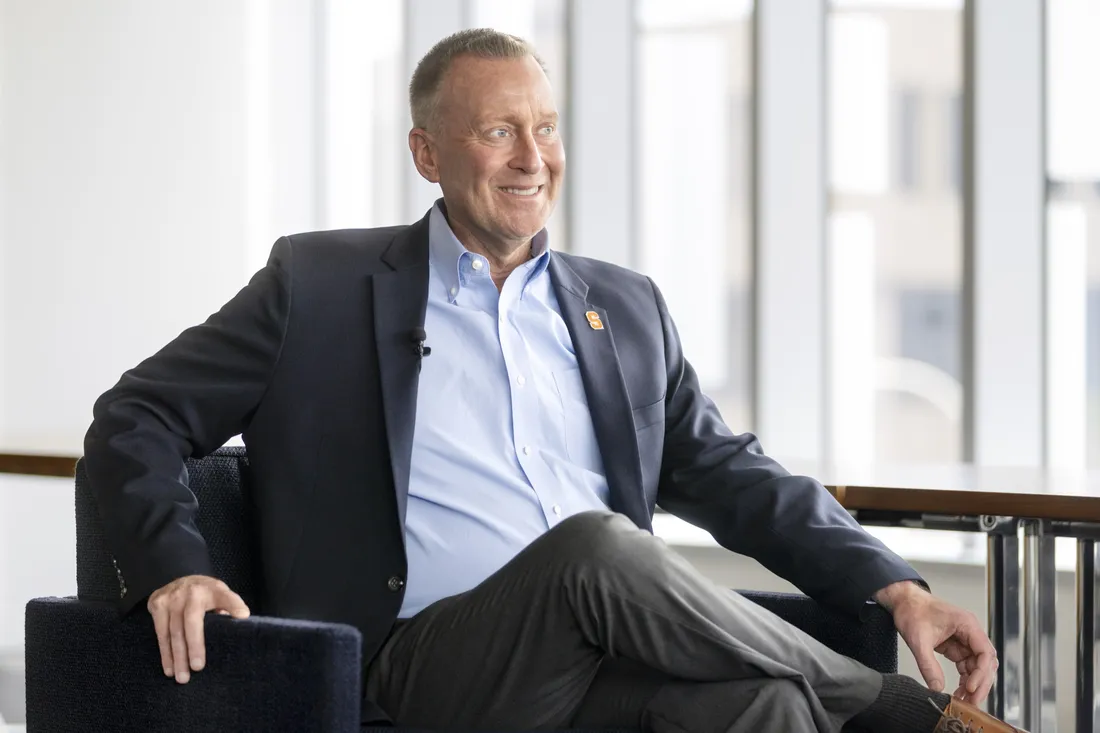
A 14-year Air Force veteran, Chancellor J. Michael Haynie draws on his own military service as he steps into his new role as Syracuse University’s 13th Chancellor—deepening the institution’s commitment to the veterans and military-connected students.
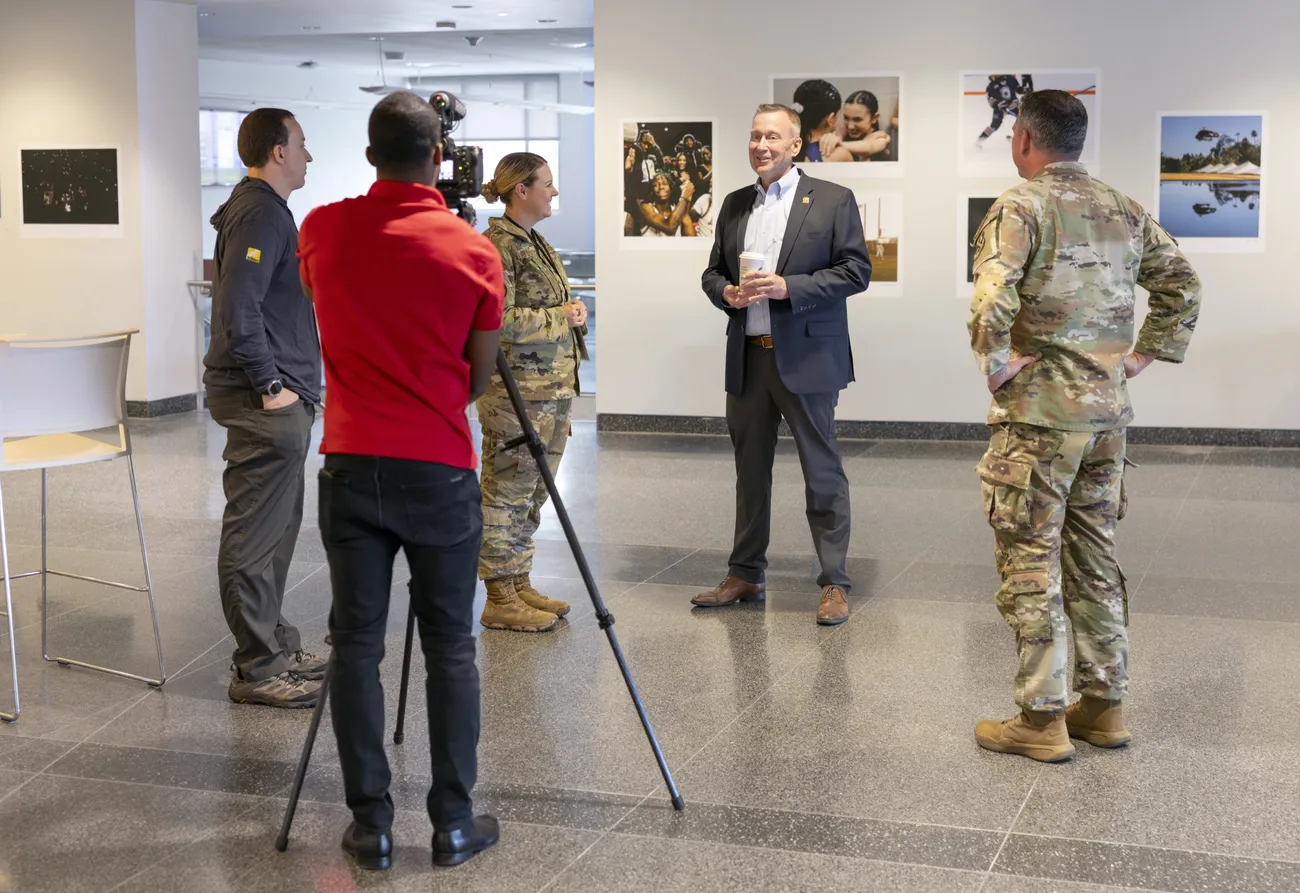
The interview, led by Senior Airman Trust Tate and Army Staff Sgt. Jamie Robinson, was just one of 10 taking place on May 13 as part of the S.I. Newhouse School of Public Communications’ inaugural Air Force District of Washington Video Storytelling Immersion.
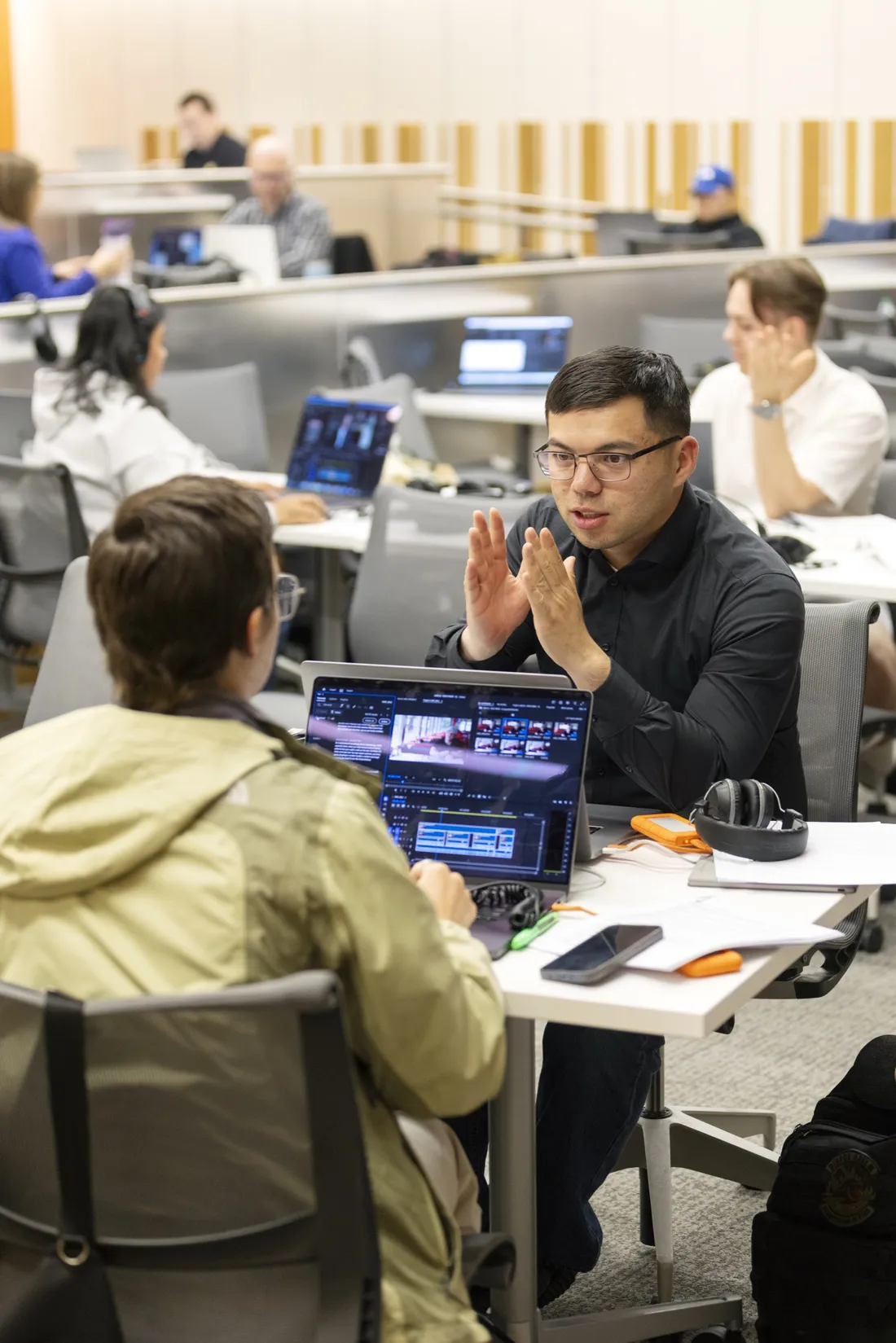
During the weeklong immersion, 20 active-duty public affairs personnel from the Air Force, Army and Navy received hands-on training from Newhouse faculty while producing videos from start to finish.
“The military teaches us to get the mission done, and being here, I’m looking to learn how to do it more efficiently,” Tate says.
A Special Assignment
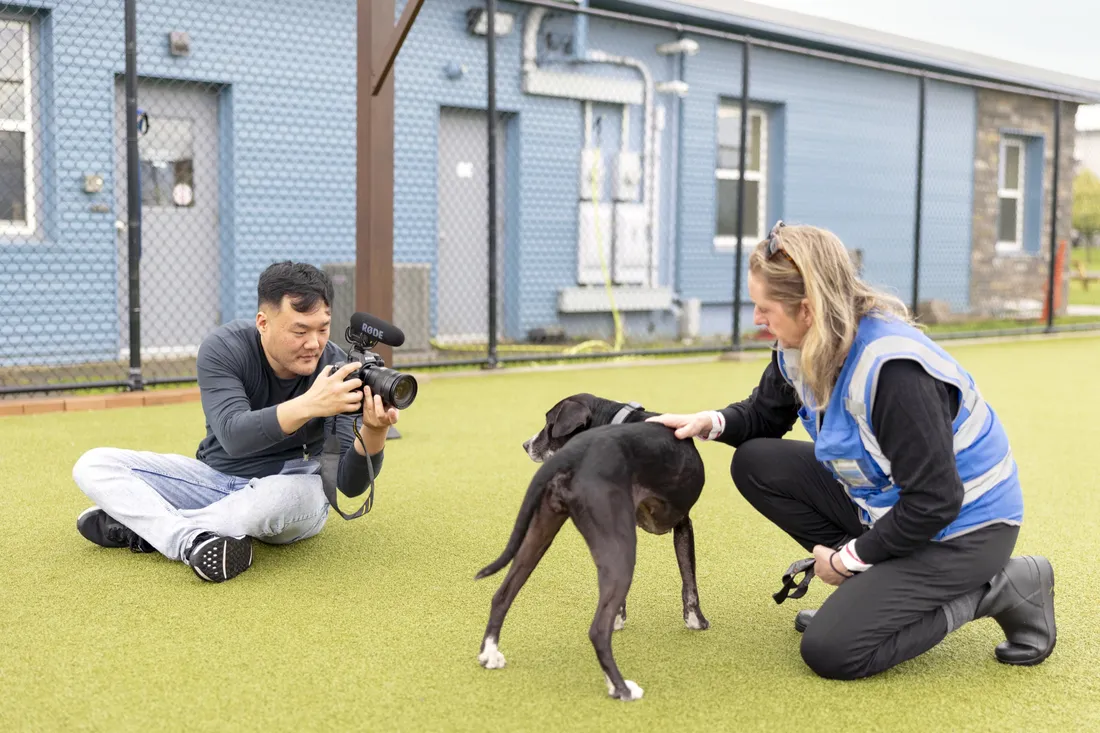
Working in teams of two, participants developed stories from concept to final edit—covering subjects that ranged from the pitmasters at Dinosaur Bar-B-Que to volunteers at Helping Hounds Dog Rescue.
The workshop challenged participants to refine their storytelling workflow. Working in teams of two, they spent the week developing stories from concept to final edit using their own equipment from the field. Assignments ranged from profiling the pitmasters at Dinosaur Bar-B-Que to documenting a longstanding women’s Mahjong group in Syracuse.
Throughout the immersion, Newhouse faculty guided students through the fundamentals of storytelling, including preproduction planning, camera work, lighting, audio, interviewing and postproduction editing.
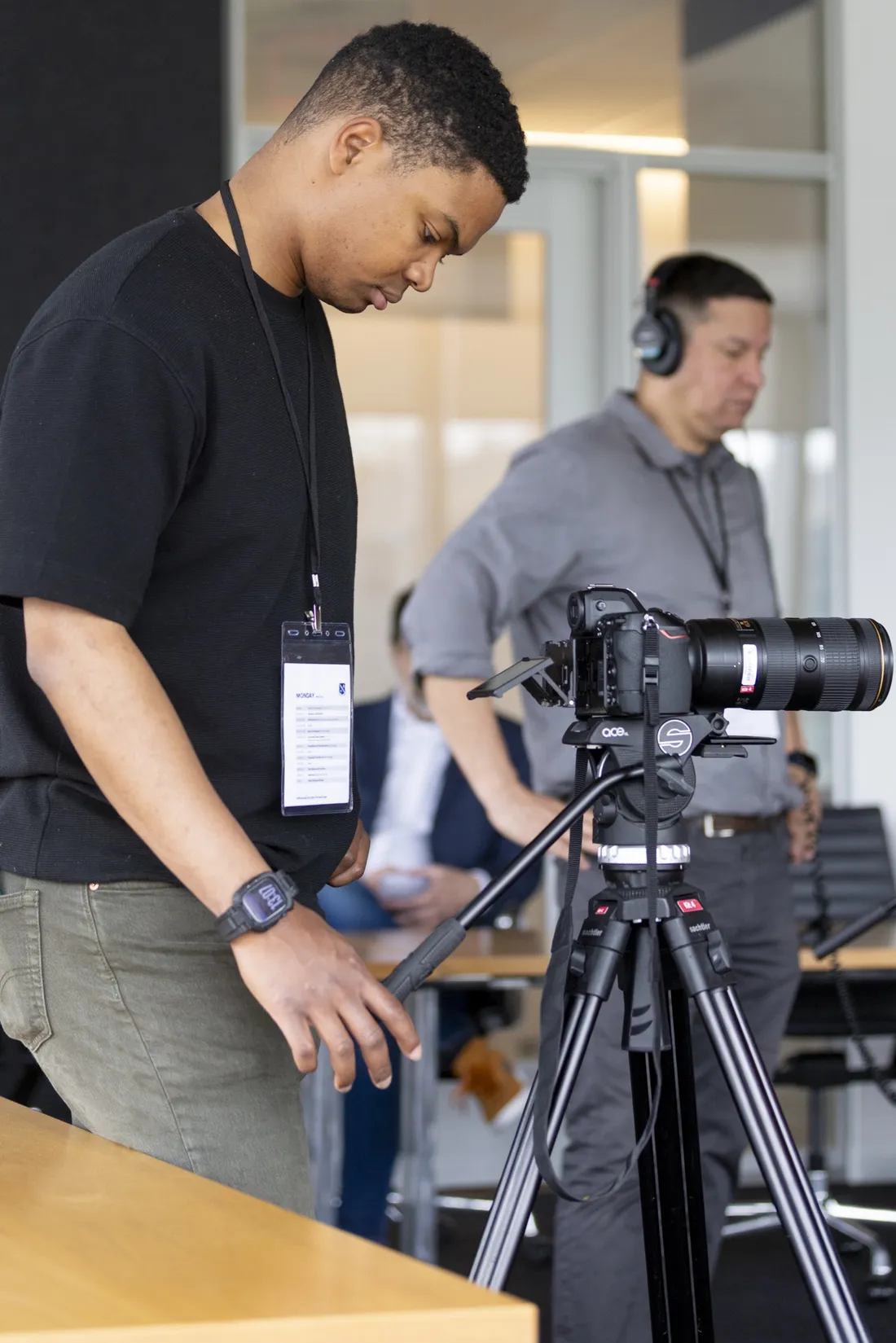
The weeklong immersion brought 20 active-duty public affairs personnel from the Air Force, Army and Navy to the Newhouse School for hands-on training in video storytelling.
For Tate and Robinson, interviewing Syracuse University’s 13th Chancellor and President just one month after he took office was a unique assignment.
“Haynie’s accomplished so much and is still doing so. But he’s very personable, which helped the interview go smoothly,” says Tate, who’s stationed at War Media Activity in Fort Meade, Maryland, covering live operations and speaking engagements with defense department officials. “I’m proud to have interviewed a fellow airman at the beginning of his next step.”
For Robinson, a former Army mechanic who later transitioned to public affairs, working in the field is an opportunity to tell unheard stories. “I like being able to capture somebody’s humanity—make them feel seen,” he says.
Now stationed with the American Forces Network in Germany, Robinson is focused on broadcasting, producing photo and video content, writing radio readers and coordinating with operations. Earlier assignments with Fort Drum’s Aviation Brigade in New York often put him alongside helicopters and flight crews. “Everyone wants coverage of air assets—if there’s a Chinook, Black Hawk or Apache, I was there,” he says.
Many of the participants are only a few years out from their initial training at the Defense Information School at Fort Meade, where all military public affairs specialists receive instruction in communications and media.
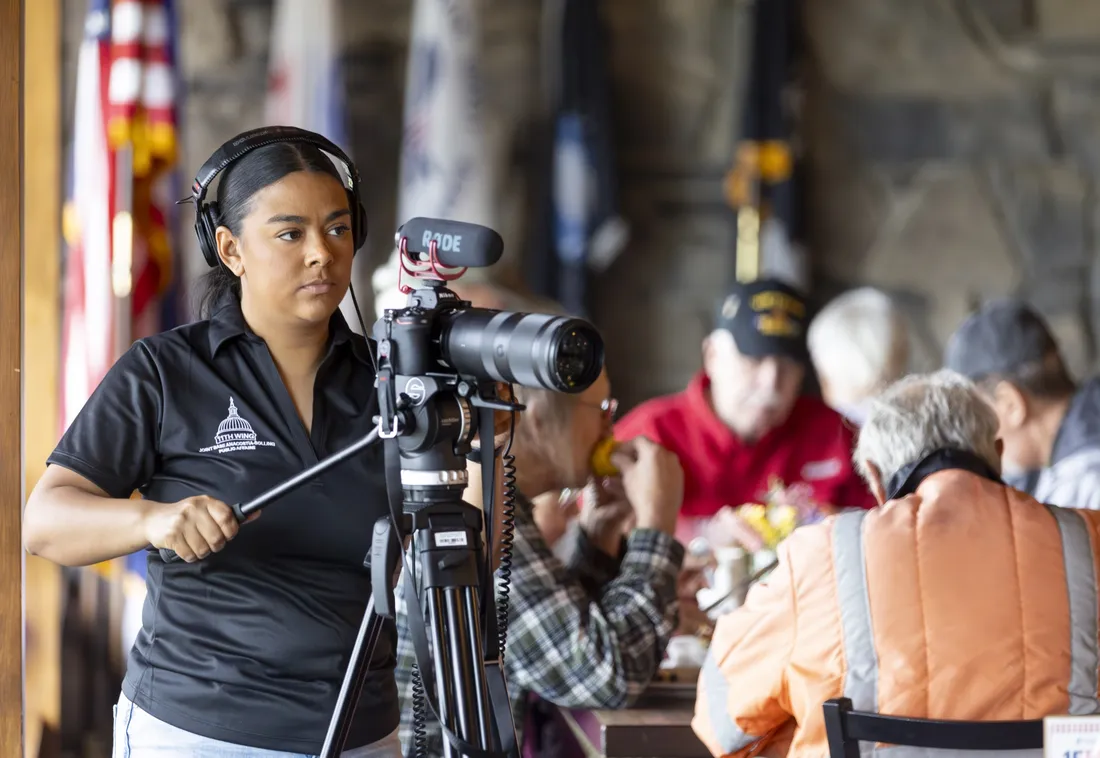
Airman 1st Class Arlene Carrara’s team spent the week documenting Clear Path for Veterans—a Syracuse-area organization that serves lunch to more than 200 veterans and their families every Wednesday.
Airman 1st Class Arlene Carrara jumped at the opportunity to join the workshop. “I knew already that Syracuse had a great communications school, so I couldn’t say no to the opportunity,” she says.
Carrara and her team partner visited Clear Path for Veterans, a Syracuse-area organization that serves lunch every Wednesday to more than 200 veterans and their families. Around 150 volunteers work each week to prepare the meals.
A public affairs apprentice stationed at Joint Base Anacostia-Bolling in Washington, D.C., Carrara hopes to become the multimedia lead in her shop. “Coming here has been such a blessing,” she says. “I want to improve my skills.”
A Reunion of Sorts
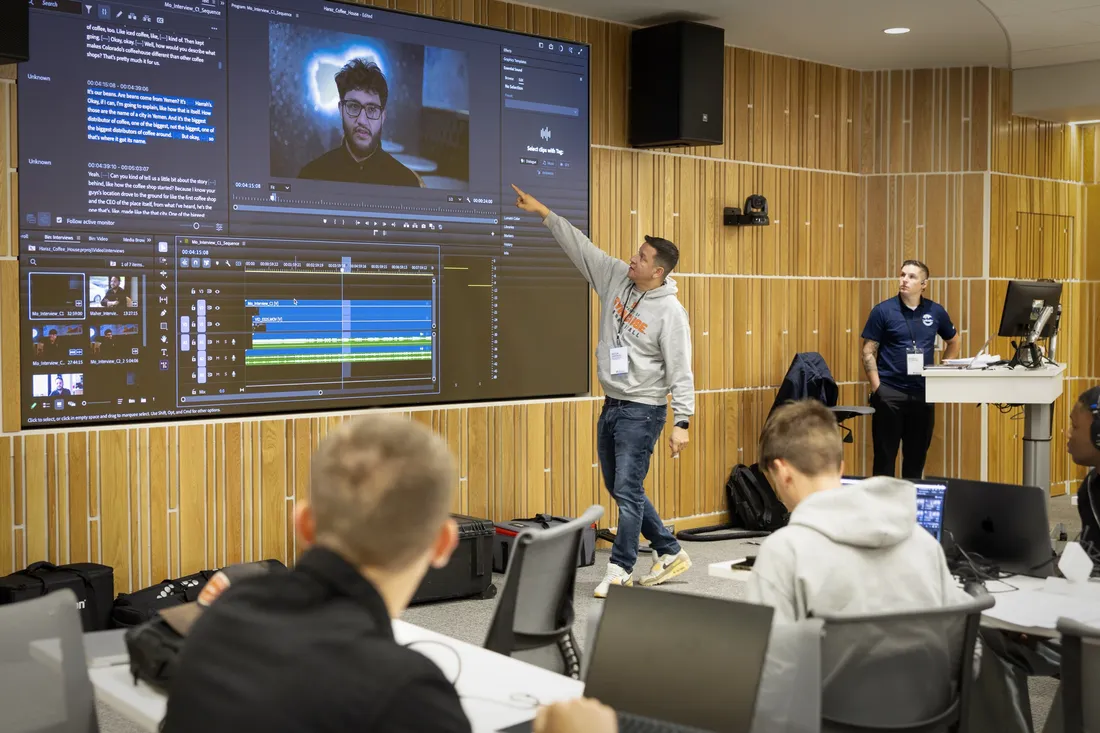
Newhouse visual communications professor Milton Santiago walks participants through the fundamentals of video production and editing as they refine their stories.
“Since I joined the military, the public affairs career field has consolidated, so instead of specializing in a single discipline, we’re trained across multimedia, writing, photography and video production,” says Air Force Master Sgt. Perry Aston, public affairs functional area manager for the Air Force District of Washington.
He says the goal is to develop well-rounded communicators, but that video production requires additional practice because of its technical nature. Public affairs specialists often head into the field shortly after completing this initial training, learning many skills on the job.
Workshops like this give public affairs specialists focused practice on developing message-driven storytelling—a skill the services increasingly rely on to counter misinformation.
The workshop built on Newhouse’s long history of training military communicators through its 63-year-old Advanced Military Visual Journalism (AMVJ) program.
“We need to be able to produce videos that not only tell a story but communicate a message,” says Aston, a 2017 AMVJ graduate. “Work like this is valuable to our ability to tell stories because information warfare is significant.”
Aston pitched the idea for the workshop to Milton Santiago, director of AMVJ and assistant professor of visual communications at Newhouse. “We started brainstorming—could we take our curriculum, make it more compact and get Air Force and Army back in the building?” Santiago says.
And as alumnus of the program, Aston says he wanted participants to experience the same immersive environment that shaped his own career. “Syracuse is a military-friendly school with instructors who have been teaching active-duty students for years,” he says. “I wanted these airmen to get a taste of what Newhouse offers. It just made sense to come here.”
For Haynie, the workshop reflects Syracuse University’s broader commitment to veterans and military-connected students.
“The work I do here with veterans is personal to me because for 14 years of my life, that was the only community I knew,” Haynie says. “Transitioning out of the military was hard because my identity had been so strongly connected to being part of something bigger than myself. I want to help folks navigate that transition from military to civilian life in a way where they can be put on their own path to finding meaning and purpose.”
The Department of Defense or Department of the Air Force does not endorse any nonfederal entity, organization or institution.